Body Contouring After Weight Loss: The Final Step in Your Transformation Odyssey
11/5/2026
Figure #1: Picture of a female thinking about body contouring procedures after weight loss. Model patient created by CHATGPT.
What if the most challenging phase of your weight loss journey wasn't the years of discipline, but the moment you reached your goal and still didn't recognize the person in the mirror? For many, the victory of the scale is often overshadowed by the reality of redundant skin. This physical burden makes body contouring after weight loss feel less like a choice and more like a restorative necessity. You've done the hard work, yet the discomfort of chafing and the emotional weight of "unfinished" results can make your success feel incomplete.
I believe your surgical care should be a dedicated partnership that aligns your physical anatomy with your internal transformation. You deserve a body that moves with ease and reflects the strength you've built. This article explores how advanced procedures like the 360 lower body lift and the tummy tuck can safely remove excess tissue and refine your natural proportions. We'll walk through the clinical details and the emotional benefits of these transformations; providing you with a clear roadmap to finally complete your personal odyssey and celebrate your new life.
Key Takeaways
- Understand the physiological limitations of skin elasticity and why restorative surgery is necessary to address redundant tissue.
- Explore specialized techniques, including the 360 lower body lift and Fleur-de-Lis tummy tuck, to achieve total body sculpting.
- Learn the importance of surgical staging and how a methodical plan prioritizes both your safety and your aesthetic goals.
- Gain practical knowledge on managing your recovery, from the critical first 48 hours to the long-term benefits of compression garments.
- Discover how body contouring after weight loss acts as the definitive final step to harmonize your physical appearance with your new identity.
Table of Contents
- What is Body Contouring After Weight Loss?
- Advanced Surgical Techniques for Total Body Sculpting
- The Strategic Planning of Your Contouring Odyssey
- Navigating the Recovery and Healing Process
- Reclaiming Your Life: The Emotional Impact of Sculpting
What is Body Contouring After Weight Loss?
I've seen many patients reach their target weight only to find that their physical form doesn't yet match their internal triumph. You've climbed the mountain, but the redundant skin left behind can feel like a heavy anchor. Body contouring after weight loss isn't merely an elective aesthetic choice; it's a restorative suite of procedures designed to align your skin with your new, smaller frame. This is a significant medical field; according to recent ASPS data, 171,064 abdominoplasty surgeries were completed in a single year, highlighting how many people seek this essential final step. Unlike traditional cosmetic surgery, which might focus on minor enhancements, post-massive weight loss (MWL) reconstruction focuses on removing large volumes of tissue to restore function and comfort. Within this specialized field, we often utilize advanced surgical techniques for abdominoplasty to address the midsection and restore a natural, geometric balance to the torso.
I view this process as a dedicated partnership. We aren't just performing a surgery; we're completing a transformation odyssey. While diet and exercise are effective for reducing adipose tissue, they're powerless against skin that has lost its structural integrity. Think of your skin like a rubber band. If it's stretched too far for too long, it loses its "snap back" ability. This is because the internal scaffolding of collagen and elastin fibers has been permanently damaged. Once these fibers break, no amount of core work or topical creams can retract the tissue. Surgery is the only definitive way to remove this excess and reveal the hard work you've put into your weight loss.
The Physiological Impact of Massive Weight Loss
The destruction of collagen and elastin isn't just an aesthetic issue. Large folds of skin often lead to chronic dermatological challenges, including persistent rashes, intertrigo, and painful chafing that limits your mobility. These physical burdens can make simple tasks, like jogging or finding clothes that fit, feel like a constant struggle. Redundant skin is a chronic medical condition characterized by the loss of dermal structural integrity, rather than a simple cosmetic flaw. By removing this tissue, we're not just changing how you look; we're improving how your body functions on a daily basis.
Who is the Ideal Candidate for Contouring?
Success in body contouring after weight loss depends heavily on timing and preparation. I look for patients who have maintained a stable weight for at least three to six months. This stability ensures that your body is in a neutral metabolic state, which is vital for safe anesthesia and predictable results. Your nutritional status is equally important. High protein intake and optimal vitamin levels are the building blocks of healing. Finally, you must be psychologically ready. This is a transformative journey that requires a positive mindset and a clear understanding of the recovery process. When your physical health and mental readiness align, we can achieve truly life-changing results.
Advanced Surgical Techniques for Total Body Sculpting
I often explain to my patients that body contouring after weight loss is not a series of isolated fixes, but a comprehensive architectural restoration. While some individuals explore the FDA on non-invasive technologies for minor skin tightening, these methods generally cannot address the structural skin laxity that follows massive weight loss. To achieve a truly transformative result, we must utilize specialized surgical techniques that treat the body as a three-dimensional whole. My goal is always to create a silhouette that feels as light and agile as the person inside it. By using precise geometric planning, we can address redundant tissue across the entire torso and extremities in a way that looks and feels natural.
The 360 Lower Body Lift: A Geometric Transformation
The 360 lower body lift is the gold standard for post-MWL patients. By utilizing a circumferential incision that travels entirely around the waist, I can lift the abdomen, the lateral thighs, and the buttocks simultaneously. This approach addresses the panniculus, the heavy apron of skin that often causes physical discomfort and limits mobility. Rather than just flattening the stomach, this procedure restores a natural, geometric balance to your entire midsection. It ensures your results are harmonious from every angle, providing a 3D transformation that a standard tummy tuck cannot match. For those with significant vertical skin laxity, I often integrate the Fleur-de-Lis technique, which adds a vertical incision to maximize waistline definition and remove excess tissue from both planes.
Specialized Upper Body Procedures
We don't stop at the waistline. For the upper body, a mastopexy, or breast lift, is frequently necessary to restore youthful projection and position after significant tissue loss. Many of my patients choose to combine this with implants to regain lost volume. We also address the extremities through brachioplasty and thigh lifts to refine the limbs to match your new silhouette. In cases where skin laxity is extensive, I may employ an 'L-Brachioplasty,' which extends the arm incision to the chest wall to remove back rolls and upper torso folds. This level of detail is what separates a generic procedure from a truly customized reconstruction. If you're ready to see how these techniques can be tailored to your unique journey, you can explore my specialized approach to body sculpting.
The Strategic Planning of Your Contouring Odyssey
When I sit down with a patient who has achieved massive weight loss, we aren't just looking at a surgical checklist. We're designing a master plan for your final physical reclamation. Because the body has undergone such a profound change, the approach to body contouring after weight loss must be methodical and patient specific. I don't believe in a one-size-fits-all model; your skin laxity, muscle quality, and personal priorities are unique. We must balance your aesthetic desires with the physiological realities of major reconstructive surgery. This planning phase is where we transition from the "what" to the "how," ensuring your journey is as safe as it is transformative.
I often prioritize procedures based on a combination of physical discomfort and your highest areas of concern. For many, the midsection is the logical starting point because it offers the most significant functional relief. Removing a heavy panniculus can immediately improve mobility and resolve chronic skin issues. We then look at the timeline. Healing is not a process that can be rushed. I generally recommend a staging interval of three to six months between major surgical sessions. This allows your circulatory system to fully recover and your nutritional stores to replenish, which are both critical for achieving the crisp, refined contours we're aiming for.
Safety Protocols and Combined Procedures
Safety is the cornerstone of every plan I create. We must evaluate a "surgical time budget" for every session. While it's tempting to want everything done at once, staying under anesthesia for excessive periods increases risks. Staging is a strategic safety measure that breaks down a comprehensive transformation into manageable phases to ensure the body can heal effectively between interventions. As a board-certified specialist, my role is to manage these complexities, monitoring your systemic health just as closely as your surgical sites. We may combine a 360 lower body lift with a tummy tuck or breast lift, but only when the total surgical time remains within a safe, predictable window.
Preparing for the Consultation
Your initial consultation is a vital step in our partnership. I encourage you to come prepared with specific questions about my experience with post-MWL patients and our facility's safety protocols. We will discuss the necessary tradeoff between longer scars and a more refined body shape. In post-weight loss reconstruction, longer incisions are often required to remove enough tissue to create a truly tight, geometric result. Reviewing our "before and after" galleries during this time helps set realistic expectations. It allows you to see how different surgical choices lead to specific outcomes, helping you visualize the final chapter of your own odyssey.
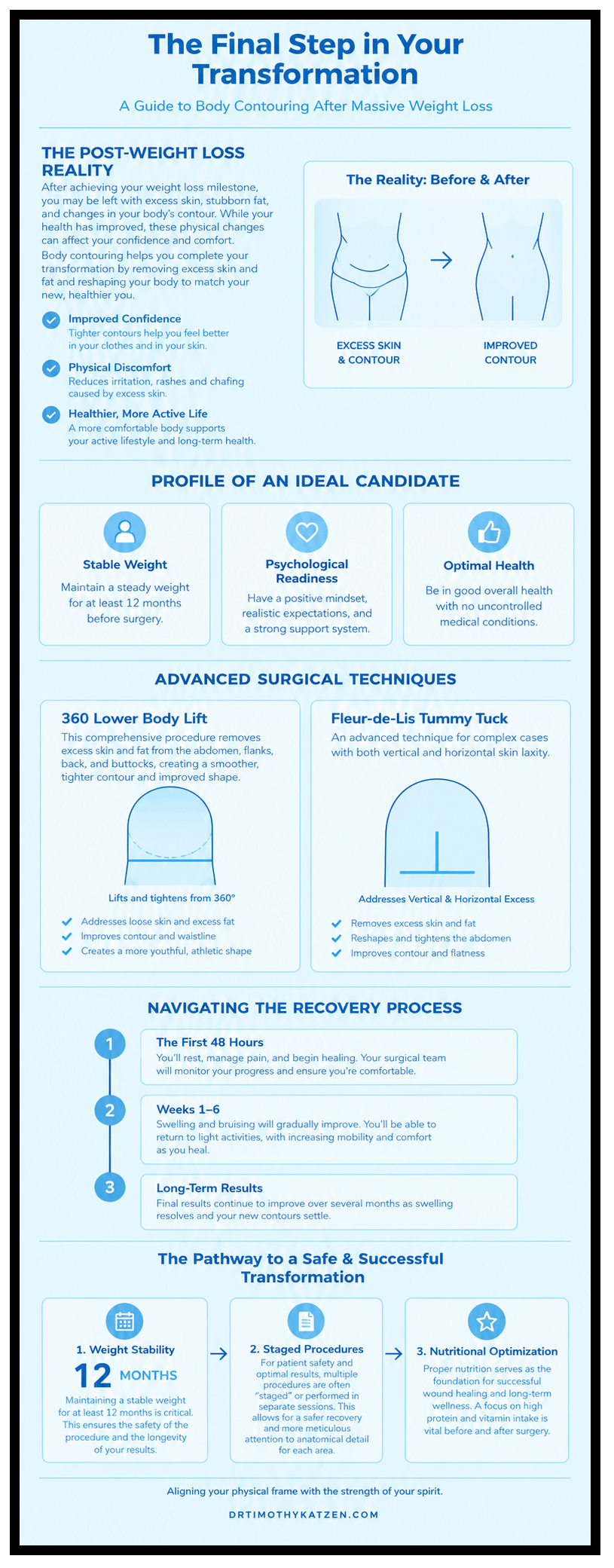
Figure #2: Picture of infogram about final steps before reconstructive plastic surgery after weight loss and profiles of an ideal candidate.
Navigating the Recovery and Healing Process
I often tell my patients that the operating room is where we create the form, but the recovery period is where we refine the result. This phase requires a different kind of discipline than the weight loss journey. It's a time of profound physical rest and methodical healing. Body contouring after weight loss involves significant tissue manipulation, so your body needs time to recalibrate. During the first 48 hours, managing discomfort and encouraging initial mobility are my primary goals. While you'll feel tired, I'll have you taking short, assisted walks almost immediately to promote healthy circulation and prevent complications.
We use medical-grade compression garments to support your new contours and minimize edema. These garments act as a secondary skin, holding the tissues in their new, geometric alignment while the internal healing takes place. Meticulous scar management is also a priority in my practice. By utilizing specialized silicone treatments and massage techniques once the incisions have closed, we ensure that your surgical lines fade into thin, discreet marks. Long-term maintenance is the final piece of the puzzle. Protecting your results requires a lifelong commitment to the healthy living habits that made your weight loss possible.
Milestones in Your Healing Journey
- Week 1-2: Your focus remains on gentle circulation. Short, frequent walks around your home are essential for a safe recovery.
- Week 4-6: You'll begin a gradual return to non-strenuous daily activities. Most patients return to desk work during this window, though heavy lifting remains restricted.
- Month 3-6: This is the 'settling' phase. Residual swelling subsides, and the final, crisp results of your transformation become visible.
Nutritional Support for Surgical Recovery
Your body needs high-quality fuel to rebuild. Protein is the most critical component for tissue repair and wound healing; I recommend focusing on lean sources to support cellular regeneration. Hydration and vitamins like Vitamin C and Zinc are equally important for skin health and scar maturation. Avoiding inflammatory triggers, such as high-sodium foods or nicotine, is non-negotiable during the acute healing phase. Protecting your surgical investment means maintaining the nutritional discipline that brought you this far. If you're ready to begin this final phase of your journey, you can schedule a consultation to discuss your personalized recovery plan.
Reclaiming Your Life: The Emotional Impact of Sculpting
I've often observed that the most profound results of surgery aren't seen on a scale, but in the way a person carries themselves. You've spent months or years focused on the numbers, yet the presence of redundant skin can make you feel like you're still wearing your old body. Body contouring after weight loss is the essential process of aligning your physical reality with the person you've become. It's about finally shedding the 'hidden' burden of excess tissue, which requires constant daily maintenance and often dictates what you can wear or how you move. When we remove that final obstacle, the surge in confidence is almost immediate.
I view myself as more than a surgeon; I'm a dedicated partner in your transformative odyssey. My role is to ensure that the physical silhouette we create is a true reflection of your inner strength and discipline. This isn't just about aesthetic standards; it's about quality of life. Whether it's the ability to wear a swimsuit without anxiety or the simple comfort of skin that no longer chafes, these changes are deeply personal. We're not just moving tissue; we're restoring your ability to engage with the world on your own terms, without the physical reminders of your past weight holding you back.
The Psychological 'Closing of the Chapter'
Completing this surgery often marks a significant shift in identity. Many of my patients find they can finally move past the label of a 'weight loss patient' and simply exist as a person with a healthy body. This psychological 'closing of the chapter' has a ripple effect through every aspect of life. I see it in the way patients approach intimacy with renewed ease, engage in social activities with less self-consciousness, and carry themselves with greater professional confidence. It takes immense courage to complete this entire journey, and celebrating that victory with a body that feels like home is a vital part of the healing process.
Next Steps: Your Personal Consultation
Taking the first step toward your final transformation can feel daunting, but you don't have to navigate it alone. During a comprehensive evaluation, I'll listen to your concerns and perform a detailed anatomical assessment to determine the best geometric approach for your needs. We'll discuss your goals with transparency and empathy, ensuring you feel fully informed and safe before we move forward. This is the moment to bridge the gap between your hard work and your final reflection. Schedule your consultation today to complete your transformation odyssey.
Begin the Final Chapter of Your Transformation Odyssey
You've already conquered the most difficult part of your journey through incredible dedication. Now, it's time to ensure your physical form finally reflects that hard-won strength. We have explored how specialized body contouring after weight loss provides the structural restoration that diet and exercise alone cannot achieve. By prioritizing a strategic, staged approach and a methodical recovery, you can align your reflection with your internal identity and move with a new sense of freedom.
As a world-renowned expert in 360 lower body lifts, Dr. J. Timothy Katzen brings decades of experience to every reconstructive case. His compassionate, patient-centric approach ensures your safety and aesthetic goals remain the primary focus of your partnership. You've worked tirelessly to reach this milestone; you deserve a body that celebrates your success rather than hiding it under the burden of redundant skin.
Book your personal consultation with Dr. Katzen to reclaim your silhouette and step into the life you have earned. Your transformation is nearly complete, and the final victory is within your reach.
Common Questions About Your Transformation
How much weight should I lose before considering body contouring?
You should reach your target weight and maintain it for at least three to six months before scheduling surgery. Weight stability is the most important factor for a safe outcome and predictable results. If your weight is still fluctuating, the skin may continue to stretch or sag, which can compromise the geometric precision of our work. I want your body to be in a stable metabolic state to ensure your recovery is as smooth as possible.
Will my insurance cover the cost of excess skin removal?
Most insurance providers categorize these procedures as elective cosmetic surgery; however, a panniculectomy may be covered if you have documented medical issues like chronic skin infections or severe intertrigo. While I focus on the restorative aspects of body contouring after weight loss, you'll need to check with your specific carrier. My team can help provide the necessary clinical documentation if your redundant skin is causing functional health problems that meet their criteria for medical necessity.
How long are the scars, and where will they be located?
Scars are a necessary tradeoff for a refined silhouette, and their location depends on the specific technique we use. For a 360 lower body lift, the incision is circumferential, meaning it goes entirely around your waistline. For a Fleur-de-Lis tummy tuck, we add a vertical incision to remove maximum excess tissue. I place these incisions strategically so they can be hidden by most undergarments and swimwear, and we use advanced techniques to ensure they fade significantly over time.
Can I have multiple procedures, like a tummy tuck and arm lift, at the same time?
I can often combine procedures like a tummy tuck and an arm lift, but your safety always dictates our surgical "time budget." While combining surgeries reduces total recovery time, staying under anesthesia for too long increases clinical risks. During our consultation, I'll evaluate your overall health and the complexity of each area to decide if a single session or a staged approach is the safest path forward for your specific transformation.
What is the difference between a standard tummy tuck and a 360 lower body lift?
A standard tummy tuck focuses only on the front of the abdomen, while a 360 lower body lift addresses the entire trunk in a single circle. The 360 approach is the gold standard for my massive weight loss patients because it lifts the buttocks and lateral thighs along with the stomach. This circumferential technique provides a more harmonious, three-dimensional result that restores balance to your entire lower torso rather than just flattening the anterior abdominal wall.
How long do I need to take off work for recovery after a body lift?
Most patients need two to three weeks off from a desk job, while physically demanding roles require four to six weeks of recovery. You'll need to listen to your body and follow our activity restrictions closely during this time. While you'll be walking within the first 48 hours to promote circulation, your body needs significant rest to heal the internal tissues. I'll provide a detailed timeline so you can plan your professional and personal commitments accordingly.
Is body contouring safe after bariatric surgery?
Body contouring is not only safe after bariatric surgery but is often considered the final restorative step in that medical journey. Many of my patients come to me after successful gastric bypass or sleeve procedures to address the physical and emotional burden of loose skin. As long as your primary care physician clears you and your nutritional levels are optimized for healing, we can safely proceed with your reconstructive body contouring after weight loss to complete your transformation.
Will the skin ever grow back if I gain a small amount of weight?
Your skin will not "grow back," but it can stretch again if you experience significant future weight gain. The surgery permanently removes the redundant tissue, but the remaining skin still has some elasticity. Maintaining a stable weight is the best way to protect your surgical investment and keep your results crisp and defined. I encourage all my patients to continue the healthy lifestyle habits that led to their successful weight loss in the first place.