Post-Surgery Body Dysmorphia: A Surgeon’s Guide to Emotional Recovery
11/10/2026
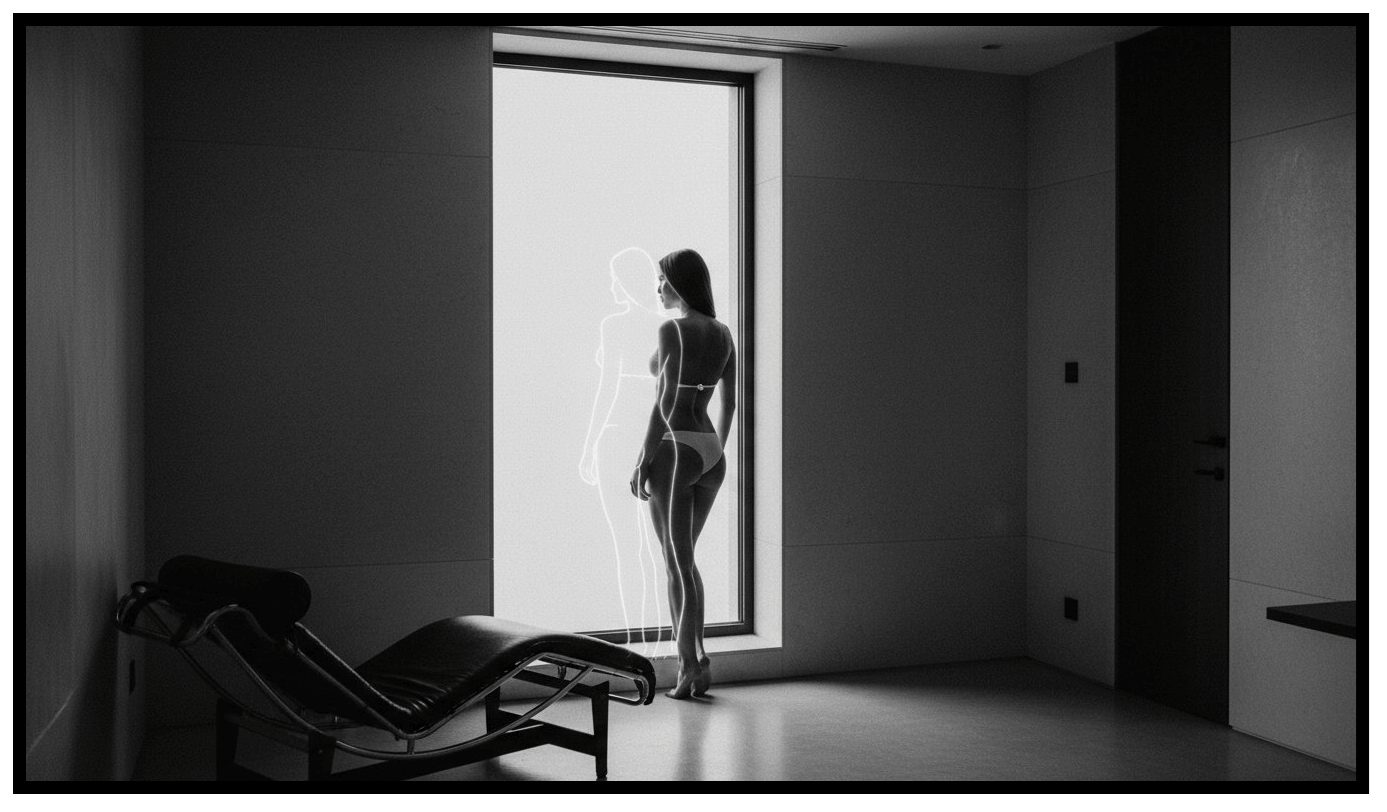
Figure #1: Picture of a female massive weight loss patient with body dysmorphia.
What if the most challenging phase of your transformation isn't the physical healing of your incisions, but the recalibration of your mind's internal eye? You might find yourself staring at your reflection after a procedure like a tummy tuck, feeling a confusing sense of disconnect because you still see the silhouette you thought you left behind. It's a common, yet rarely discussed, phenomenon where your mental map lags behind your new physical geometry. If you feel a sense of guilt for not experiencing immediate joy or find yourself obsessively checking for flaws in the post-operative swelling, you aren't alone. Research indicates that between 18.6% and 24% of cosmetic surgery patients experience these complex feelings, highlighting that emotional recovery is just as vital as clinical care.
I understand the anxiety that arises when your brain hasn't yet accepted your surgical success. In this guide, I'll help you navigate the process of dealing with post-surgery body dysmorphia by explaining why this psychological delay occurs. You'll learn professional strategies to align your self-perception with your physical reality and reduce mirror-checking behaviors. We will explore how to manage expectations during the inflammatory phase and build the confidence needed to fully embrace your long-term results as the final, celebratory step of your personal odyssey.
Key Takeaways
-
Discover how your brain’s internal map, known as the cortical homunculus, requires significant time to recalibrate to your new physical geometry after a procedure.
-
Learn why dealing with post-surgery body dysmorphia often stems from a "phantom body" effect, where the mind continues to project your previous silhouette onto your recovered form.
-
Gain a methodical framework to objectively distinguish between temporary post-operative swelling and actual surgical results to reduce anxiety during the healing phase.
-
Implement professional psychological tools such as "mirror fasting" and "neutral observation" to break the cycle of obsessive checking and reclaim emotional peace.
-
Understand how to utilize follow-up consultations as a vital resource for emotional grounding, positioning your specialist as a dedicated partner in your long-term odyssey.
Table of Contents
-
What is Post-Surgery Body Dysmorphia? Understanding the "Phantom Body"
-
Why the Brain Lags Behind the Scalpel: The Neurology of Transformation
-
Practical Strategies for Navigating the Mirror During Recovery


What is Post-Surgery Body Dysmorphia? Understanding the "Phantom Body"
When I perform a transformative procedure, such as a circumferential body lift or a comprehensive tummy tuck, I am reshaping more than just tissue; I am altering the physical geometry that your brain has recognized for years. Post-surgery body dysmorphia occurs when there is a profound disconnect between this new physical reality and your internal mental perception. While the mirror shows a refined contour, your mind may still project the "old" version of yourself onto your reflection. I often describe this as the "Phantom Body" effect. Similar to how an amputee might feel a phantom limb, your brain continues to signal the presence of excess skin or volume that has been surgically removed. Dealing with post-surgery body dysmorphia is a process of reconciling these two conflicting maps of the self.
It is helpful to understand What is Body Dysmorphic Disorder? in a clinical context to realize why these feelings occur. Your brain’s internal map is not updated instantly. When we make significant changes to your silhouette, we disrupt the neural pathways that track your body's boundaries and proportions. Validating these feelings is a crucial step in your recovery odyssey. You aren't failing to appreciate your results; your neurology is simply catching up to the meticulous work we have done together. These emotions are a common, though often unspoken, part of the transition from your old self to your new reality.
The Difference Between BDD and Normal Post-Op Anxiety
It's natural to feel a dip in your mood during the first few weeks of recovery. The "post-op blues" are often triggered by the lingering effects of anesthesia, physical trauma, and the temporary discomfort of swelling. However, BDD is distinct because it is persistent, obsessive, and disruptive to your daily life. While normal anxiety fades as you heal, dysmorphia can lead to hours of mirror-checking or a conviction that the surgery failed despite clinical evidence to the contrary. Keep in mind that every procedure has a "settling period," typically lasting six to twelve months, where the tissues soften and the final aesthetic outcome truly reveals itself.
Who is Most at Risk After a Transformation?
In my practice, I find that patients who have undergone massive weight loss are often most susceptible to these feelings. After living with excess skin for years, that physical burden becomes a core part of their identity. When it's suddenly gone, the psychological shift can feel jarring. Additionally, individuals with high-stakes expectations or those who have struggled with body image in the past may find those old insecurities resurfacing during the vulnerable recovery phase. Dealing with post-surgery body dysmorphia requires us to acknowledge these risks so we can approach your healing with the specialized care and profound empathy you deserve.
Why the Brain Lags Behind the Scalpel: The Neurology of Transformation
Your body operates on a complex sensory system called proprioception. This is the biological sense that allows you to understand where your limbs are in space without having to look at them. When I perform a transformative procedure like a tummy tuck, I am fundamentally altering your physical boundaries and your body's relationship with space. Your brain, however, still holds onto its original blueprint, known as the cortical homunculus. This neurological map of your physical self doesn't update as fast as the scalpel moves. Understanding What is Body Dysmorphic Disorder helps clarify that this disconnect isn't a lack of gratitude or a failure of the surgery. It's a physiological delay. Think of it as installing high-end new hardware while the system is still running old, outdated software. It typically takes six to twelve months for the brain to fully re-map your new geometry and accept the transformation as your permanent reality.
The Role of Post-Operative Edema
Edema, or post-operative swelling, creates a moving target for your brain. Swelling fluctuates daily based on your activity levels, hydration, and sodium intake. This constant change makes it nearly impossible for your mind to establish a stable new internal map. Compression garments are essential for a successful recovery, but they also mask your true silhouette, adding another layer of visual confusion. You won't see your final, stable result until the inflammation completely subsides, which is why patience is the most critical tool for anyone dealing with post-surgery body dysmorphia. The brain needs a consistent, non-fluctuating image before it can retire the old map.
Visual Processing and the Mirror Trap
The mirror can be a deceptive tool during the early months of recovery. When the macro-change to your body is massive, your brain often struggles to process the entire silhouette at once. Instead, it "zooms in" on micro-flaws, such as the texture of a healing scar or a temporary area of unevenness. This hyper-focus is a psychological defense mechanism; the brain fixates on small, familiar details because the total transformation feels alien. Photos often look different than your reflection because they provide a static, two-dimensional view that bypasses the dynamic distortions our minds create in real-time. If you find these visual shifts overwhelming, discussing your progress during a personalized consultation can provide the clinical perspective needed to ground your reality and confirm that your healing is on the correct trajectory.
Distinguishing Between a "Bad Result" and Body Dysmorphia
One of the most frequent questions I hear during post-operative visits is, "What if I’m right and the surgery actually looks bad?" It is a valid, deeply felt fear. When you have invested significant emotional and financial resources into a transformation, the stakes feel incredibly high. Dealing with post-surgery body dysmorphia involves learning how to separate your subjective feelings from the objective clinical reality. While your mind might fixate on a specific area, I look for symmetry, wound healing, and the overall harmony of your new proportions. We must distinguish between a surgical complication, which is a measurable clinical issue, and a perceptual lag, which is a psychological one.
To ground yourself, I strictly recommend the "one-year rule." Your tissues are in a constant state of flux for months. Making a final judgment before the twelve-month mark is premature and often leads to unnecessary distress. During our follow-up appointments, I use your professional before and after photos as a clinical baseline. These images strip away the emotional weight of the mirror and provide a factual record of the geometric changes we achieved. Research into unrealistic expectations after surgery suggests that patients often struggle when they lose sight of this baseline, allowing their internal "phantom" image to override the visible progress. Trusting the data over the feeling is a vital part of your recovery.
Signs Your Perception May Be Distorted
It’s important to recognize when your self-assessment has crossed into obsessive territory. In my practice, I look for specific behavioral markers that suggest a disconnect. If you spend more than one hour a day checking your reflection, or if you find yourself asking for reassurance from others only to dismiss their answers, your perception may be skewed. Many patients also find themselves avoiding social events despite being physically healed. These behaviors indicate that you are dealing with post-surgery body dysmorphia rather than a physical surgical flaw.
The Surgeon’s Perspective on "Perfection"
As a specialist, my goal is always profound improvement and aesthetic harmony. However, I must work within the framework of your unique anatomy. Your rib cage, hip width, and skin elasticity dictate the final geometry of a procedure like a tummy tuck. I view surgery as the final, celebratory step of a long odyssey, but it is always limited by biological reality. A successful outcome is defined by functional and aesthetic balance. True recovery involves accepting that while surgery can achieve remarkable transformation, its success lies in improvement rather than an impossible standard of perfection.
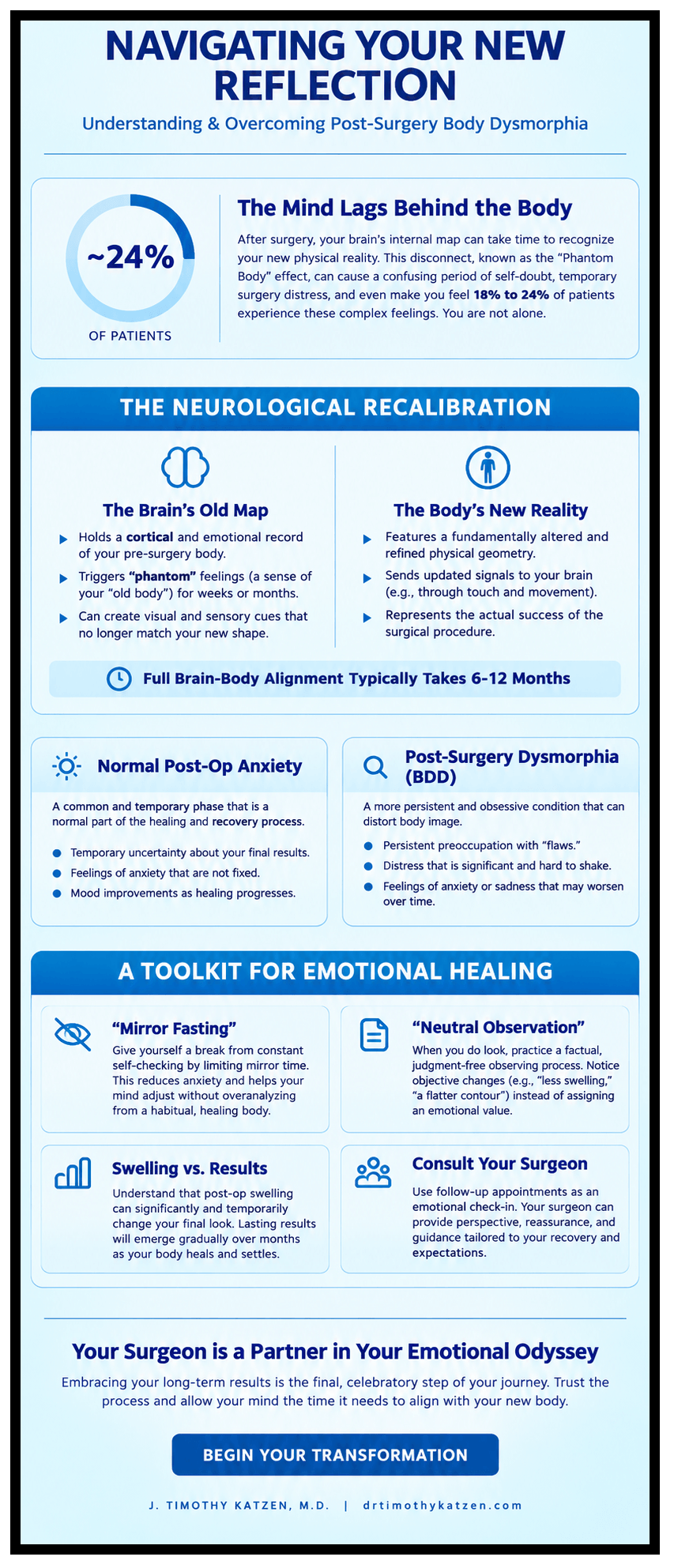
Figure #2: Picture of an infogram depicting overcoming and understanding post-surgery body dysmorphia.
Practical Strategies for Navigating the Mirror During Recovery
Healing is not a passive event; it requires active participation in your emotional recovery. One of the most effective tools I recommend for dealing with post-surgery body dysmorphia is "Mirror Fasting." This involves intentionally limiting your time in front of reflective surfaces to break the cycle of obsessive checking. When you do look, aim for "Neutral Observation" rather than "Judgmental Scanning." Instead of hunting for perceived flaws, try to describe your body in objective, geometric terms. For example, note that your waistline is more defined or your silhouette is more balanced, without attaching a value judgment to temporary bruising or swelling.
Shift your internal dialogue by using the "Focus on Function" technique. Ask yourself what your new body can do today that it couldn't do last week. Perhaps your mobility is improving after a tummy tuck, or you feel a lighter physical presence as you move through your home. This shift in perspective moves the focus from a static image to a dynamic, living system. A digital detox is also essential during this time. Social media often presents "perfect" recovery timelines that are curated and filtered. Disconnecting from these accounts prevents you from comparing your unique healing journey to an unrealistic standard. If you find these emotional hurdles difficult to clear alone, request a follow-up consultation to discuss your progress in a supportive, clinical environment.
The 5-Minute Mirror Rule
Set a timer on your phone for necessary grooming tasks like showering or changing dressings. This firm boundary prevents you from "spiraling" into a hyper-fixation on minor details. Stand at least five feet away from the mirror to observe the big-picture silhouette. From this distance, you can appreciate the comprehensive changes to your physical geometry without getting lost in the five-inch view of a healing incision. Practice gratitude for your body’s incredible ability to heal from a major surgical intervention. It's doing hard work every second of the day.
Journaling the Transformation
Start a recovery journal that tracks energy levels and mobility rather than just inches or pounds. These non-scale victories are powerful indicators of progress that the mirror cannot capture. Note how your clothes fit differently or how your posture has improved. Write down one aspect of your results that you appreciate every day. This practice helps rewire your mental map, ensuring your self-perception begins to align with your clinical outcome. Dealing with post-surgery body dysmorphia is easier when you have a written record of your body’s resilience and growth.
Your Surgeon as a Partner in Your Emotional Odyssey
I view my role as far more than a technician of the physical form; I am a dedicated partner in your entire transformative odyssey. Surgery, particularly a comprehensive procedure like a tummy tuck, is the final, celebratory step of a journey that often began years ago. When you're dealing with post-surgery body dysmorphia, your follow-up appointments serve as vital anchors for emotional grounding. These visits aren't just for checking incisions or monitoring the progress of your sutures. They're opportunities for us to look at your results together and reconcile your internal feelings with the objective clinical reality. I encourage you to be entirely transparent about any perceived flaws you see in the mirror. My team and I are here to listen with profound empathy and provide the clinical context necessary to bridge the gap between your current perception and your physical results.
Open communication is the foundation of a successful recovery. If you find yourself fixating on a specific area of swelling or a healing scar, bring it to my attention during our consultations. We can review your pre-operative geometry and compare it to your new silhouette, using factual data to quiet the "phantom body" sensations discussed earlier. By treating these concerns as a natural part of the healing process rather than a failure of the procedure, we build a foundation of trust and safety. This collaborative approach ensures you never feel isolated while your mind works to accept the profound changes we’ve achieved together.
The Importance of Specialized Post-Contouring Care
Choosing a specialist who understands the unique challenges of post-weight loss transformations matters immensely. We focus on a meticulous, all-encompassing approach to body sculpting, ensuring that every geometric change is in harmony with your underlying anatomy. Beyond the operating room, we utilize supportive therapies like lymphatic massage to manage edema and professional skin care to optimize the appearance of your results. These interventions provide physical relief while offering a tangible way to care for your new form, reinforcing the reality of your transformation through touch and professional maintenance.
When to Seek Professional Mental Health Support
Sometimes, even with an elite surgical outcome, the mind needs extra support to update its internal software. I believe in normalizing the use of Cognitive Behavioral Therapy (CBT) for anyone dealing with post-surgery body dysmorphia. Just as we use physical therapy to heal the muscles, mental health support can help you reconcile your "new hardware" with your long-held self-perception. A therapist specializing in body image can provide the tools needed to silence the inner critic and fully embrace your improved quality of life. The final vision of this odyssey is a version of you that is both physically restored and mentally aligned, standing with confidence in your new reality.
Embracing Your New Reality with Confidence
Your physical transformation is a monumental achievement, but the psychological alignment with your new form is the final, essential chapter of your odyssey. We have explored how your brain’s internal map requires time to catch up to surgical changes and why practical tools like mirror fasting help you regain emotional balance. Dealing with post-surgery body dysmorphia is not a sign of failure. It is a physiological response to a significant shift in your body's geometry. By focusing on functional victories and maintaining open communication with your medical team, you'll ensure your mental perception matches the meticulous work performed in the operating room.
I am committed to being your dedicated partner through every phase of this recovery. My practice is built on a foundation of compassionate, patient-centric care that prioritizes your long-term well-being. As a board-certified specialist world-renowned for 360 lower body lifts, I understand the delicate intersection of physical sculpting and emotional healing. Begin your transformative journey with a partner who understands the physical and emotional geometry of change. Schedule your consultation with Dr. Katzen today. You've already done the hard work of preparing for this change. Now, it is time to fully inhabit and celebrate the new you.
Frequently Asked Questions
Is it normal to feel depressed after plastic surgery?
Yes, experiencing a temporary dip in mood after a procedure is a common physiological response to physical trauma and the lingering effects of anesthesia. I often see patients go through a period of "post-op blues" as their bodies dedicate immense energy to the healing process. However, if these feelings persist or evolve into obsessive fixations, you might be dealing with post-surgery body dysmorphia. It is vital to distinguish between temporary recovery fatigue and a deeper psychological disconnect with your new silhouette.
How long does it take for the brain to adjust to a new body shape?
It typically takes between six and twelve months for your brain’s internal map to fully recalibrate to your new physical geometry. Your neurology operates on a much slower timeline than the surgical procedure itself. During this period, your mind is busy updating its proprioceptive software to match your new hardware. Consistency is key; as post-operative swelling stabilizes and the results become constant, your brain will eventually accept the refined contours as your permanent reality.
Can surgery actually cause body dysmorphia?
Surgery does not cause Body Dysmorphic Disorder, but the sudden change in appearance can trigger latent body image struggles or a significant perceptual lag. For most individuals, this is a temporary disconnect rather than a clinical condition. However, research indicates that up to 24% of cosmetic surgery patients may meet the criteria for BDD. This is why I prioritize a holistic assessment before a tummy tuck to ensure your mind is as prepared for the transformation as your body.
What should I do if I hate my plastic surgery results?
If you are unhappy with your results, the first step is to allow your body to complete the full healing cycle, which takes one year. I strongly advise against seeking revisions during the inflammatory phase, as swelling can distort the true clinical outcome. Schedule an honest, transparent consultation with your surgeon to review your professional before and after photos. This comparison provides the objective grounding needed to see the actual geometric improvements we achieved together.
Why do I still feel "fat" after a tummy tuck or liposuction?
Feeling "large" after a body contouring procedure is usually the result of post-operative edema and the "Phantom Body" effect. Swelling fluctuates daily based on activity and salt intake, making your silhouette feel inconsistent and confusing your brain’s ability to map your new size. Additionally, your mind may still be projecting the previous volume you carried for years. Patience during this stage is essential while your tissues soften and the final, stable results emerge.
How can I stop obsessively checking my surgical scars?
To stop obsessive checking, I recommend implementing a strict "Mirror Fasting" protocol and a 5-minute timer for necessary grooming. Avoid looking at your reflection outside of these windows to break the cycle of hyper-fixation. When you do look, stand at least five feet away to appreciate the macro-changes to your silhouette. Fixating on micro-details like scar texture at a close range only fuels anxiety and prevents you from seeing the successful, comprehensive transformation.
When is the right time to seek therapy for post-op body image issues?
You should consider professional support if your preoccupation with your appearance becomes persistent, disruptive to your daily life, or leads to social isolation. While some anxiety is normal, obsessive behaviors that last beyond the initial recovery weeks may require specialized help. Cognitive Behavioral Therapy is an excellent tool for dealing with post-surgery body dysmorphia. Seeking therapy is a proactive step in ensuring your emotional recovery is just as successful as your physical one.
What is the "phantom skin" sensation after weight loss surgery?
"Phantom skin" is a sensory phenomenon where your brain continues to signal the presence of excess tissue that has been surgically removed. This is similar to phantom limb syndrome and occurs because your internal mental map hasn't updated yet. After a transformative skin removal procedure, you might still "feel" the weight or pull of the old tissue in your mind. This sensation typically fades as your neural pathways re-map to your new, streamlined geometry.