I Lost 600 Pounds: What Do I Do About Loose Skin After Massive Weight Loss?
10/23/2026
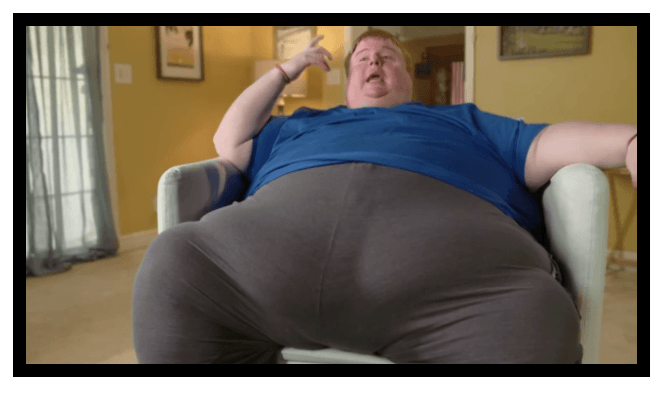
Picture #1: Before weight loss. A 41-year-old male who weighed 835 pounds sitting in a chair.
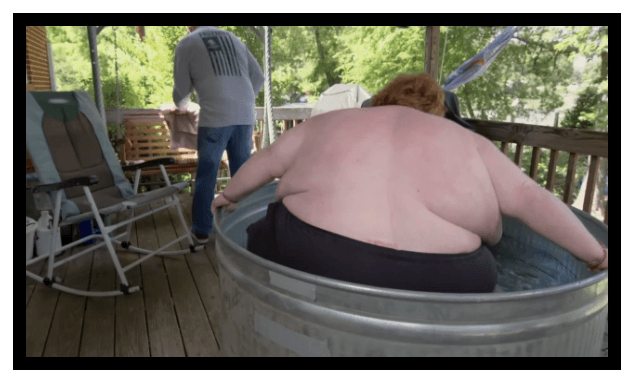
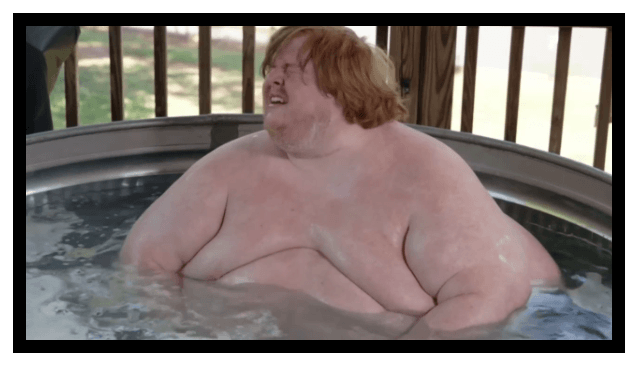
Picture #2: Before weight loss. A 41-year-old male who weighed 835 pounds bathing in an outdoor tub.
Losing a massive amount of weight can completely change a person's life. But after losing hundreds of pounds, many patients discover that there is another part of the transformation they did not anticipate: what to do about the excess skin that remains after the weight is gone.
This is the story of a 41-year-old man who achieved an extraordinary 600-pound weight loss. His maximum weight was approximately 835 pounds. Through a combination of diet, exercise, and vertical sleeve gastrectomy, he ultimately reached a lowest weight of approximately 235 pounds.
That means he lost approximately 600 pounds—more weight than the combined weight of several people.
His transformation illustrates an important issue faced by patients after massive weight loss: losing the weight is only part of the journey. For some patients, the next step is addressing the skin and soft-tissue changes left behind.
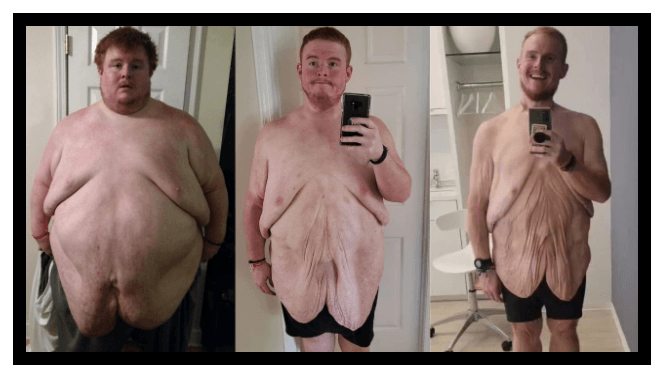
Picture #3: A picture showing the weight loss from 835 pounds to 235 pounds. A remarkable 600-pound weight loss following diet, exercise, and vertical sleeve gastrectomy.
From 835 Pounds to 235 Pounds
At his maximum weight, this patient weighed approximately 835 pounds. He worked to lose weight through lifestyle changes and ultimately underwent a vertical sleeve gastrectomy, commonly known as a gastric sleeve.
After his bariatric surgery and continued commitment to weight loss, he reached approximately 235 pounds.
The difference between his highest and lowest recorded weight was approximately:
835 pounds - 235 pounds = 600 pounds lost.
A weight loss of this magnitude represents an extraordinary physical transformation.
However, the skin does not always shrink in proportion to the underlying reduction in body volume.
When a person has lived at a very high weight for an extended period, the skin and supporting tissues may become significantly stretched. Once the underlying fat and volume are dramatically reduced, the skin may not have enough elasticity to conform to the new body size.
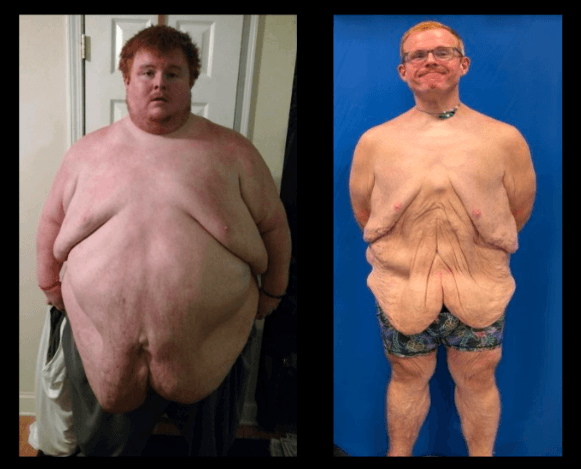
Picture #4: A 600-pound transformation: this patient's weight decreased from a maximum of 835 pounds to a lowest weight of 235 pounds after diet, exercise, and vertical sleeve gastrectomy.
Losing the Weight Does Not Always Mean the Transformation Is Finished
Patients who have lost 100, 200, 300, 400, 500 or even 600 pounds often tell me that they expected their bodies to look completely different once the weight was gone.
Instead, they may find themselves asking:
“I lost the weight. Why do I still have so much skin?”
This can be frustrating. Unfortunately, some patients even wish they could regain their weight to avoid dealing with the excess skin.
The excess skin is not necessarily an indication that the patient has failed to lose enough weight. In fact, it may be the opposite. The more dramatic the weight loss, the more significant the resulting skin redundancy can sometimes become.
Diet and exercise can reduce body fat, and bariatric surgery can facilitate substantial weight loss, but neither can reliably remove large amounts of permanently stretched skin.
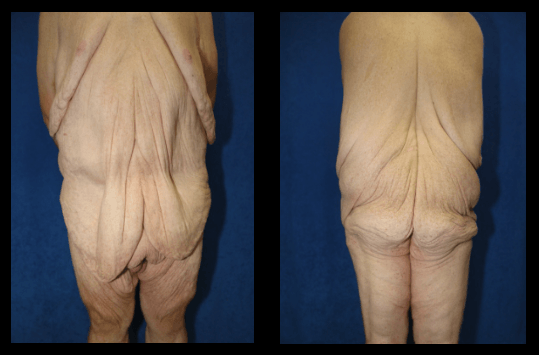
Picture #5: Frontal and back pictures of a male who lost 600 lbs. After losing hundreds of pounds, significant excess skin may remain because previously stretched skin does not always contract completely to match the body's new size.
LOST 100+ POUNDS? THE NEXT STEP MAY BE BODY CONTOURING.
If you're dealing with excess skin after massive weight loss, learn what body-contouring options may be available. Schedule a consultation with Dr. Katzen to discuss your individual anatomy, goals, weight stability and potential treatment options.
What Happens to the Body After Losing 600 Pounds?
A patient who loses nearly 600 pounds may have excess skin in multiple regions rather than one isolated area.
Abdomen: The abdomen may develop a large hanging pannus or apron of skin extending over the pubic region and upper thighs.
Flanks and lower back: Significant rolls of redundant skin can extend around the sides and posterior trunk.
Buttocks: The buttocks may lose volume and support, while redundant skin can descend.
Thighs: The inner and outer thighs may develop significant skin laxity, sometimes interfering with walking, exercise, clothing and hygiene.
Arms: The upper arms may develop substantial hanging skin, sometimes extending from the armpit toward the elbow and even the wrist.
Chest: Men may develop a combination of excess skin, residual fatty tissue and stretched breast tissue after massive weight loss.
Mons pubis: The pubic region may also develop substantial skin and soft-tissue redundancy.
Because the deformity can involve the entire trunk and multiple extremities, one operation may not be sufficient.
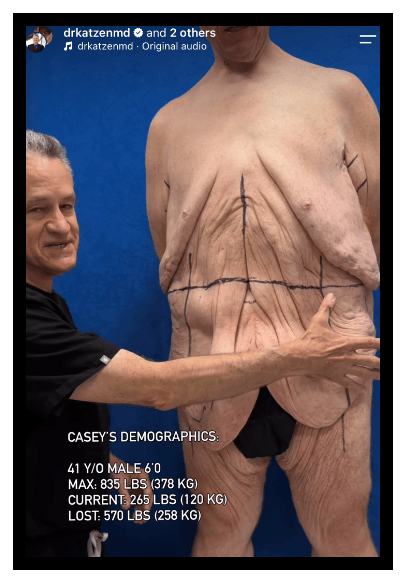
Picture #6: Picture of a patient who weighed 835 lbs. Massive weight loss can affect multiple areas of the body, including the abdomen, flanks, back, chest, arms, thighs and buttocks. Body contouring is customized per the patient's individual pattern of excess skin.
Why a Tummy Tuck May Not Be Enough After Massive Weight Loss
One of the most common misconceptions is that a patient who has experienced massive weight loss simply needs a tummy tuck, also known as an abdominoplasty.
A traditional abdominoplasty primarily addresses the front of the abdomen. For some patients, however, excess tissue extends around the sides and back of the torso.
In these circumstances, a lower body lift or circumferential body lift may be more appropriate.
A circumferential procedure can address excess tissue involving the abdomen, pubic region, flanks, hips, lower back, buttocks and outer thighs.
The appropriate procedure depends on the patient's anatomy, goals, weight stability, health, nutritional status and the distribution of excess skin.
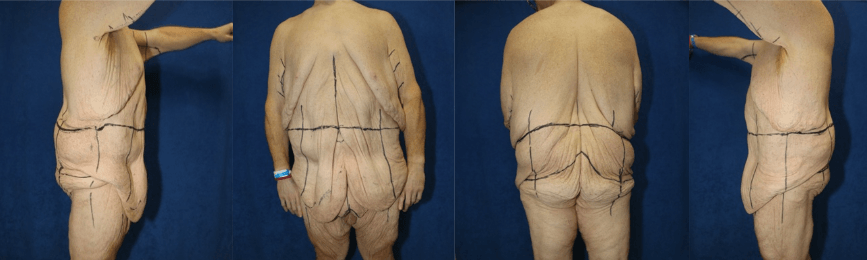
Picture #7: Pictures of surgical plan for a 360 circumferential lower body lift on a male who lost 600 lbs. When excess skin extends beyond the abdomen to the flanks and back, a circumferential or lower body lift may provide a more comprehensive approach than a traditional tummy tuck alone. For this patient, all the skin and fat from the upper horizontal line to the lower horizontal line was removed. The upper abdominal line was pulled down whereas the lower buttock line was pulled up.
What Procedures Can Be Considered After Massive Weight Loss?
There is no single operation that is right for every massive-weight-loss patient.
Abdominoplasty
A tummy tuck removes excess abdominal skin and may address separation or laxity of the abdominal wall when appropriate. It usually includes a pubic lift or reduction, reconstruction of the belly button (umbilicoplasty), and muscle plication to correct rectus diastasis.
Panniculectomy
A panniculectomy focuses primarily on removing a large, hanging abdominal pannus. Unlike a tummy tuck, it does not include a pubic lift or reduction, reconstruction of the belly button (umbilicoplasty), or muscle plication to correct rectus diastasis.
Circumferential Lower Body Lift
A lower body lift can address excess tissue around the abdomen, hips, flanks, buttocks, and outer thighs. A circumferential approach treats excess tissue around the entire torso rather than limiting treatment to the front of the abdomen.
Arm Lift
A brachioplasty removes excess skin from the upper arms. In massive-weight-loss patients, excess skin may extend toward the armpits and along the sides of the chest, potentially requiring additional contouring (torsoplasty).
Thigh Lift
A medial or longitudinal thigh lift may be considered when significant skin redundancy affects the inner thigh or extends along its length. The incision may extend from the groin toward the inner knee.
Chest Contouring in Men
Men who experience massive weight loss may develop substantial excess chest skin and residual tissue. Depending on the anatomy, treatment may include skin excision, liposuction, glandular tissue removal, or a combination of these techniques.
Staged Body Contouring
For patients with extremely large amounts of excess skin, attempting to correct every area during one operation may not be appropriate. Instead, body contouring may be staged over multiple operations to address different areas in a planned sequence.
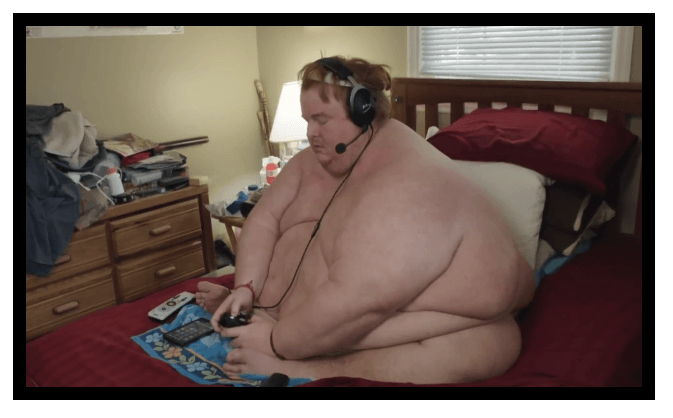
Picture #8: Picture of a man before he lost 600 lbs. Body contouring after massive weight loss may include abdominoplasty, panniculectomy, lower body lift, circumferential body lift, arm lift, thigh lift and male chest contouring. Procedures are selected and staged per each patient's anatomy and goals.
When Should You Have Plastic Surgery After Massive Weight Loss?
One of the most important questions is timing.
In general, patients should be close to their desired weight and demonstrate that their weight has stabilized before undergoing major elective body-contouring surgery.
This is important because additional significant weight loss after body contouring can create more loose skin and alter the surgical result.
For a patient who has lost hundreds of pounds, reaching a stable weight can be an important milestone before beginning the surgical body-contouring phase.
Nutrition Is Especially Important After Massive Weight Loss
Patients who have undergone bariatric surgery require careful attention to nutrition before major body-contouring surgery.
Protein, vitamins, and minerals are important for wound healing. Patients who have experienced major weight loss—particularly those who have undergone bariatric surgery—may have nutritional deficiencies that need to be identified and corrected before surgery.
For this reason, a comprehensive preoperative evaluation is an important part of planning surgery after massive weight loss.
What Are the Goals of Body Contouring After Massive Weight Loss?
The goal is not simply to make someone “thinner.” The patient has already accomplished the weight-loss component. The goal of body contouring is to remove redundant skin and reshape the remaining tissues to create a more proportional body contour. There may also be functional reasons to remove excess skin.
Large skin folds can contribute to skin irritation, chafing, difficulty with hygiene, recurrent rashes, moisture trapping, difficulty exercising, and problems finding appropriately fitting clothing.
The Psychological Side of Massive Weight Loss
There is also an emotional component to massive weight loss that should not be ignored. A person may have spent years being defined by their weight. After losing hundreds of pounds, they may expect to finally feel comfortable in their body. Instead, they may find themselves hiding under loose clothing because of large amounts of excess skin.
Some patients describe feeling as though their external appearance has not caught up with the transformation they have achieved.
Body contouring cannot—and should not—be viewed as a replacement for weight loss, healthy nutrition, or exercise.
Rather, for an appropriately selected patient, it can be considered the next stage of the transformation after the weight has been lost and stabilized.
Losing 600 Pounds Is an Extraordinary Accomplishment
This 41-year-old patient lost approximately 600 pounds, going from a maximum weight of approximately 835 pounds to a lowest weight of approximately 235 pounds. That is an extraordinary achievement that required a long-term commitment to weight loss, lifestyle changes, and bariatric surgery. But his story also demonstrates an important reality:
When someone loses hundreds of pounds, the journey may not end when the scale reaches its lowest number.
For some patients, the next chapter involves removing excess skin and reshaping the body after massive weight loss.
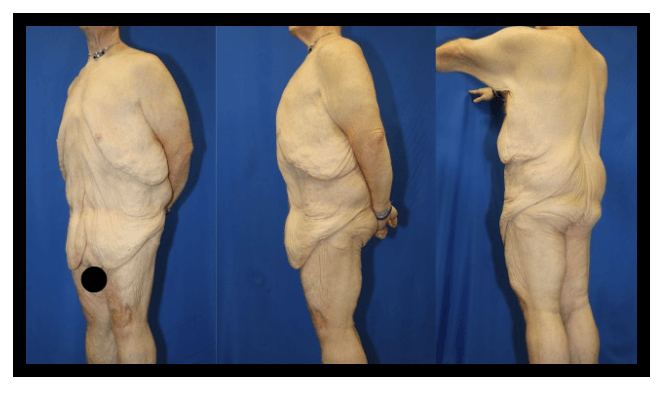
Picture #9: Picture of a man after losing 600 lbs. After losing 600 pounds, body contouring can become the next chapter of a patient's transformation—addressing the excess skin and soft-tissue changes that remain after massive weight loss.
What Should I Do If I Lost 100, 200, 300, 400, or 500+ Pounds?
If you have experienced massive weight loss, the first step is not necessarily deciding which operation you need. The first step is a comprehensive evaluation.
Every massive-weight-loss patient is different. The location and amount of excess skin, your current weight, whether your weight is stable, your previous bariatric surgery, nutritional status, medical history, and personal goals all influence the surgical plan.
Some patients may benefit from a tummy tuck. Others may require a panniculectomy. Some may be better candidates for a lower body lift or circumferential body lift. Others may require a staged approach involving the abdomen, chest, arms, thighs, and other areas over several operations.
There is no single “massive weight loss surgery.” The operation should be customized to the patient's anatomy and goals.
The Next Chapter After Massive Weight Loss
Losing 600 pounds is not simply a number on a scale. It represents years of effort, discipline, and commitment. For patients who have achieved extraordinary weight loss, body contouring can be an opportunity to address the physical changes that remain after the weight is gone.
If you have lost 100, 200, 300, 400, 500, or even more pounds and are left with significant excess skin, a consultation with a board-certified plastic surgeon experienced in massive-weight-loss body contouring can help determine which options may be appropriate.
Your weight-loss journey may have changed your life. Body contouring can be the next step in completing your physical transformation.
READY TO BEGIN THE NEXT CHAPTER AFTER MASSIVE WEIGHT LOSS?
If you have lost 100, 200, 300, 400, 500, or more pounds and are living with excess skin, you do not have to figure out which procedure you need on your own. Dr. J. Timothy Katzen specializes in body contouring for patients who have experienced massive weight loss. During a consultation, he can evaluate the areas of excess skin, your current weight and weight stability, your previous weight-loss or bariatric surgery, your overall health, and your goals. Your treatment plan may involve a tummy tuck, panniculectomy, lower body lift, circumferential body lift, arm lift, thigh lift, chest contouring, or a combination of procedures performed in stages. Take the next step: schedule a consultation with Dr. Katzen to discuss your massive-weight-loss transformation and learn which options may be appropriate for you. Whether you have lost 100 pounds or 600 pounds, your weight-loss journey is an extraordinary accomplishment. Body contouring may be the next step toward addressing the excess skin that remains.
SCHEDULE YOUR MASSIVE WEIGHT LOSS CONSULTATION
An online consultation request does not guarantee candidacy; candidacy and timing require medical evaluation.
Frequently Asked Questions
I lost 300 pounds. Do I need a tummy tuck?
Not necessarily. Some patients may benefit from a tummy tuck, while others have excess tissue extending around the sides and back and may be better candidates for a 360-degree circumferential lower body lift. The appropriate procedure depends on your anatomy, the distribution of excess skin, your health, weight stability, and personal goals.
I lost 500 pounds. Can all my excess skin be removed at once?
In many cases, multiple procedures may be necessary to address excess skin after massive weight loss. Several areas may be combined in one operation when medically appropriate, but treating every area at once may not be advisable. Staged surgery allows different areas to be addressed over time while considering patient safety, healing, and recovery.
How much weight should I lose before body contouring?
There is no universal target weight because the appropriate goal depends on the individual. In general, patients should be near their desired weight and demonstrate that their weight has stabilized before major elective body-contouring surgery. Your plastic surgeon can help determine appropriate timing based on your health, nutritional status, and goals.
Will exercise remove my excess skin?
Exercise can improve muscle tone, strength, and overall fitness, but it generally cannot remove permanently stretched, redundant skin. For patients with significant excess skin after massive weight loss, body-contouring surgery may be an option to discuss with a qualified plastic surgeon.
Can men have a lower body lift after massive weight loss?
Yes. Men can develop significant excess skin around the abdomen, flanks, back, buttocks, thighs, and chest after massive weight loss. Body-contouring procedures can be customized to address these areas based on individual anatomy, health, and goals. A consultation can help determine which procedures may be appropriate.
How long after gastric sleeve surgery should I wait before plastic surgery?
The timing varies from patient to patient. Important considerations include reaching and maintaining a stable weight, having adequate nutritional status, and being medically appropriate for surgery. Your bariatric care team and plastic surgeon can help determine when it may be appropriate to proceed with body contouring.
What happens if I lose more weight after my body-contouring surgery?
Additional substantial weight loss after body-contouring surgery can create more loose skin and change your body contour. This is one reason why achieving and maintaining a stable weight before elective body contouring is generally important. Your surgeon can discuss how future weight changes may affect your results.
Can body contouring be performed after losing weight with diet and exercise rather than bariatric surgery?
Yes. Significant weight loss can result from diet and exercise, bariatric surgery, medications, or a combination of approaches. Patients who are left with excess skin may be candidates for body-contouring surgery regardless of how the weight was lost. Candidacy depends on individual anatomy, weight stability, nutritional status, overall health, and treatment goals.
About Dr. Timothy Katzen
J. Timothy Katzen, MD, MBA, FACS, is a Beverly Hills plastic surgeon specializing in complex body contouring, including body-contouring surgery for patients who have experienced massive weight loss.
Patients seeking evaluation after major weight loss should understand that the appropriate operation depends on their individual anatomy, health, weight stability, and goals. A personalized consultation is necessary to determine which procedures, if any, are appropriate.
This article is intended for educational purposes and does not constitute individualized medical advice. Surgical risks, benefits, alternatives, and expected outcomes should be discussed directly with a qualified plastic surgeon.
J. Timothy Katzen, MD, FACS|Beverly Hills, California|timothykatzenmd.com