Benefits of No-Drain Abdominoplasty: What Patients Should Know
10/26/2026

Figure #1: Picture of tummy tuck patient deciding whether to have a drain or drainless tummy tuck. Model generated by CHATGPT.
What if the biggest benefit of a no-drain tummy tuck is a simpler early recovery, not a better result? The benefits of no-drain abdominoplasty may include avoiding drain care and the discomfort or inconvenience that can come with it. In this approach, internal sutures help close the space beneath the abdominal skin where fluid could collect. But going without drains doesn’t eliminate fluid-related risks, and it isn’t automatically the right choice for every patient.
If you’re uneasy about managing drains, it’s understandable to wonder whether avoiding them changes healing or safety. The answer depends on more than the technique alone. This article explains how no-drain abdominoplasty differs from using conventional drains, what practical recovery advantages it may offer, and what trade-offs to consider. It also covers how your anatomy, health, surgical goals, and any combined procedures can shape the plan. The right approach is a personalized decision that accounts for both your desired outcome and the recovery experience you can expect.
Key Takeaways
- The benefits of no-drain abdominoplasty may include less hands-on drain care, but convenience alone doesn’t determine the best surgical approach.
- Progressive-tension or quilting sutures may bring tissue layers together, while drains provide an outlet for fluid.
- Compare the approaches by considering fluid management, follow-up needs, and the care tasks each recovery may involve.
- Your health history, medications, anatomy, procedure extent, and healing considerations can help guide a personalized tummy tuck plan with Dr. Katzen.
Table of Contents
- What Are the Benefits of No-Drain Abdominoplasty?
- How No-Drain Abdominoplasty Works: Closure, Tissue Space, and Fluid
- No-Drain vs. Traditional Drain Abdominoplasty: Benefits and Trade-Offs
- Who May Be Considered for No-Drain Abdominoplasty?
- Considering No-Drain Abdominoplasty? Plan Your Next Step with Dr. Katzen
What Are the Benefits of No-Drain Abdominoplasty?
No-drain abdominoplasty is tummy tuck surgery completed without routine surgical drains after the operation. With a traditional approach, drains can collect fluid from the surgical area while it heals. A no-drain approach avoids leaving those devices in place as a routine part of recovery. The Abdominoplasty Overview offers background on the procedure and recovery, but your surgeon’s plan is specific to your needs.
No-drain abdominoplasty means having a tummy tuck without routine postoperative drains, so patients may avoid the daily tasks involved in caring for drain bulbs. Those tasks can include securing the bulbs, emptying them, recording output, and attending appointments for drain removal when drains are used. The practical difference is how fluid is managed after surgery, not a promise of a particular aesthetic result.
What patients may find easier without drains
During early recovery, even small tasks can feel demanding. Drains may need to be secured under clothing, checked regularly, and accounted for when changing positions or getting dressed. For some patients, avoiding that routine can make recovery feel more manageable and reduce drain-related planning. It doesn’t remove the need to rest, follow care instructions, or attend scheduled follow-up visits.
Some people also hope that no drains will make bathing or moving around easier. Those details depend on your surgeon’s postoperative instructions and your healing progress. Not having drains doesn’t automatically mean you can bathe sooner, move without restrictions, or resume normal activities earlier. Follow the specific guidance provided for your recovery.
What no-drain surgery does not promise
Drain-free surgery does not make fluid buildup impossible. The surgical area still needs time to heal, and fluid management remains part of the surgeon’s planning and postoperative care. If a concern develops, the appropriate response depends on an individual assessment. A no-drain plan also doesn’t rule out changes to care if healing requires additional attention.
The potential benefits of no-drain abdominoplasty are best understood as possible practical advantages, not guaranteed clinical outcomes. Avoiding drains does not assure less pain, a lower risk of infection, faster healing, or an earlier return to daily routines. Pain and recovery vary, and the presence or absence of drains is only one part of a broader surgical plan.
- Convenience: You may avoid managing bulbs, emptying them, and tracking their output.
- Bathing and movement: Timing and activity still depend on your surgeon’s instructions.
- Healing and results: These depend on individual factors, not drain status alone.
It’s reasonable to value a recovery with fewer device-related tasks. Weigh that preference alongside your anatomy, health, procedure, and healing considerations. A personalized tummy tuck plan should account for both the practical recovery experience you prefer and the surgical approach suited to your circumstances.
How No-Drain Abdominoplasty Works: Closure, Tissue Space, and Fluid
To understand how a no-drain approach may work, it helps to picture the layers involved. During a tummy tuck, abdominal skin and tissue are lifted and repositioned. This creates a potential space between the lifted tissue and the deeper layer beneath it. As the area heals, fluid can collect in that space. Surgeons plan the closure and fluid management with this possibility in mind.
Why fluid can collect after an abdominoplasty
A seroma is a collection of fluid beneath the skin after surgery. Dissection separates tissue layers, leaving an area where fluid may gather before healing progresses. This doesn’t mean a seroma will occur, but it explains why surgeons consider fluid management as part of the operation and recovery plan.
In some no-drain approaches, progressive-tension sutures, also called quilting sutures, are placed between the lifted tissue and the underlying layer. Rather than closing only the incision edges, these sutures attach tissue at points across the surgical area. This can bring the layers closer together, reduce movement between them, and limit the open space where fluid might collect. The number and placement of these sutures, and whether they’re used, can vary with the surgical plan.
Closure sutures may reduce the space where fluid can collect, but they can’t eliminate the possibility of a fluid buildup. Sutures manage the relationship between tissue layers; they don’t guarantee that a seroma or another healing concern cannot happen. The benefits of no-drain abdominoplasty should therefore be understood in the context of the full surgical approach, not as a promise that fluid-related risks disappear.
How closure sutures differ from drain tubes
The two methods address fluid differently. Closure sutures anchor tissue layers together, while a drain tube provides a route for fluid to leave the body after surgery. One approach focuses on limiting the space; the other offers an outlet if fluid collects. Neither description alone establishes which is better for a particular patient.
The plan may depend on your anatomy, health, procedure, and the surgeon’s assessment. Technique can vary, too: a no-drain approach isn’t necessarily identical from one surgical plan to another, and the term doesn’t describe every detail of how the incision or deeper tissues are closed. Ask how the proposed plan addresses tissue closure and fluid management, and what follow-up would involve if healing raises a concern.
These are useful topics to discuss as part of personalized tummy tuck planning. Understanding how the approaches work can help you weigh your preferences while keeping the focus on the surgical judgment and recovery considerations specific to you.
No-Drain vs. Traditional Drain Abdominoplasty: Benefits and Trade-Offs
The clearest difference between these approaches is how the surgical plan manages fluid. Drains create an exit route for fluid and allow output to be monitored. A no-drain approach relies on closure strategies to manage the space beneath the abdominal tissue instead. Neither option removes the need for postoperative monitoring or careful adherence to recovery instructions.
| Consideration | Traditional drain approach | No-drain approach |
|---|---|---|
| Drain management | Patients may need to secure drains, empty them, record output, and care for the insertion sites. | Routine drain bulbs and their daily care are avoided. |
| Fluid management | Drain Tubes provide an outlet for fluid from the surgical area. | Surgical closure strategies aim to limit the space where fluid could collect |
| Follow-up | Follow-up may include reviewing drain output and assessing when drains can be removed | Follow-up still includes monitoring healing and checking for concerns such as fluid buildup |
| Patient Experience | Some patients find carrying and monitoring drains inconvenient during early recovery. | Fewer drain-related tasks may feel more manageable, though recovery needs remain individual. |
Potential advantages and limitations of drains
A drain can give fluid a route out of the body and let the care team track its output. That information may help inform follow-up and drain removal. Drains also involve practical responsibilities: keeping the tube secure, emptying the collection bulb as directed, recording output, and caring for the insertion site. They don’t prevent every fluid-related complication, and their presence doesn’t replace follow-up or recovery instructions.
Potential advantages and limitations of a no-drain approach
For patients who prefer to avoid device care, having fewer tasks involving bulbs, output logs, and drain sites may be a meaningful convenience. But fluid can still collect, and a possible seroma may need clinical assessment. Not having drains doesn’t mean monitoring is unnecessary; patients still need to follow their postoperative plan and report concerns as instructed.
The practical differences are clearer than broad claims about which method produces an easier recovery. Pain, healing, follow-up needs, and the overall experience can vary with the individual and the surgical plan. The benefits of no-drain abdominoplasty should be weighed against the role drains may play in a particular case, not treated as a guarantee of less discomfort or a faster return to routine.
Use the comparison to frame a focused discussion: how will fluid be managed, what follow-up should you expect, and which daily care tasks might apply to you? A personalized tummy tuck plan considers these questions alongside your anatomy, health, procedure, and recovery expectations. Whichever approach is selected, your surgeon’s instructions remain central to attentive healing.
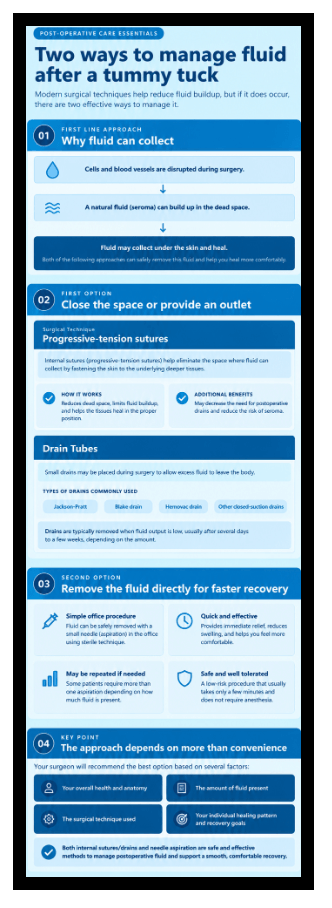
Figure #2: picture of Infogram regarding the two ways to manage fluid after a tummy tuck.
Who May Be Considered for No-Drain Abdominoplasty?
There isn’t a universal checklist for deciding who should have a no-drain tummy tuck. Candidacy is an individualized surgical decision based on your health, anatomy, goals, and the details of the planned procedure. Preferring to avoid drain care is a valid recovery concern, but it doesn’t by itself establish that a drain-free approach is safer or easier for you.
Consider the potential benefits of no-drain abdominoplasty alongside how the surgical plan will manage fluid and support healing. This puts convenience in context: the approach needs to fit the patient, not just the preference for fewer devices.
Factors that can shape the surgical plan
A surgeon may consider your overall health, medical history, medications, and factors that could influence healing. Share relevant information openly, including prescribed medicines and supplements. Don’t stop or change medication on your own; medication decisions belong in a conversation with your surgical team.
Anatomy and the extent of surgery also matter. The amount of tissue being removed, whether abdominal muscles will be repaired, and the overall complexity of the procedure can inform closure and fluid-management planning. These considerations don’t create automatic rules. They help the surgeon assess your situation and determine an appropriate plan.
Recovery support is another practical part of the conversation. Consider who can help you follow postoperative instructions and attend follow-up visits, and how you’ll manage the restrictions and care needs that apply to your surgery. Avoiding drains doesn’t remove the need for monitoring, reliable support, or attention to symptoms that need assessment.
Questions to clarify your priorities and expectations
Before discussing options, identify what concerns you most. Is it carrying or securing drains, emptying them, recording output, caring for insertion sites, or fitting those tasks into the help available at home? Naming the specific concern gives your surgeon a clearer picture of what matters in your recovery.
Use these questions to guide the discussion:
- How will fluid be managed with the proposed approach?
- What follow-up should I expect, and what will be monitored?
- Which symptoms or changes should prompt me to seek clinical guidance?
- How do my health, medications, anatomy, and planned procedure affect the options?
- What are the trade-offs of each approach for my circumstances?
Clear answers can help you weigh practical preferences against surgical judgment without assuming one method suits everyone. Dr. Katzen’s approach to tummy tuck planning is personalized to each patient’s goals and circumstances. Learn about tummy tuck care as you consider the questions you’d like to discuss.
Considering No-Drain Abdominoplasty? Plan Your Next Step with Dr. Katzen
Choosing between a tummy tuck with drains and a no-drain approach isn’t simply a choice between more or fewer recovery tasks. It means weighing your preferences against the surgical plan best suited to your health, anatomy, procedure, and healing needs. The potential benefits of no-drain abdominoplasty may matter to your recovery experience, but they don’t determine whether that approach is appropriate for you.
Dr. Katzen is a board-certified plastic surgeon with advanced body-contouring experience, including care for patients after significant weight loss. His tummy tuck planning is personalized to each patient’s goals and circumstances. A thoughtful discussion can help you understand the reasoning behind a proposed plan, rather than relying on the technique’s name alone.
What to expect from a personalized planning discussion
A planning conversation can begin with what you hope to change and what matters most in recovery. Your health history, medications, anatomy, and procedure priorities help shape the discussion. If you’ve experienced significant weight loss, for example, you may want to discuss concerns about excess abdominal skin and how your broader body-contouring goals inform surgical planning.
You can also discuss the benefits, limitations, and alternatives relevant to your circumstances. Ask how the plan addresses fluid management, what follow-up involves, and which recovery instructions will guide your care. Being clear about what you find difficult, such as carrying drain bulbs or recording output, helps make your preferences part of the conversation without treating them as the only deciding factor.
- Your goals: What changes are you hoping to achieve with tummy tuck surgery?
- Your health: What medical history or medication details should inform planning?
- Your recovery: What monitoring, support, and follow-up should you expect?
- Your priorities: Which practical aspects of recovery matter most to you?
Make an informed decision about your tummy tuck
Convenience deserves consideration, but so do safety, appropriate monitoring, and your personal recovery needs. A no-drain approach doesn’t automatically make surgery safer or easier, just as drains don’t guarantee that every fluid-related concern will be avoided. The most appropriate plan depends on individualized medical judgment and a clear understanding of your options.
Give yourself room to ask questions and consider the answers. You don’t need to decide based on a label or a single promised advantage. Focus instead on how the plan fits your circumstances and what to expect at each stage of care. That clarity can help you move forward with realistic expectations.
Explore personalized tummy tuck care with Dr. Katzen and take an informed next step toward discussing your goals and circumstances. Explore tummy tuck surgery with Dr. Katzen.
Take the Next Step with Confidence
As you consider tummy tuck surgery, focus on what a well-informed decision would look like for you. Write down the recovery tasks you’re most concerned about, the support you expect to have at home, and the questions you want answered before moving forward. These priorities can make a surgical discussion more personal and useful.
The benefits of no-drain abdominoplasty are best considered as part of a plan shaped around your goals and individual circumstances, not as a promise attached to one technique. You deserve to understand the reasoning behind your options and feel comfortable discussing what matters to you.
Explore tummy tuck surgery with Dr. Katzen and take a thoughtful next step toward a plan that reflects your needs. With clear information and personalized guidance, you can move forward with greater confidence.
Frequently Asked Questions
Can no-drain abdominoplasty include muscle repair?
Yes. A tummy tuck may include abdominal muscle repair whether or not routine drains are used. The drain decision concerns postoperative fluid management, while muscle repair addresses the abdominal wall when it’s part of the surgical plan. Whether repair is appropriate depends on your anatomy, examination, and goals. Ask what work is planned beneath the skin, since muscle repair can influence the procedure and recovery instructions independently of drain choice.
Does having no drains mean I can skip a compression garment?
No. The decision to use a compression garment is separate from whether surgical drains are placed. Your surgeon may recommend a garment as part of your postoperative plan, with guidance on when to wear it and how to care for the treated area. Don’t assume a drain-free approach changes those instructions. If a garment feels uncomfortable or difficult to manage, raise that concern with your surgical team rather than adjusting use on your own.
What happens if a seroma develops after no-drain abdominoplasty?
A suspected seroma should be assessed by your surgical team, since swelling or a fluid pocket can’t be reliably diagnosed from appearance alone. The clinician can evaluate the area and decide whether monitoring or treatment is appropriate; management depends on the findings and your symptoms. Follow your postoperative guidance about reporting changes, and seek medical advice if you notice new or increasing swelling, discomfort, or another concerning change.
How long does recovery take after a drainless tummy tuck?
There isn’t one recovery timeline that applies to everyone, and having no drains doesn’t guarantee a shorter recovery. Healing depends on the extent of surgery, your health, and how your body responds. Recovery also happens in stages: feeling ready for light daily routines doesn’t necessarily mean you’re cleared for strenuous activity. Ask your surgeon which milestones apply to your plan and get guidance before resuming exercise or lifting.
Can a surgeon use drains if they are considered appropriate?
Yes. A surgeon may choose to place drains if they’re considered appropriate for the individual operation. Planning can account for your anatomy, health, medications, and the procedure’s extent, so a preference for avoiding drains doesn’t have to dictate the final decision. If the plan changes during surgery or recovery needs call for a different approach, your care team can explain the reasoning and the instructions that apply.
Is no-drain abdominoplasty the same as a mini tummy tuck?
No. “No-drain” describes how postoperative fluid is managed, while “mini tummy tuck” refers to the scope of the abdominal procedure. These terms answer different questions, so one doesn’t automatically imply the other. The extent of surgery depends on your anatomy and goals. During planning, clarify what areas the proposed procedure addresses and how its scope relates to the recovery plan, including any approach to fluid management.
Will a no-drain tummy tuck leave a different scar?
Not necessarily. Drain use is a fluid-management choice, while the incision and resulting scar depend more on the operation’s scope, your anatomy, and individual healing. A no-drain approach doesn’t by itself promise a shorter or less visible scar. Ask where the incision is expected to be placed and what factors may affect its appearance over time. Your surgeon can discuss scar care as part of your recovery instructions.