Comfortable Clothes for Abdominoplasty Recovery: A Surgeon’s Guide (2026)
8/5/2026
Your wardrobe is much more than a collection of fabric following a tummy tuck; it's a vital clinical tool that supports your body as it heals into its new silhouette. You've likely spent months or even years preparing for this physical odyssey, yet the prospect of managing surgical drains or irritating a fresh incision line can feel daunting. It's common to feel a sense of anxiety about how "swelly belly" might impact your comfort or whether you can look presentable while wearing necessary medical-grade compression.
I believe that your recovery should be the final, celebratory step of your transformation rather than a struggle with logistics. In this guide, I'll show you how to select comfortable clothes for abdominoplasty recovery that protect your results while helping you feel like yourself again. We'll cover the essential shopping list of breathable, front-closure garments and professional tips for layering your attire with surgical binders. By the end of this article, you'll have the knowledge to move through your healing journey with grace, ensuring your clothing serves as a supportive partner in your transformative process.
Key Takeaways
- Prioritize front-opening or step-in garments in dark colors during the first 48 hours to ensure easy mobility and discreetly manage surgical drainage.
- Distinguish between medical-grade compression and commercial shapewear to properly support internal healing and minimize the risk of seromas.
- Select high-waisted, soft-elastic underwear and flowy maxi dresses as the foundation of comfortable clothes for abdominoplasty recovery during the initial two weeks.
- Navigate the evening "swelly belly" by transitioning into high-stretch fabrics like jeggings as you move into the third week of your healing journey.
- Protect your long-term results by incorporating UV-rated clothing to safeguard your incision line from hyperpigmentation during the first year.
Table of Contents
- The First 48 Hours: Dressing for Surgery Day and Immediate Comfort
- Decoding Post-Surgical Compression: Your Most Important Layer
- Essential Wardrobe Pieces for the First Two Weeks
- Transitioning to 'Normal' Clothes: Weeks 3 to 6
- Long-Term Care: Protecting Your Transformation
The First 48 Hours: Dressing for Surgery Day and Immediate Comfort
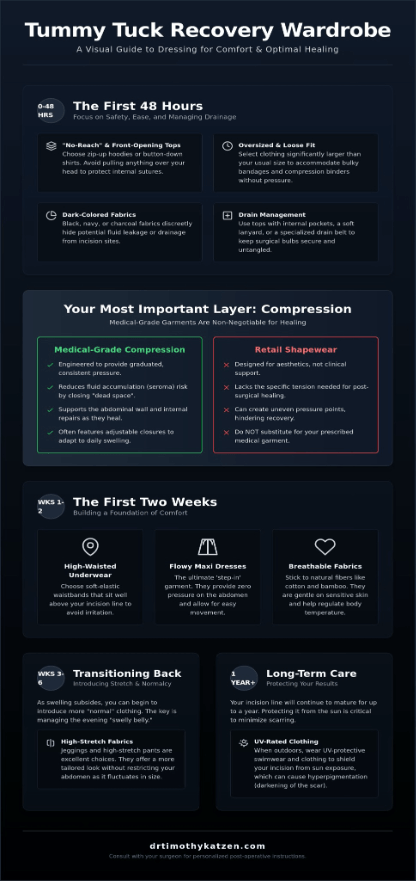
The moment you leave the surgical suite, your focus shifts from the anticipation of change to the reality of healing. Choosing an abdominoplasty is a significant step in your personal odyssey, and the first 48 hours require a wardrobe that prioritizes safety and ease of movement above all else. I always instruct my patients to select "step-in" or "front-opening" garments. These are mandatory. Your core mobility will be temporarily limited as your internal repairs begin to settle, and trying to maneuver your body into restrictive clothing is both painful and counterproductive to your results.
Dark colors like charcoal, navy, or black are your best allies during this immediate post-operative phase. It's common to experience minor fluid leakage or drainage near the incision sites. Darker fabrics hide these marks, reducing any unnecessary anxiety about your appearance as you rest. Additionally, ensure every piece is significantly oversized. You'll be wearing bulky bandages and a medical compression binder, so your usual size won't provide the necessary room for these essential protective layers. Think of your clothing as a soft, protective shell for the meticulous work performed during your surgery.
Don't overlook your feet. Stability is crucial when you're navigating those first few walks around the house to encourage circulation. Non-slip, easy-entry slippers are a post-op necessity. You won't have the flexibility to bend over to tie laces or pull on tight socks, so choose something you can slide into effortlessly while maintaining a firm grip on the floor. Safety in movement is the foundation of a successful recovery.
The 'No-Reach' Rule for Post-Op Tops
Protecting your abdominal muscle repair means following the "no-reach" rule. Lifting your arms above your head can inadvertently strain the delicate internal sutures. This is why zip-up hoodies and button-down pajamas are the gold standard for comfortable clothes for abdominoplasty recovery. Stick to soft, breathable natural fibers like cotton or bamboo. These materials are gentle on sensitized skin and help regulate your body temperature as your system processes the anesthesia. Avoid synthetic fabrics that might trap heat or cause itching near your bandages.
Managing Surgical Drains with Style
Managing surgical drains is often the most intimidating logistical challenge for my patients. I recommend looking for comfortable clothes for abdominoplasty recovery that feature internal pockets designed specifically to house surgical bulbs. If your preferred loungewear lacks these, a soft lanyard or a specialized drain belt worn under a loose robe can keep the bulbs secure and out of the way. High-waisted, loose-fitting lounge pants are far superior to traditional pajamas. The waistband sits safely above your incision line, preventing painful friction while providing a sense of security as you begin your journey toward renewal.
Decoding Post-Surgical Compression: Your Most Important Layer
While the outer layers of your wardrobe offer comfort and style, the most critical element of your recovery attire is the one closest to your skin. It's vital to distinguish between medical-grade compression and standard retail shapewear. Medical garments, such as clinical binders and fajas, are engineered to provide graduated pressure that facilitates lymphatic drainage and stabilizes the abdominal wall. Standard shapewear often lacks the specific tension needed to support the delicate internal repairs made during your transformation. This medical layer acts as a secondary support system, effectively closing the "dead space" between the skin and the underlying muscle to reduce the risk of seroma or fluid accumulation.
I always recommend a "two-garment" strategy for my patients. Since you'll be wearing these pieces nearly 24 hours a day, having a backup is essential for laundry days. This ensures your results are never left unsupported. During your consultation for a tummy tuck, we'll discuss the specific dimensions required to accommodate your new contours. Remember that your compression needs will fluctuate. You might notice your abdomen feels tighter in the evening, a phenomenon commonly known as "swelly belly." Choosing a garment with adjustable hook-and-eye closures allows you to modify the fit as your body's volume changes throughout the day.
When to Wear Your Compression Garment
Consistency is the primary driver of your final aesthetic result. The American Society of Plastic Surgeons emphasizes that compression minimizes swelling and supports the abdomen as it heals. Most patients follow a 23/7 rule, removing the garment only for bathing. You'll typically start with a Stage 1 binder, which is more rigid, before transitioning to a Stage 2 garment that offers more flexibility. If you notice numbness, significant skin discoloration, or sharp pain, the garment may be too tight. Listen to your body; it will tell you when the pressure exceeds therapeutic levels.
Layering for Comfort and Skin Protection
Finding comfortable clothes for abdominoplasty recovery often involves smart layering techniques. To prevent the edges of a medical binder from chafing your skin, wear a thin, seamless cotton camisole underneath it. This creates a soft barrier that absorbs moisture and prevents irritation. Moisture-wicking fabrics are particularly helpful here, as they keep the skin dry and reduce the risk of heat rash under heavy medical garments. When you're ready to venture out, you can hide the lines of your compression gear by opting for structured fabrics or patterned tunics. These choices allow you to maintain your privacy and confidence while your body continues its steady march toward renewal. Integrating these layers into your daily routine is a key part of selecting comfortable clothes for abdominoplasty recovery that work for your lifestyle.
Essential Wardrobe Pieces for the First Two Weeks
The first fourteen days after your tummy tuck represent a period of profound physical recalibration. As you move beyond the immediate post-operative haze, your wardrobe becomes your most intimate environment. Selecting comfortable clothes for abdominoplasty recovery during this window requires a strategic balance between soft protection and functional support. This is often affectionately called the "Granny Panty" phase. High-waisted, soft-elastic underwear is your best friend because the waistband sits far above your new incision line, preventing any mechanical irritation that could disrupt the geometric alignment of your new contour.
Understanding Tummy Tuck Recovery: What to Expect helps you appreciate why certain garments are non-negotiable. For example, maxi dresses and tunics are the gold standard for effortless, drain-friendly style. They provide a seamless drape that accommodates your medical binder while offering easy access to surgical bulbs without the need to disrobe entirely. I advise my patients to strictly avoid leggings with tight, narrow waistbands. These can act like a tourniquet against your healing tissues, potentially restricting lymphatic flow and increasing localized swelling. Instead, choose fabrics with significant "give," such as bamboo or high-quality modal, which offer a gentle hug without constriction.
The Versatility of the Recovery Robe
A lightweight knit robe is superior to heavy terry cloth, as it prevents overheating while your body manages the initial inflammatory response. Look for designs with deep internal pockets specifically for drain management. This allows you to move around your home with a sense of dignity and privacy. The robe acts as a "modesty shield" during those early, cautious walks, providing a layer of security over your compression garments as you begin to reclaim your mobility and celebrate the first steps of your transformation.
Bottoms That Won't Irritate the Incision
When you aren't in a dress, wide-leg lounge pants with soft, fold-over waistbands are ideal. Many of my patients find that maternity-style leggings are a brilliant hack during this stage, even for non-maternity patients. The high, stretchy panel provides a gentle layer of secondary support over your binder without the sharp pressure of a traditional elastic band. If you choose drawstring bottoms, ensure the ties are positioned well away from your incision site. A misplaced knot can create a focal pressure point that compromises blood flow to the skin flap, a risk we must meticulously avoid to ensure your optimal aesthetic outcome.
By curating these specific pieces, you ensure your comfortable clothes for abdominoplasty recovery do more than just cover your body. They facilitate a smoother transition through this critical phase of your personal odyssey, allowing you to focus entirely on your renewal.
Transitioning to 'Normal' Clothes: Weeks 3 to 6
As you enter the third week of your transformation, the focus shifts from sedentary healing to reclaiming your daily rhythm. This period is often characterized by a unique physiological phenomenon known as "swelly belly." While you may wake up feeling lean and contoured, your abdomen will likely expand by the evening as you become more active. This fluctuation is a natural part of the lymphatic system's response to your increased movement. Your selection of comfortable clothes for abdominoplasty recovery during this phase must prioritize flexibility to accommodate these volume changes.
Many patients feel a strong desire to return to denim, but traditional jeans with rigid waistbands and heavy hardware can still cause significant discomfort or even pressure-induced marks on your maturing incision. I suggest prioritizing high-stretch "jeggings" or denim-look leggings first. These provide the aesthetic of normal attire without the restrictive nature of a classic zip-fly. You can create a streamlined silhouette by layering long cardigans or structured blazers over your compression garment. These outer layers offer a sense of professional polish while discreetly masking the lines of your medical binder. Even as you reach the six-week mark, continue to avoid belts or hardware that might press directly into the surgical site.
Dressing for Work After Abdominoplasty
Returning to a professional environment requires a strategic wardrobe. Wrap dresses are an exceptional choice because they allow you to adjust the tension around your midsection as the day progresses and swelling fluctuates. Pleated trousers also offer a sophisticated look while providing necessary volume to mask any post-operative inflammation. During your follow-up appointments for a tummy tuck, we'll discuss exactly when your medical binder can be replaced by lighter, commercial shapewear. Until then, continue to prioritize supportive flats over heels to maintain a stable gait and reduce strain on your abdominal muscles.
The Psychology of Your New Wardrobe
This phase of your recovery is as much emotional as it is physical. You're beginning to embrace a profound shift from hiding your midsection behind oversized layers to highlighting your new, celebratory contour. However, I urge you to wait until at least the third month before committing to a full wardrobe overhaul or professional tailoring. Your body's final geometric proportions are still settling, and premature purchases may not fit correctly once the residual swelling fully dissipates. Fitting into clothes that were previously "off-limits" is a milestone in your personal odyssey, but patience ensures that your comfortable clothes for abdominoplasty recovery eventually reflect the meticulous results of your procedure.
Long-Term Care: Protecting Your Transformation
The journey beyond the six-week mark is where your results transition from a surgical outcome to a permanent lifestyle. While you've successfully navigated the initial phases of healing, the choices you make regarding your attire over the next year will determine how beautifully your incision matures. I often remind my patients that "comfortable" should not be synonymous with "unsupported." Even as you return to your favorite activities, your body continues to refine its internal architecture. Maintaining the integrity of your results requires a thoughtful approach to long-term comfortable clothes for abdominoplasty recovery, specifically focusing on protection and stability.
High-impact exercise is a celebratory milestone, but it introduces new stresses to your abdominal wall. During activities like running or intensive HIIT sessions, I recommend continuing with light compression gear. This isn't about restriction; it's about providing a secondary layer of support that minimizes tissue "bounce" and reduces the strain on your maturing scar. Selecting swimwear also requires a discerning eye. Look for pieces that offer both style and appropriate coverage. High-waisted bikinis or one-piece suits with strategic ruching can celebrate your new contour while keeping the incision line shielded from external irritants and environmental factors.
Sun Safety and Your Incision
Protecting your scar from ultraviolet rays is perhaps the most critical aspect of long-term care. Fresh surgical scars are highly susceptible to permanent hyperpigmentation if exposed to direct sunlight during the first twelve months of healing. This darkening occurs because the new skin lacks the mature melanocytes needed to process UV radiation correctly. When selecting comfortable clothes for abdominoplasty recovery for outdoor use, prioritize fabrics with a built-in Ultraviolet Protection Factor (UPF). If you're wearing tight-fitting athletic gear, I suggest applying silicone scar sheets underneath. These sheets provide a physical barrier against friction while maintaining the hydration levels necessary for a flat, faint scar line.
The Final Step of Your Journey
I view your recovery wardrobe as more than just clothing; it's a bridge to your new, confident self. Every garment you choose should honor the physical odyssey you've undertaken and the meticulous work performed during your procedure. While general guidelines are helpful, every body heals with its own unique rhythm and geometric requirements. A personalized consultation is the best way to plan your specific recovery needs and ensure your wardrobe supports your long-term aesthetic goals. If you're ready to take the next step, you can Schedule a consultation with Dr. Katzen to plan your transformation and begin the final, celebratory chapter of your personal renewal.
Step Into Your New Life With Confidence
Your recovery is the final, celebratory chapter of a long personal odyssey. By curating a wardrobe of comfortable clothes for abdominoplasty recovery, you do more than just manage physical discomfort; you actively protect the meticulous geometric changes achieved during your procedure. From the immediate necessity of front-opening tops to the long-term vigilance of UV-rated fabrics, every layer serves as a supportive partner in your healing. Remember that managing surgical drains and fluctuating swelling is temporary, but the results of your transformation are designed to last a lifetime.
I am dedicated to ensuring that every patient receives a level of care that matches the prestige of their results. My practice offers board-certified expertise in post-weight loss body contouring and a specialized focus on 360 lower body lifts. We provide personalized recovery protocols tailored to your unique anatomical needs, ensuring you feel safe and informed at every stage of your renewal. If you're ready to complete your journey toward a more confident self, I invite you to Begin your transformation journey with Dr. Katzen. Your new silhouette is a testament to your resilience, and I look forward to being your partner in this life-changing process.
Frequently Asked Questions
Can I wear jeans after a tummy tuck?
You should avoid traditional denim for at least six weeks following your procedure. The rigid waistbands and heavy hardware characteristic of classic jeans can press directly into your maturing incision, potentially causing pain or disrupting the delicate skin flap. Once you enter the third week, you may transition into high-stretch jeggings that provide a similar aesthetic without the restrictive pressure of a standard zip-fly.
How many compression garments do I need for recovery?
I recommend that every patient has at least two medical-grade compression garments. Since you'll be wearing these pieces nearly 24 hours a day to facilitate lymphatic drainage, having a backup is essential for laundry days. This "two-garment" strategy ensures that your new contours are never left unsupported, which is vital for minimizing the risk of fluid accumulation or seromas during your transformation.
Should I wear underwear under my post-op compression binder?
Yes, wearing soft, high-waisted cotton underwear beneath your binder is often much more comfortable. I suggest choosing "granny panty" styles where the waistband sits far above your incision line. This extra layer acts as a gentle barrier that prevents the medical garment from chafing your sensitized skin and helps manage moisture, making it a key component of comfortable clothes for abdominoplasty recovery.
What is the best fabric for post-abdominoplasty clothing?
Natural, breathable fibers like cotton, bamboo, and modal are the gold standard for comfortable clothes for abdominoplasty recovery. These materials are exceptionally gentle on the skin and help regulate your body temperature as your system processes the initial inflammatory response. Avoid synthetic fabrics that trap heat, as they can cause itching or heat rashes near your bandages and bandages.
How do I hide my surgical drains under my clothes?
Discreetly managing surgical drains is easiest with loose-fitting tunics, long cardigans, or robes that feature internal pockets. If your preferred loungewear doesn't have pockets, you can use a soft lanyard or a specialized drain belt worn under a flowy top. Darker colors and patterned fabrics also work well to mask the outlines of the surgical bulbs as you move through your home.
When can I start wearing my normal bra or underwire tops?
I advise my patients to wait at least six weeks before reintroducing underwire bras or restrictive tops into their wardrobe. The metal hardware can create localized pressure points that irritate the upper abdominal area and interfere with the natural settling of your tissues. Stick to soft, front-closure sports bras or seamless camisoles until your internal repairs are sufficiently stable to handle more structured garments.
Do I need to buy clothes in a larger size for recovery?
Yes, you should select recovery pieces that are one to two sizes larger than your current fit. This extra volume is necessary to accommodate post-operative swelling and the bulk of your medical compression binder. Choosing oversized garments ensures that you don't feel restricted or confined during the first few weeks when your "swelly belly" is most prominent and your mobility is still returning.
What should I wear to sleep during the first few weeks of recovery?
Soft, button-down pajamas or nightgowns are the best choices for sleeping after your surgery. These front-opening styles are essential because they follow the "no-reach" rule, preventing you from straining your abdominal muscle repair by lifting your arms over your head. Pair these with non-slip socks to ensure you have a stable grip on the floor during any late-night walks around your home.