Functional Benefits of Abdominoplasty: What Tummy Tuck Surgery May Improve
10/1/2026
Could a tummy tuck address more than the appearance of your abdomen? For some people, loose skin that rubs, traps moisture, or makes washing and drying uncomfortable is a daily concern. Abdominal muscle separation may also affect how supported the core feels. These possible functional benefits of abdominoplasty are worth discussing, but they aren’t guaranteed, and another person’s results can’t predict yours.
It’s understandable to want clear answers when online claims make surgery sound like a reliable fix for discomfort, back pain, or movement concerns. This article separates potential functional effects from aesthetic changes and explains why outcomes depend on your anatomy, symptoms, and surgical plan.
You’ll learn which concerns may be appropriate to raise during an individualized surgical evaluation, what remains uncertain, and what questions can help you decide whether to pursue a consultation. The goal is a grounded conversation about your priorities, without promises surgery can’t make.
Key Takeaways
- The functional benefits of abdominoplasty depend on the concern being addressed, your abdominal anatomy, and the surgical plan. Don’t assume a particular outcome.
- A surgeon can assess excess abdominal skin and separation of the rectus muscles, but surgery won’t address every abdominal symptom.
- Weigh possible comfort or support goals against the procedure’s limitations, risks, and uncertainty. Don’t expect a guaranteed cure for back pain or restored core function.
- Prepare for an individualized evaluation by noting your symptoms, triggers, duration, prior care, and effects on daily life.
- Use your consultation to discuss your goals, health history, abdominal anatomy, alternatives, and the risks relevant to your situation.
Table of Contents
- What Functional Benefits of Abdominoplasty May Matter Beyond Appearance?
- How Abdominoplasty Addresses Abdominal Skin and Muscle Concerns
- Do Functional Benefits of Abdominoplasty Outweigh Its Limits and Risks?
- How to Assess Whether Abdominoplasty Fits Your Functional Goals
- Discussing Abdominoplasty Benefits and Next Steps With Dr. Katzen
What Functional Benefits of Abdominoplasty May Matter Beyond Appearance?
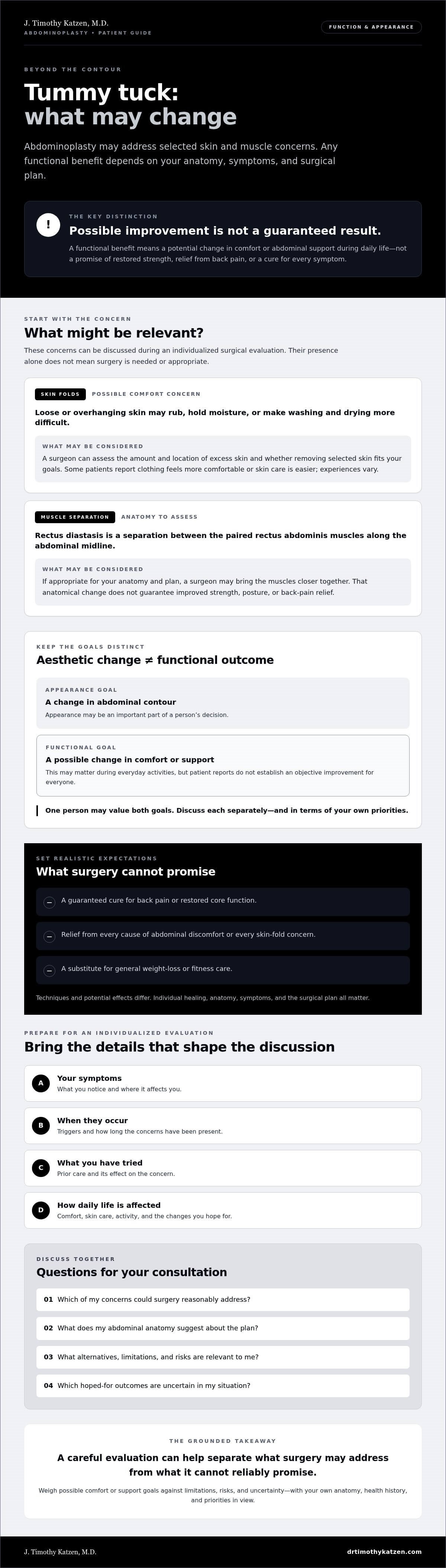
Abdominoplasty, commonly called a tummy tuck, is surgery that removes selected excess abdominal skin and may address separation of the rectus abdominis muscles, depending on a person’s anatomy and surgical plan. Its goals can be aesthetic, functional, or both. Appearance may be an important part of someone’s decision, while everyday discomfort or difficulty caring for a skin fold may matter just as much to someone else.
Abdominoplasty can involve d ifferent techniques, so the procedure and its potential effects aren’t the same for every patient. A surgeon’s evaluation can help clarify which concerns surgery may reasonably address and which may call for a different approach.
Which abdominal concerns can lead someone to explore surgery?
Loose or overhanging skin can form folds that rub against clothing or other skin, retain moisture, and make washing or drying the area more difficult. These experiences can be uncomfortable and frustrating, particularly when they persist despite routine skin care. A surgeon can assess the amount and location of excess skin and discuss whether removing selected skin may fit a person’s goals.
Abdominal muscle separation, also called rectus diastasis, may be another concern considered during an evaluation. Its presence alone doesn’t mean surgery is needed, and appearance by itself doesn’t determine medical need or candidacy. The relevance of any symptom depends on the individual’s anatomy, health, and priorities.
What does “functional benefit” mean after a tummy tuck?
In this context, function means a possible change in comfort or abdominal support during daily activities. It differs from a cosmetic change in contour, although one person may value both. A useful distinction is: “A functional benefit is a potential improvement in comfort or support during daily life, not a guaranteed result of surgery.”
Some benefits are described through patients’ reports of their own comfort or activity. Those reports don’t automatically establish an objective improvement in strength or physical function for everyone. Set expectations around your own concerns and discuss them with a surgeon, rather than relying on broad online promises. Surgery may address selected skin and muscle concerns, but it doesn’t treat every cause of abdominal discomfort or replace general weight-loss or fitness care.
The functional benefits of abdominoplasty depend on the concern being considered and the individualized plan. A careful discussion can help distinguish a hoped-for change from what surgery may realistically offer.
How Abdominoplasty Addresses Abdominal Skin and Muscle Concerns
A tummy tuck can address selected abdominal changes through different surgical steps, depending on a person’s anatomy and goals. Excess skin may be removed. If muscle separation is present, the surgeon may consider repairing the abdominal wall as part of the plan. Neither step treats every source of discomfort, and a possible functional effect should not be mistaken for a predictable result.
The American Society of Plastic Surgeons discusses potential medical benefits of a tummy tuck, but general information can’t determine what one person will experience. The anticipated benefit depends on the concern, the planned operation, and individual healing.
How muscle separation relates to abdominal support
Diastasis recti is a separation between the paired rectus abdominis muscles along the midline of the abdomen. A surgeon may assess their position and the condition of the abdominal wall during an evaluation. If repair is considered appropriate, the muscles may be brought closer together. That anatomical change doesn’t guarantee restored strength, improved posture, or relief from back pain. Discuss those goals in light of your own history and expectations.
How removing excess skin may affect comfort and skin care
A panniculus is an overhanging fold of abdominal skin and tissue. In some people, skin-to-skin contact and trapped moisture can contribute to irritation or make the area harder to keep clean and dry. “A persistent abdominal fold can create friction and hold moisture, which may contribute to skin discomfort for some people.” Intertrigo, an irritation that can develop in skin folds, is one possible concern, not a diagnosis or an automatic reason for surgery.
If excess skin is removed, some patients may report that clothing feels more comfortable or that washing and drying the area is easier. These are individual experiences, not guaranteed outcomes. Surgery also involves recovery and risks, which should be weighed against the changes you hope to see.
Surgical planning is specific to the person. The amount and location of loose skin, muscle separation, health history, and desired changes all inform the approach, and the extent of surgery can vary. An individualized evaluation can help clarify which concerns may be addressed and which may persist. If you’re considering a tummy tuck, you can learn more about tummy tuck surgery and prepare questions about your functional goals for a surgical discussion.
Do Functional Benefits of Abdominoplasty Outweigh Its Limits and Risks?
A tummy tuck isn’t a reliable cure for back pain, nor does it guarantee full core function. Some outcomes have been reported in research: a 2018 study in Plastic and Reconstructive Surgery found that among women with pre-existing back pain who had abdominoplasty with muscle repair, the proportion reporting moderate to severe back-pain disability fell from 51% before surgery to 9% six months afterward. That finding describes a particular group and follow-up period. It can’t predict what another person will experience.
Posture, back discomfort, exercise capacity, and perceived core strength can vary after surgery. Persistent pain or skin symptoms may have causes that an abdominal operation won’t address, so they merit appropriate assessment. A functional goal is a reason to discuss your concerns, not proof that surgery is medically necessary or the right treatment.
Which benefit claims need careful qualification?
Treat promised improvements in daily movement or comfort as possibilities to explore, not guaranteed outcomes. Individual reports can describe patient experience, but they don’t establish that everyone will have the same change. Ask what evidence applies to your specific concern and whether another source of symptoms should be assessed before considering surgery.
What should patients weigh against potential improvements?
Abdominoplasty is an operation that involves anesthesia, healing, scars, and the possibility of complications. The specific risks and recovery demands depend on the individual and planned procedure. A qualified surgeon can explain them in light of your health and anatomy. For some concerns, non-surgical care or evaluation by another healthcare professional may be more appropriate.
Weigh the functional benefits of abdominoplasty against the demands and trade-offs of surgery, rather than considering potential benefits alone. This comparison can help frame a consultation:
Possible Goal | Important Limit or Trade-Off
Less rubbing or difficulty caring for a skin fold
Skin removal may not resolve every skin or hygiene concern; healing and scarring are part of the decision.
More abdominal support after muscle repair
Repair doesn’t guarantee restored strength, better exercise capacity, or relief from pain.
Improved comfort during daily activities
Benefits vary, while anesthesia, recovery, and complication risks need individual discussion.
Before deciding, ask your surgeon which changes are realistic for your anatomy, what uncertainties remain, and what alternatives could address your symptoms. The useful question isn’t whether possible benefits outweigh risks in general, but whether the likely personal benefit justifies the recovery and trade-offs for you.
How to Assess Whether Abdominoplasty Fits Your Functional Goals
A useful consultation starts with your experience, not a checklist that predicts whether you’re a candidate. Clear examples can help a surgeon understand what you hope to change, assess your anatomy, and explain whether a tummy tuck may be relevant. Because the functional benefits of abdominoplasty are individual, focus on how your symptoms and priorities relate to a realistic plan.
What concerns and goals should you bring to an evaluation?
Before an appointment, write down what happens and how it affects your routine. Keep functional priorities separate from appearance-related goals, even if both matter to you. Include relevant health history and, where applicable, pregnancy or weight changes, so the surgeon has context for assessing your abdominal skin and muscles.
- Describe the concern: Note recurring irritation, rubbing, moisture, hygiene difficulties, discomfort, or movement concerns. Be specific about where and when they occur.
- Track the pattern: Record how long the concern has been present, possible triggers, how often it occurs, and any care you’ve already tried.
- Explain the daily impact: Consider whether it affects clothing choices, work tasks, exercise, or routine activities. Describe what you notice without assuming the cause.
- Clarify your priorities: Identify the functional changes you hope for, then list any separate aesthetic goals. This helps you and the surgeon discuss each expectation directly.
What questions help set realistic expectations?
Bring questions that invite a specific explanation, not a promise. Ask how the surgeon evaluates your abdominal muscles, skin, and overall suitability, and which parts of your concern a proposed procedure is intended to address. An individualized assessment should also consider whether symptoms might have another cause.
- Which of my concerns might this procedure address, and which may remain unchanged?
- What outcomes are realistic for my anatomy, and what uncertainties should I understand?
- What alternatives should I consider, including non-surgical care or further evaluation?
- What recovery demands, scars, and individualized risks should I weigh before deciding?
Take time to consider the answers. A thoughtful evaluation is a chance to understand your options, not a commitment to surgery. If you’d like to discuss your goals with Dr. Katzen, request an individualized tummy tuck evaluation.
Discussing Abdominoplasty Benefits and Next Steps With Dr. Katzen
The possible functional benefits of abdominoplasty depend on the concern you want addressed, your abdominal anatomy, and the plan developed for you. A tummy tuck may be worth discussing if excess skin or muscle separation relates to your goals, but a hoped-for change isn’t a promise of a particular result. An individualized evaluation can help explore what surgery may and may not address in your circumstances.
What to expect from an individualized surgical discussion
A thoughtful evaluation considers your priorities alongside your health history and abdominal anatomy. Be ready to describe the specific functional concern you hope to improve and how it affects your daily life. Ask how the proposed operation relates to that concern, what other factors could contribute to it, and which symptoms may remain unchanged. The discussion should also cover alternatives and the risks relevant to your situation.
An evaluation can help clarify whether a tummy tuck may be appropriate, but it doesn’t guarantee candidacy or a particular outcome. Any recommendation should reflect your circumstances, not a general claim about what surgery can do.
How to take a considered next step
Before contacting a practice, review reliable information about the procedure and bring notes about your symptoms, priorities, and questions. Consider functional goals separately from aesthetic preferences, while recognizing that both may matter to you. Give yourself time to compare potential benefits with recovery demands, scars, and risks before making a decision.
J. Timothy Katzen, M.D., offers tummy tuck surgery and personalized care for patients with varied goals. In a discussion with Dr. Katzen, you can ask how your concerns, anatomy, and health history may inform an individualized plan. You don’t need to arrive with certainty. Start by seeking clear answers about what may be realistic for you.
Learn about tummy tuck surgery with Dr. Katzen and consider whether an individualized evalua tion could help you explore your goals.
Make Your Next Step an Informed One
The functional benefits of abdominoplasty depend on the concern being addressed, your abdominal anatomy, and the plan developed for you. Removing selected excess skin or addressing muscle separation may align with certain comfort or support goals, but results aren’t guaranteed, and surgery won’t resolve every symptom. Weigh possible benefits alongside recovery, scars, and individual risks.
A thoughtful evaluation can help you discuss your priorities, health history, anatomy, alternatives, and realistic expectations. Bring specific examples of how your concerns affect daily life, and ask which changes surgery may or may not achieve. You deserve clear answers before making a decision.
Dr. Katzen is a board-certified plastic surgeon, and his practice specializes in advanced body contouring. If you’re ready to explore whether a tummy tuck may fit your goals, learn about tummy tuck surgery and discuss your goals with Dr. Katzen. An informed conversation can be a meaningful first step toward deciding what feels right for you.
Frequently Asked Questions
Can abdominoplasty improve core strength?
Abdominoplasty may address separated abdominal muscles as part of surgery, but it doesn’t guarantee increased core strength. Bringing separated muscles closer together may change abdominal-wall support, yet strength depends on more than the surgical repair and varies by person. A surgeon can assess your abdominal anatomy and discuss what the proposed procedure may reasonably change. Ask how any expected support relates to your specific activities and what outcomes remain uncertain.
Can a tummy tuck relieve back pain or improve posture?
A tummy tuck may be associated with changes in back discomfort or posture for some patients, but it’s not a reliable treatment for either concern. Back pain and posture can have many causes, so surgery may not address the source of your symptoms. Share your history and goals with a qualified surgeon, and ask whether other evaluation or care may be appropriate before considering surgery for these reasons.
Can abdominoplasty reduce rashes or irritation beneath excess abdominal skin?
Removing selected excess skin may reduce skin-to-skin contact in the treated area, which could help with rubbing or moisture-related discomfort for some people. It can’t guarantee that rashes or irritation will resolve, since symptoms may have other causes and outcomes vary. If you have a persistent rash, infection, or sore, seek medical assessment rather than assuming surgery is the right treatment. Discuss the skin concern and any care you’ve tried with your clinician.
Is abdominoplasty a weight-loss procedure?
No. Abdominoplasty is not a substitute for weight-loss care or a way to treat general weight gain. The operation may remove selected excess abdominal skin and, when appropriate, address muscle separation. If your primary goal is weight loss, discuss suitable options with a healthcare professional. If you’re considering surgery after weight changes, explain your history and priorities during an individualized surgical evaluation so the surgeon can assess your anatomy and discuss realistic goals.
What happens if I have muscle separation but little excess skin?
Having muscle separation with little excess skin calls for an individualized assessment, not an automatic recommendation for surgery. A surgeon can evaluate the abdominal muscles, abdominal wall, skin, health history, and goals, then explain whether a tummy tuck is appropriate and what it would involve. Ask what concerns the proposed plan may address, what it may not change, and whether alternatives should be considered. Only an evaluation can clarify options for your circumstances.
How do I know whether functional benefits are realistic for me?
The functional benefits of abdominoplasty are most realistic to discuss in relation to a specific concern, your anatomy, and a tailored surgical plan. Write down your symptoms, when they occur, what affects them, and how they influence daily activities. Then ask the surgeon which changes are plausible, what uncertainties remain, and what recovery and risks to expect. A consultation can inform your decision, but it can’t guarantee candidacy or a particular result.
Does abdominoplasty remove all abdominal discomfort or excess skin?
No. Abdominoplasty removes selected excess abdominal skin, but it may not remove every area of loose skin or resolve discomfort from other causes. The extent of surgery depends on your anatomy and the plan developed with your surgeon. Be specific about where discomfort occurs and what you hope to improve. Ask which areas may be treated, what symptoms could persist, and whether another evaluation or approach may better address your concern.