Muscle Repair and Skin Removal: Restoring Your Core Foundation in 2026
8/4/2026
What if the final step of your transformation isn't just about removing what's on the outside, but repairing what's been compromised on the inside? You've done the hard work of weight loss, yet you might still struggle with persistent back pain, an unstable core, or the daily irritation of excess tissue. It's common to feel "unfinished" when your body doesn't feel as strong as it looks. I've seen many patients reach their goal weight only to realize their physical foundation remains fractured.
I believe a true restoration requires more than a surface-level correction. By combining muscle repair with skin removal, we address the underlying structural damage of the abdominal wall while simultaneously refining your silhouette. This integrated approach, known as abdominal muscle plication paired with skin excision, creates a functional, high-definition result that skin removal alone cannot achieve. In 2026, as surgical care shifts toward more efficient outpatient settings and advanced recovery protocols, we can now rebuild your core with unprecedented precision. This article explores how this dual-action procedure eliminates hanging skin and restores your posture, finally providing the sense of physical wholeness you deserve.
Key Takeaways
- Understand why skin excision alone often fails to address a protruding midsection without repairing the underlying abdominal muscle wall.
- Learn the clinical benefits of combining muscle repair with skin removal, including a streamlined recovery and the restoration of your core's structural integrity.
- Discover the science of how significant weight fluctuations permanently damage internal fascia and why surgical plication is necessary for a flat, stable profile.
- Gain clarity on the functional gains of a repaired core, from improved posture to the elimination of chronic back pain caused by muscle separation.
- Explore the 360 Lower Body Lift as a comprehensive methodology for patients who require a full circumferential restoration rather than a standard tummy tuck.
Table of Contents
- What Does Combining Muscle Repair with Skin Removal Actually Mean?
- The Science of Diastasis Recti and Skin Laxity
- Combined vs. Staged Procedures: Evaluating Your Path
- Recovery and Functional Gains: What to Expect
- The Katzen Methodology: 360-Degree Body Restoration
What Does Combining Muscle Repair with Skin Removal Actually Mean?
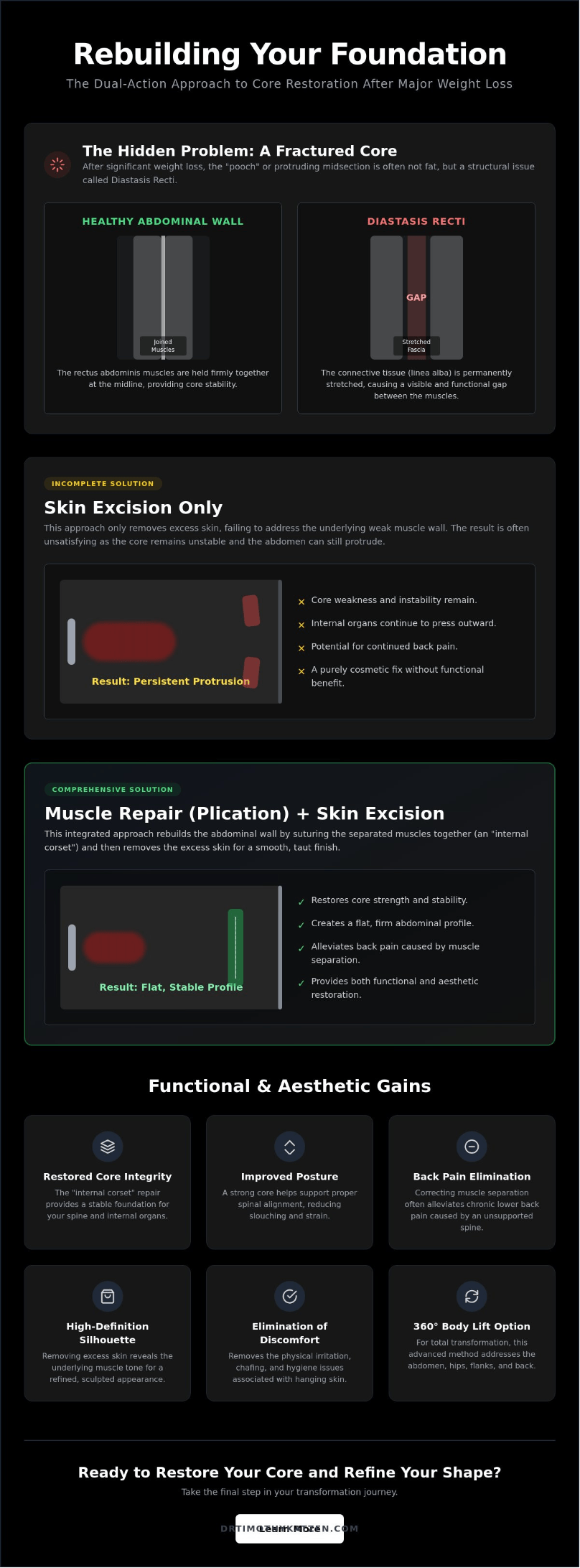
In my practice, I often meet individuals who have achieved incredible weight loss milestones but feel their bodies haven't quite caught up to their hard work. They see the excess tissue, but they also feel a persistent lack of stability in their midsection. When we talk about combining muscle repair with skin removal, we're describing a comprehensive structural overhaul. This process isn't just a cosmetic trim; it's a careful recalibration of your core foundation. It involves the simultaneous excision of redundant tissue and the surgical tightening of the rectus abdominis muscles, which are often stretched or separated after significant physical changes.
The clinical term for this dual approach is Abdominoplasty with muscle plication. While many people simply refer to it as a Tummy Tuck, the distinction lies in the depth of the intervention. We aren't just addressing the skin "envelope." We're also addressing the "contents" by reinforcing the abdominal wall that holds everything in place. I've found that skin removal alone often leaves patients frustrated. If a surgeon only removes the redundant skin without addressing the underlying muscle separation, the stomach may still appear to protrude. This happens because the internal organs push against a weakened, stretched muscle layer. By combining muscle repair with skin removal, we ensure that the surface is flat because the foundation beneath it is firm and secure.
Understanding Muscle Plication
Muscle plication is the process of using permanent sutures to draw the separated rectus abdominis muscles back to the midline. Think of it as creating an internal corset that holds your core together. This doesn't just flatten the stomach; it provides a stable support system for your internal organs and spine. It's the difference between a superficial fix and a true structural reconstruction. This internal reinforcement helps restore the physical strength you need for daily mobility and long term health.
The Role of Skin Removal (Excision)
The second part of this synergy is the excision, or removal, of the "apron" of skin that typically remains after massive weight loss. Once skin has lost its elasticity due to extreme stretching, no amount of exercise or topical treatment can make it retract. We surgically remove this redundant tissue to create a smooth, taut surface. The aesthetic goal is a silhouette that finally reflects the hard work you've put into your transformation, allowing the underlying muscle work to be visible and celebrated. This step eliminates the physical discomfort of hanging skin while providing the high definition finish that patients desire.
The Science of Diastasis Recti and Skin Laxity
I often speak with patients who have lost 50, 100, or even 200 pounds, yet they still see a "pooch" in the mirror. It's a source of immense frustration. You've done everything right, but the stomach remains rounded. This isn't a failure of willpower or exercise; it's a matter of biological physics. When the body undergoes significant weight fluctuations, the abdominal wall is under extreme pressure. This pressure stretches the fascia, the connective tissue that holds your muscles in place, often beyond its breaking point. Think of your rectus abdominis muscles as the vertical pillars of your core, held together by a thin band of tissue called the linea alba. Diastasis recti is the physical separation of the rectus abdominis muscles.
When this separation occurs, your internal organs are no longer supported by a firm muscular wall. Instead, they press against the weakened fascia and skin. This is why combining muscle repair with skin removal is so critical. Without fixing that internal gap, removing skin is like putting a new coat of paint on a crumbling wall. According to this Abdominoplasty Overview, the procedure is specifically designed to correct this rectus diastasis alongside redundant skin. I've observed that many of my patients are surprised to learn that their "pooch" is actually a functional deficit rather than a fat deposit. By combining muscle repair with skin removal, we aren't just sculpting a profile; we are restoring the mechanical integrity of your entire midsection.
Why Fascia Doesn't Snap Back
Skin and fascia have a "memory," but it's limited by the health of your collagen and elastin fibers. Once these fibers are stretched past their elastic limit, they become like a rubber band that has been pulled too far for too long. They lose their ability to recoil. This results in "crepey" skin texture and a soft, yielding abdominal wall. If you feel that your core is "hollow" or lacks tension even when you're flexing, it's likely that the connective tissue has suffered permanent damage. If you're ready to see if your core can be restored, you can explore our specialized approach to post-transformative care.
The Functional Impact of a Broken Core
A broken core affects more than just your appearance. When the rectus muscles are separated, the burden of supporting your torso shifts. Your lumbar spine begins to take the weight that your core should be carrying. This often leads to chronic lower back pain and a persistent "slumping" posture that no amount of conscious effort can fully correct. Additionally, your respiratory efficiency can decrease because the diaphragm lacks a stable base to work against. Restoring this foundation through surgery allows for better core stability and improved posture. Patients frequently tell me they feel they can finally stand tall for the first time in years.
Combined vs. Staged Procedures: Evaluating Your Path
Choosing how to proceed with your restoration is a pivotal decision. For many, the goal is to reach the finish line as efficiently as possible. Combining muscle repair with skin removal offers a streamlined path that addresses the internal and external damage in a single session. This approach isn't just about convenience; it's about the synergy of healing. When we repair the core and excise the skin simultaneously, the body adapts to its new geometry all at once, rather than in fragments. It's a powerful way to reclaim your physical self without prolonged interruptions to your life.
From a practical standpoint, a combined procedure is often more cost-efficient over the long term. You'll face one round of facility fees, one anesthesia bill, and one primary recovery window. Beyond the finances, there's a profound psychological weight to the "one-and-done" model. Combining muscle repair with skin removal allows you to close the chapter on your physical transformation and begin your new life without the looming shadow of a second surgery. It provides a definitive end to a long personal odyssey, marking a celebratory transition into your final result.
Factors for Combining Procedures
I carefully evaluate your overall health and cardiovascular fitness before recommending a combined approach. Longer surgical times require a resilient system that can handle the metabolic demands of healing. We also look at the total surface area of tissue. If we're performing a 360-degree restoration that encompasses the front, sides, and back, we must ensure your circulation and skin tension allow for a safe, high-definition outcome. Your safety is always the primary metric in this decision.
The Staging Framework
There are times when staging is the more compassionate and clinical choice. For patients with complex medical histories or those at the beginning of their surgical journey with a higher BMI, breaking the process into steps is a safety priority. We might prioritize the abdomen first, as it often provides the most significant functional relief. This allows your tissues to heal and settle before we move on to refining other contours. This methodical pace helps prevent surgical burnout and ensures you don't feel overwhelmed by the recovery process.
Recovery and Functional Gains: What to Expect
Recovery is a profound transition from physical vulnerability to reclaimed strength. In the initial days following your procedure, you'll likely experience a distinct sensation of "tightness" throughout your midsection. This isn't merely the result of the skin being pulled taut; it's the feeling of your newly reinforced internal corset holding your core in its proper alignment. Many patients are surprised to find that they feel they are "standing taller" almost immediately. This shift occurs because the surgical repair has finally relieved your lumbar spine of the burden it was carrying in the absence of a stable abdominal wall. By combining muscle repair with skin removal, we've replaced a fractured foundation with one that is structurally sound and supportive.
Patience is essential during this restorative phase. While I encourage light walking within the first few days to stimulate circulation, your body requires time to integrate the internal changes. I typically advise waiting six to eight weeks before returning to heavy lifting or strenuous core exercises. This window ensures the plication sutures are fully secure before they're subjected to intense physical stress. We must also discuss the reality of scarring. While I utilize meticulous techniques to place incisions where they can be discreetly hidden by swimwear or undergarments, these lines are a permanent trade-off. Most patients find this a small price to pay for a life-changing structural restoration that grants them the freedom to move without pain or self-consciousness.
The Sensation of a Restored Core
As you heal, you'll begin to redefine your relationship with your abdominal muscles. You might notice that your balance feels more centered during daily activities or that your movements feel more "connected" and powerful. Muscle repair provides the internal tension required for a truly flat aesthetic. This internal tension is what creates the high-definition profile that exercise alone often fails to produce in the presence of diastasis recti. If you're ready to experience this level of physical renewal, you can schedule a consultation to discuss your specific restoration goals.
Long-term Maintenance
The plication sutures used in your repair are designed to be permanent, yet the longevity of your result is a partnership between surgery and lifestyle. While the internal reinforcement is robust, significant future weight fluctuations can still stretch the surrounding tissue and fascia. Protecting your surgical investment requires a commitment to stable health and consistent nutrition. Beyond the physical maintenance, there's a powerful psychological shift that occurs as you move from "hiding" your midsection to "showcasing" your new silhouette. It's the final, celebratory step of your personal odyssey, where your physical form finally aligns with your internal sense of self.
The Katzen Methodology: 360-Degree Body Restoration
While a standard Tummy Tuck addresses the anterior abdomen, it's often insufficient for someone who has completed a massive weight loss journey. I've found that these patients require a more global perspective. Your skin laxity isn't limited to a single plane; it encircles the entire torso. My methodology focuses on combining muscle repair with skin removal within a 360-degree framework. We don't just fix the front. We address the geometric reality of your new body, ensuring that the tension and contour are balanced from every angle. This comprehensive approach is essential for restoring the core foundation in a way that feels natural and permanent.
This level of precision allows for high-definition sculpting. We aren't merely removing tissue; we're revealing the athletic contours that have been hidden for years. By reinforcing the core and removing the entire circumference of redundant skin, I can create a stable silhouette that moves with you. I prioritize an aesthetic that looks fit and functional rather than "operated on." This specialized focus on combining muscle repair with skin removal ensures that your physical form finally reflects the strength you've developed during your health journey.
Beyond the Abdomen
For many of my patients, the odyssey doesn't stop at the waistline. I often integrate thigh and buttock lifts into the restorative process to ensure a cohesive, balanced result across the lower body. I've spent years refining the placement of incisions, ensuring they sit discreetly within the lines of your favorite clothing or swimwear. It's vital to choose a specialist who understands the complex geometry of post-weight loss anatomy. Every curve and angle must be considered to achieve a result that feels authentically yours.
The Final Step of Your Odyssey
I view this surgery as the celebratory conclusion to your health journey. You've done the hardest part by losing the weight; now, it's time to claim the reward. My goal is to be your partner in this final transition, prioritizing your long-term well-being and physical confidence above all else. This isn't just about a procedure. It's about the profound sense of hope and renewal that comes when your body finally matches your spirit. Begin your transformation with a personalized consultation with Dr. Katzen.
Your New Foundation Awaits
Your journey toward a healthier self has been a long personal odyssey, and you deserve a result that reflects your dedication. We've explored how a truly flat and functional midsection requires more than just a surface-level trim. By combining muscle repair with skin removal, we address the structural damage of the past while carving out a high-definition future. Whether you need a focused abdominal restoration or a comprehensive 360-degree lower body lift, the goal remains the same: a firm core, improved posture, and the physical confidence to move freely again.
As a board-certified specialist with practices in Beverly Hills and Las Vegas, I take a meticulous, person-centric approach to every transformation. I don't just see a patient; I see a partner in a life-changing process. You've done the hard work of weight loss, and it's time to finalize your results with a world-renowned specialist who understands the unique geometry of your body. Schedule your virtual or in-person consultation with Dr. Katzen today to discuss how we can rebuild your core foundation together. You've earned this final, celebratory step, and I'm here to ensure you stand tall in your new silhouette.
Frequently Asked Questions
Is muscle repair included in a standard tummy tuck?
Yes, muscle plication is typically a standard component of a Tummy Tuck. However, some surgeons perform "skin-only" procedures for patients who don't have muscle separation. I always emphasize that for individuals who have experienced significant weight loss, the internal repair is often the most vital step. We must ensure the foundation is secure before we can expect the skin to look its best.
Can I get pregnant after having muscle plication and skin removal?
You can technically have a safe pregnancy after this procedure, but it isn't ideal for your surgical results. A subsequent pregnancy will likely stretch the repaired muscles and the skin envelope again, which can undo the high-definition contours we've achieved. I strongly recommend that my patients wait until they've finished growing their families before committing to this final step of their transformation.
How long does the muscle repair part of the surgery last?
The repair is designed to be permanent. I use high-strength, non-absorbable sutures to draw the muscles together, and over time, your body creates its own internal scar tissue to reinforce the area. As long as you maintain a stable weight and avoid extreme strain on the abdominal wall, your restored core foundation should last a lifetime. It's a long-term investment in your physical health.
Will insurance cover combining muscle repair with skin removal?
Most insurance providers consider combining muscle repair with skin removal to be a cosmetic restoration rather than a medical necessity. While they may cover a panniculectomy if the hanging skin causes documented health issues, they rarely pay for the muscle tightening or aesthetic refinements of a Tummy Tuck. It's always best to verify your specific 2026 coverage with your insurance coordinator during your consultation process.
What is the difference between a panniculectomy and a tummy tuck with muscle repair?
A panniculectomy is a functional procedure that only removes the overhanging "apron" of skin to alleviate hygiene issues or irritation. It doesn't address the muscles or the skin above the belly button. In contrast, a Tummy Tuck with muscle repair is a comprehensive body-sculpting procedure. It tightens the separated abdominal wall and removes excess skin across the entire midsection to create a firm, athletic profile.
How painful is the muscle repair compared to just skin removal?
Muscle repair does add a specific type of discomfort to the recovery process. Patients often describe it as an intense, deep soreness similar to the feeling after an aggressive core workout. I use advanced pain management protocols, including long-acting local anesthetics, to keep you comfortable. While the initial "tight" sensation is noticeable, most patients find the functional strength they gain far outweighs the temporary discomfort.
Can exercise fix diastasis recti without surgery?
While targeted physical therapy can improve core stability, it cannot surgically reconnect fascia that has been permanently stretched or torn. Exercise can strengthen the muscles themselves, but it won't close the physical gap or fix the "pooch" caused by a broken foundation. For many of my patients, combining muscle repair with skin removal is the only way to achieve the flat, stable midsection they desire.
How do I know if I need muscle repair or just liposuction?
If your stomach protrudes even when you are at your goal weight, or if you feel a "gap" when you flex your abs, you likely need muscle repair. Liposuction only removes fat; it doesn't address loose skin or a weakened abdominal wall. During your examination, I'll assess your muscle integrity and skin elasticity to determine which approach will provide the most cohesive and lasting result for your body.