Recovery After Diastasis Recti Surgery: A Comprehensive Guide to Healing & Core
9/14/2026
Approximately 60% of women experience the functional and aesthetic challenges of abdominal separation after pregnancy. While the surgical repair is a transformative milestone, the true journey often begins the moment you leave the operating room. It's common to feel a mix of exhilaration and intense caution, perhaps even fearing that a simple movement could compromise the meticulous internal architecture we have restored. Managing the recovery after diastasis recti surgery requires more than just rest; it demands a partnership based on clear, clinical guidance and personal empowerment.
I recognize the frustration that comes with initial physical limitations and the uncertainty surrounding compression protocols or pain management. You deserve to feel secure in your healing, knowing that each day brings you closer to a functional, flat abdomen and a return to high-intensity exercise. This comprehensive guide serves as your professional roadmap, offering a week-by-week breakdown of what to expect during your restoration. We will detail the essential milestones of your healing odyssey, from managing early discomfort to safely reclaiming your core strength and lasting confidence.
Key Takeaways
- Discover why recovery is a proactive biological process of tissue restoration rather than passive downtime.
- Navigate a professional week-by-week roadmap to master your recovery after diastasis recti surgery, from the critical first 72 hours to full activity.
- Learn the science behind medical-grade compression and how to manage the unique sensation of your newly restored "internal girdle."
- Identify the specific nutrients, such as protein and Zinc, that accelerate tissue repair and support long-term core integrity.
- Understand why a 360-degree perspective is essential for achieving a truly functional, sculpted abdomen following significant physical transformations.
Table of Contents
- Understanding the Recovery Journey After Diastasis Recti Repair
- The Clinical Recovery Timeline: What to Expect Week-by-Week
- Managing Post-Operative Discomfort and the "Internal Girdle"
- Lifestyle Integration: Activity, Nutrition, and Results
- The Katzen Approach: 360-Degree Core Integrity
Understanding the Recovery Journey After Diastasis Recti Repair
I often tell my patients that surgery is only the first half of their transformation. The true work of restoration happens during the weeks that follow. Recovery is not a passive state of waiting for time to pass; it is a proactive biological process where your body meticulously knits together the new internal architecture we have created. When you approach your recovery after diastasis recti surgery as a deliberate phase of healing rather than a period of downtime, you empower yourself to achieve the most resilient results possible.
It's vital to distinguish this procedure from a standard Tummy Tuck. While both address the aesthetic contours of the midsection, a diastasis repair is a structural intervention. We are not just removing redundant skin; we are reinforcing the very foundation of your core. This makes the recovery more intensive because we have altered the tension of your abdominal wall. For many, Diastasis Recti represents a loss of functional integrity that impacts posture and back health. Correcting it requires a period of adaptation as your body learns to move within its newly tightened parameters.
The Biological Reality of Muscle Repair
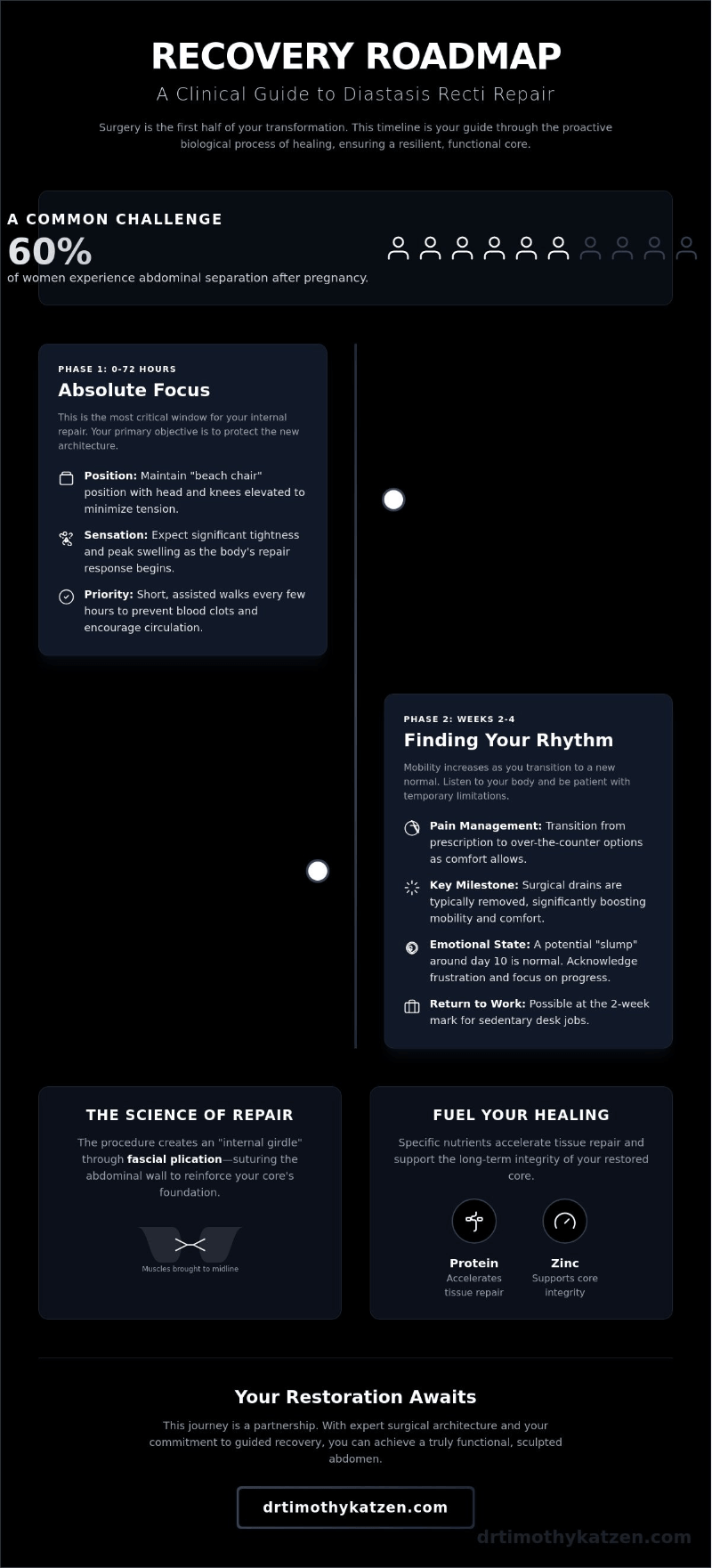
During the procedure, I perform what is known as fascial plication to bring the separated muscles back to the midline. Fascial plication is the surgical creation of an internal girdle through the meticulous suturing of the abdominal wall. In the first 72 hours, your body initiates a significant inflammatory response. This isn't a sign of something going wrong; it's the biological signal for repair cells to flood the area. As the fascia heals around the sutures, it creates a bond that is ultimately stronger than the original tissue, but this "knitting" process takes weeks of protected movement to finalize.
Why This Recovery is a "Partnership"
I provide the surgical architecture, but you provide the environment in which that architecture thrives. This partnership is built on trust and a commitment to my post-operative protocols. Every time you wear your binder or resist the urge to lift a heavy object, you are protecting the integrity of the plication. Following these rules ensures that the tension remains exactly where I placed it, preventing the repair from stretching or "undoing" during the vulnerable early stages. Think of me as your guide through this odyssey; we are working together to ensure your core remains stable and secure.
You will likely experience an emotional arc during this time. The first few days are often defined by fatigue and the strange sensation of a "tight" abdomen. This eventually gives way to a stage of renewal. As the swelling subsides and your strength returns, you'll discover a "new normal" where your core feels functional and flat for the first time in years. This sense of physical wholeness is the ultimate reward for your patience and dedication to the healing process.
The Clinical Recovery Timeline: What to Expect Week-by-Week
While the surgical intervention is precise, the chronology of your healing is where the real transformation takes root. I provide a structured timeline to help you anticipate the physical and emotional shifts that occur during your recovery after diastasis recti surgery. This roadmap ensures you feel supported at every milestone, moving from initial vulnerability to restored strength and core stability.
The First 48 Hours: Absolute Focus
The first 72 hours represent the most critical window for your internal repair. During this time, your main objective is to maintain a "beach chair" position. By keeping your head and knees slightly elevated, you minimize tension on the abdominal plication and your primary incision. While rest is paramount, I also require short, assisted walks around your room every few hours. These brief movements are essential to prevent blood clots and encourage circulation. You'll likely feel a significant sense of "tightness" as the body reacts to the new internal girdle, and swelling will be at its peak during this phase.
Weeks Two to Four: Finding Your Rhythm
By the second week, most patients find they can transition from prescription pain management to over-the-counter options. This is often the time when surgical drains are removed, providing a welcome boost in mobility and comfort. However, be prepared for a potential psychological "slump" around day 10. It's normal to feel frustrated by your temporary limitations, but remember that this is a brief chapter in a much larger odyssey. If you work a sedentary desk job, you may feel ready to return at the two-week mark, provided you don't have to lift anything heavier than a laptop. For those considering a Tummy Tuck to address these concerns, understanding this rhythm is key to a stress-free experience.
Between weeks three and four, your energy levels will begin to stabilize. You'll notice the "internal girdle" feeling becomes less restrictive and more like a supportive foundation. We continue to monitor your progress closely to ensure your activity level matches your body's biological readiness. The 14-day mark typically marks the end of the most restrictive phase of your journey.
The Three-Month Milestone
The 42-day mark is typically when I clear patients for a gradual return to high-impact exercise, but the three-month milestone is where the finality of the procedure truly shines. At this point, residual swelling has largely dissipated, and the internal sutures have matured into strong, stable scar tissue. You can finally evaluate the full aesthetic and functional results of your journey. Your abdomen should feel flat, functional, and capable of supporting your lifestyle without the previous pain or separation. While a full recovery can take up to six months, this milestone is a celebratory moment of physical renewal.
Managing Post-Operative Discomfort and the "Internal Girdle"
One of the most striking sensations you'll encounter during your recovery after diastasis recti surgery is what I call the "internal girdle." Because I have surgically tightened the fascia to restore your core's geometric integrity, you'll feel a constant, firm engagement in your abdominal wall. This isn't just a side effect; it's the physical manifestation of your new structural foundation. While it may feel restrictive at first, this tension is the very thing that will eventually allow you to stand taller and move with more power. Understanding this sensation helps transform a moment of discomfort into a sign of successful restoration.
It's essential to differentiate between "healing pain" and "warning pain." Healing pain is typically a dull, manageable ache or a sensation of extreme tightness that responds well to rest and prescribed protocols. Warning pain, however, is sharp, localized, or accompanied by sudden swelling. I want you to listen to your body's signals with a discerning ear. Managing your surgical drains with confidence is also part of this process. These small tubes are temporary but vital, as they prevent fluid buildup. Keeping the exit sites clean and recording the output is a simple, rhythmic task that ensures your internal environment remains optimal for tissue fusion.
The Science of Compression Garments
In my practice, I emphasize that your compression binder is your most reliable partner. The science of compression is twofold: it eliminates "dead space" between the skin and the repaired muscle to reduce the risk of seroma (fluid collection), and it acts as an external splint. This support is crucial during involuntary movements like coughing or sneezing, which can otherwise put undue stress on your sutures. To maximize comfort, I recommend wearing a thin, seamless camisole under the binder. This small adjustment prevents skin irritation and makes the constant pressure much easier to tolerate during the first few weeks of your odyssey.
Pain Management Beyond Medication
While medication plays a role, your "recovery nest" and daily habits are equally important. Hydration is a clinical necessity; it assists in flushing out cellular debris and reduces the inflammatory pressure that causes discomfort. When setting up your recovery space, use pillows to support your knees and back, maintaining that vital "beach chair" incline I mentioned earlier.
The most common question I hear is, "Will I ever be able to stand up straight again?" In the first few days, you'll naturally hunch forward to protect the repair. This is temporary. As your skin and muscles accommodate the new tension, you'll gradually regain your upright posture. Don't force it; your body will tell you when it's ready to unfold. This gradual return to a vertical life is a celebratory step in your personal transformation, marking the transition from healing to living.
Lifestyle Integration: Activity, Nutrition, and Results
Your surgical outcome depends significantly on how you fuel and move your body in the weeks following the procedure. I view this phase as the cultivation of your results. While I have meticulously reconstructed your abdominal wall, the longevity and definition of that repair rely on your commitment to a specific lifestyle protocol. Integrating these habits into your recovery after diastasis recti surgery ensures that your internal architecture remains secure while your body undergoes its final, celebratory transformation.
Nutritional Support for Surgical Success
I often recommend a targeted "Diastasis Recti Diet" that prioritizes the biological building blocks of tissue repair. High-quality protein is essential for muscle synthesis, while Vitamin C and Zinc act as catalysts for collagen production, which is the "glue" that stabilizes your fascial plication. For a detailed breakdown of how to structure your meals, you can explore The Tummy Tuck Recovery Diet: Foods to Eat & Avoid. Beyond tissue repair, preventing constipation is a medical necessity rather than a suggestion. Any internal strain from digestive distress can put unnecessary pressure on your new sutures, potentially compromising the integrity of the repair.
I advise my patients to strictly limit sodium intake during the first month to manage post-operative edema and prevent unnecessary swelling. Excessive salt causes the body to retain fluid, which can obscure your emerging contours and increase discomfort. By focusing on hydration and anti-inflammatory foods, you create an internal environment that accelerates healing and allows your new silhouette to reveal itself more clearly.
The Movement Roadmap
Premature strain is the greatest threat to your results. This is why I enforce a strict "10-pound rule" for the first six weeks. Lifting anything heavier, including children or groceries, engages the rectus muscles with enough force to potentially tear the internal sutures. Instead, follow this methodical progression:
- Week 1: The Shuffle. These are low-impact, assisted walks around your home. They aren't for fitness; they are for circulation and preventing complications.
- Week 4: The Power Walk. You can begin increasing your cardiovascular load, but you must avoid any twisting or core-specific strain.
- Week 8+: Professional Reintroduction. Only after this point do we begin discussing core-specific work under my guidance.
I understand the eagerness to return to your fitness routine, but patience is your most valuable asset. You can find more specific guidance on this transition in my article on When Can You Safely Exercise After a Tummy Tuck?. If you have questions about your specific activity level, contact my office to discuss your personalized recovery milestones.
The Katzen Approach: 360-Degree Core Integrity
I view the human torso not as a flat surface, but as a complex, three-dimensional cylinder. When addressing abdominal separation, a 360-degree perspective is essential, particularly for patients who have navigated significant physical transformations. Many individuals come to me after a long weight loss odyssey or multiple pregnancies, finding that their skin and muscles no longer reflect their internal vitality. My approach moves beyond a simple "mini" repair; I focus on restoring the entire geometric harmony of the midsection to ensure your core is as functional as it is aesthetic.
This procedure is the celebratory final step of your personal journey. It's the moment where we align your physical form with the strength you've cultivated. Because I prioritize anatomical integrity, I look at how the abdominal wall interacts with the hips, waist, and back. By addressing the core with this level of meticulous detail, I ensure that your recovery after diastasis recti surgery leads to a result that feels natural, stable, and profoundly transformative. We aren't just fixing a gap; we are rebuilding a foundation.
Beyond the Muscle: Addressing Excess Skin
For many patients, muscle repair is only one piece of the puzzle. Significant skin laxity often accompanies diastasis recti, and failing to address this can lead to a result that looks "unfinished." I combine advanced muscle plication with precise skin excision techniques to create a seamless, taut contour. This comprehensive method ensures that the "internal girdle" we've created is complemented by a smooth external silhouette. If you're curious about how different techniques might apply to your specific needs, I've detailed the nuances in Tummy Tuck vs. Lipo: Which Is Right for You?. Choosing a specialist who understands these complex intersections is vital for achieving a world-class outcome.
Your Consult: Building the Foundation of Trust
The success of your recovery after diastasis recti surgery begins long before you enter the operating room. It starts with a foundation of trust built during our specialized evaluation. During your consultation, I perform a thorough assessment of your abdominal separation, skin quality, and overall proportions. We don't follow generic aesthetic standards here. Instead, I work as your partner to develop a personalized surgical plan that respects your unique history and goals. This meticulous planning prevents surprises and ensures you feel fully informed about the complexities of your procedure.
I invite you to take this final step in your transformation. Let's work together to restore the function and confidence you deserve. Schedule your consultation with Dr. Katzen to reclaim your core and discover the difference that a high-level, 360-degree perspective can make for your quality of life.
Reclaiming Your Strength and Silhouette
The journey to a restored core is more than a medical procedure; it's a profound act of self-reclamation. We have explored how the meticulous clinical timeline and the science of compression work together to secure your results. By prioritizing targeted nutrition and respecting the biological pace of tissue repair, you ensure that your new internal architecture remains stable for a lifetime. Your dedication to the specific phases of recovery after diastasis recti surgery serves as the final, celebratory step in your personal odyssey.
As a world-renowned expert with a person-centric philosophy, I am dedicated to being your partner in this transformative process. I am board-certified by the American Board of Plastic Surgery and specialize in complex 360 lower body lifts and post-weight loss contouring. My goal is to provide the clinical authority and empathetic care you need to feel safe and empowered. You don't have to navigate these physical changes alone. Your path to a functional abdomen and a renewed sense of wholeness starts with a single, decisive step toward expert care.
Begin your transformation journey: Book a consultation with Dr. J. Timothy Katzen
Frequently Asked Questions
How long will I be out of work after diastasis recti surgery?
Most patients can return to a sedentary desk job within 14 days, provided they can avoid lifting and maintain a comfortable seated position. If your profession involves physical labor or constant standing, you'll likely need at least 42 days of healing before returning to full duty. It's essential to listen to your body's signals during this period of restoration to ensure your internal architecture remains secure.
When can I safely pick up my children after the procedure?
You must strictly adhere to the "10-pound rule" for the first six weeks following your procedure. Lifting a child engages the rectus muscles with significant force, which can jeopardize the integrity of your internal sutures. I understand this is a difficult limitation for parents, but protecting your internal repair is vital for a successful recovery after diastasis recti surgery and long-term core stability.
Will insurance cover the cost of diastasis recti repair?
Insurance providers rarely cover this procedure as they typically classify it as cosmetic rather than functional. However, coverage might be possible if the repair is deemed medically necessary due to a concurrent ventral hernia or documented functional impairment. You should check with your specific provider regarding their current policies, as many major insurers have explicit exclusions for the repair of diastasis recti.
Can the muscle separation return after it has been surgically repaired?
While the surgical plication creates a permanent internal girdle, significant future intra-abdominal pressure can cause the separation to recur. Subsequent pregnancies or massive weight gain are the most common factors that compromise the repair. By following my post-operative protocols and maintaining a stable weight, you can ensure your core remains functional and flat for the final, celebratory stage of your journey.
How soon can I start sleeping on my stomach or side again?
You should expect to sleep on your back in an elevated "beach chair" position for at least the first two to four weeks. This position minimizes tension on your abdominal wall and protects the primary incision site. Most patients can safely transition back to side or stomach sleeping after six weeks, once the internal tissues have achieved sufficient structural stability and the initial tightness has subsided.
What happens if I accidentally sneeze or cough shortly after surgery?
A sudden sneeze or cough can feel startlingly sharp because it momentarily increases internal pressure against your new sutures. I recommend keeping a small pillow nearby to "splint" or firmly press against your abdomen during these moments. Your compression binder acts as your first line of defense, providing an external layer of support that protects the delicate plication during these involuntary movements.
Is it normal to feel "numbness" in the abdominal area during recovery?
Sensory changes, including numbness or a "pins and needles" sensation, are a completely normal part of the healing process. During the surgery, small sensory nerves in the skin are inevitably disrupted as we reposition the tissue and tighten the core. While most sensation typically returns within six to twelve months, some areas may retain a different tactile quality as your body completes its transformative odyssey.
How long do I need to wear the compression binder?
You will likely need to wear your medical-grade compression binder 24 hours a day for the first six weeks of your recovery after diastasis recti surgery. After this initial phase, I may transition you to wearing it only during the day or during periods of increased activity. This constant support is the most effective way to manage swelling and ensure your skin adheres smoothly to the underlying muscle.