Tummy Tuck Recovery Timeline Week by Week: Your 2026 Guide to Healing
8/4/2026
For many of my patients, the decision to undergo surgery isn't just about aesthetics; it's the final, celebratory chapter of a long personal odyssey. You've likely spent months or years preparing for this physical transformation, yet the thought of the initial healing process often feels daunting. It's completely natural to feel a mix of excitement and anxiety regarding surgical drains, discomfort levels, or when you can finally return to your favorite workout routine. I've designed this comprehensive guide to provide you with a predictable, science-backed tummy tuck recovery timeline week by week so you can move forward with absolute confidence.
This journey requires more than just clinical expertise. It demands a partnership rooted in empathy and precise care. We will demystify the complexities of the first critical week, discuss practical ways to manage temporary physical restrictions, and look ahead to the moment your swelling subsides to reveal your refined, contoured silhouette. By understanding the methodical stages of healing, from the immediate post-operative period to the six-month mark, you can focus on what truly matters: your personal renewal and long-term well-being.
Key Takeaways
- Master the first 72 hours of healing by learning how to manage peak soreness and why you'll need a temporary "hunched" walk to protect your internal sutures.
- Navigate your journey with a detailed tummy tuck recovery timeline week by week that identifies exactly when it's safe to transition back to desk work and light daily activities.
- Discover the milestones for resuming physical exercise, starting with gentle cardiovascular movement before you safely reintroduce core-strengthening work.
- Identify the critical nutritional pillars and lifestyle red flags, like nicotine use, that can significantly impact your wound healing and final scar appearance.
- Understand how specialized surgical expertise minimizes recovery complications, providing a foundation of safety and trust for your final transformation.
Table of Contents
- Week 1: Managing the Immediate Post-Op Phase
- Weeks 2–4: The Turning Point in Your Healing
- Weeks 6–12: From Recovery to Results
- Optimizing Your Recovery: Essential Tips & Red Flags
- The Final Step in Your Transformation: Why Expertise Matters
Week 1: Managing the Immediate Post-Op Phase
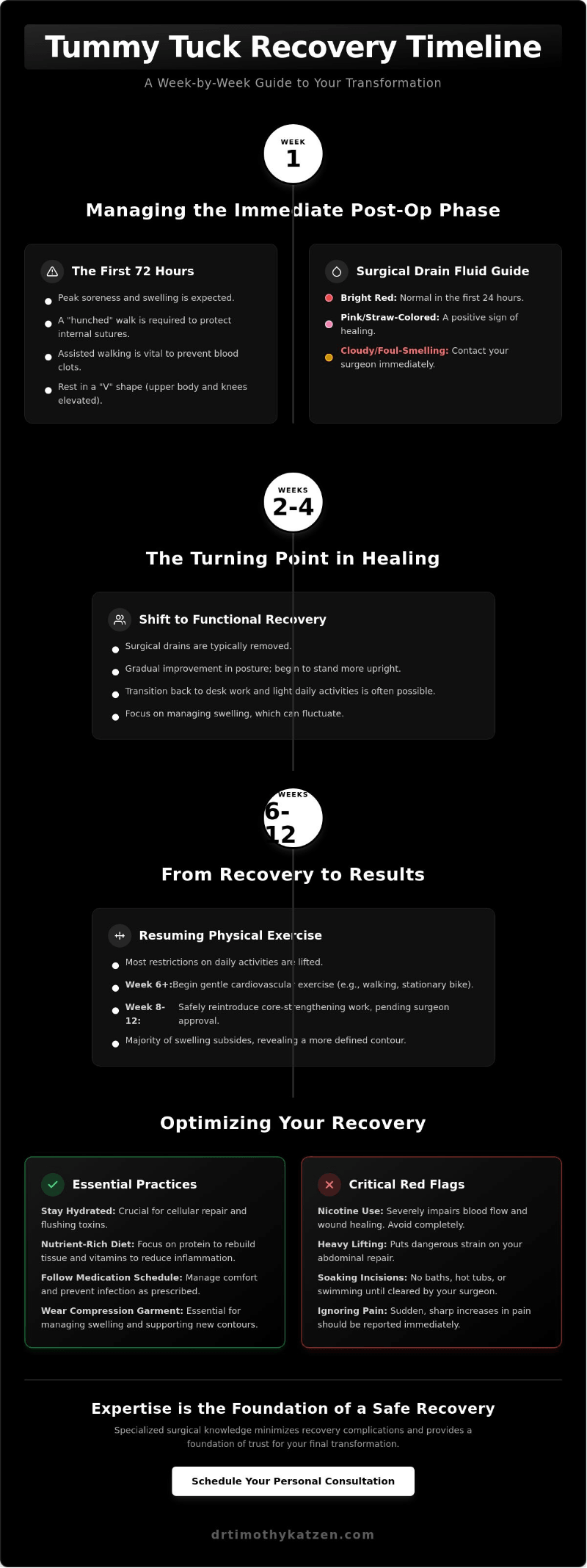
The first seven days of your journey are the most physically demanding, yet they serve as the essential foundation for your final transformation. As you navigate your tummy tuck recovery timeline week by week, you'll find that the first 24 to 72 hours represent the peak of surgical soreness and swelling. This is a period where your body redirects its energy toward cellular repair. I often describe this phase to my patients as a period of quiet reclamation. You aren't just healing from a procedure; you're allowing your body to settle into its new, refined geometry. We prioritize your comfort through a meticulous medication protocol that balances effective pain management with safety, ensuring you remain mobile enough to support healthy circulation.
One of the most distinctive aspects of this first week is the necessity of the "hunched" walk. To protect the integrity of your internal sutures and the tension on your Abdominoplasty incision, you must remain slightly bent at the waist when standing or walking. This posture prevents unnecessary stress on the repair site, allowing the delicate tissues to knit together without interference. While it may feel counterintuitive, this temporary restriction is a vital safeguard for your long-term aesthetic outcome. By the end of this first week, most patients begin to feel a shift from acute discomfort to a manageable tightness as the body adapts to these structural changes.
The First 48 Hours: Your Recovery Foundation
The first two days require a dedicated first-person caregiver to assist with your every need. This support system is crucial because, while rest is paramount, we also mandate early, assisted ambulation. Walking short distances within your home every few hours is the single most effective way to prevent blood clots and promote healthy blood flow. Before you arrive home, ensure your recovery station is prepared. You'll need a recliner or a bed with several pillows to keep your upper body and knees elevated, creating a "V" shape that minimizes tension on your abdomen. This setup isn't just about comfort; it's a clinical necessity for proper lymphatic drainage.
Understanding Your Surgical Drains
Managing surgical drains is often a primary source of anxiety, but the process is quite methodical. These small tubes prevent fluid from accumulating under the skin, which reduces the risk of seromas and supports the adherence of the skin to the underlying muscle. You will need to "strip" the tubing and empty the bulbs several times a day, carefully recording the volume and color of the output.
- Bright Red: Common in the first 24 hours as initial drainage occurs.
- Pink or Straw-Colored: A positive sign that the fluid is transitioning to serous fluid.
- Cloudy or Foul-Smelling: This requires an immediate call to our office as it can indicate early infection.
While every patient heals at a unique pace, surgical drains are generally removed once the fluid output remains consistently below 30 milliliters over a 24-hour window, a milestone typically reached within the first ten days.
Weeks 2–4: The Turning Point in Your Healing
After the restrictive nature of the first seven days, you'll enter what I consider the turning point of your transformation. This period, spanning weeks two through four, is characterized by a significant shift from acute healing to functional recovery. As you follow your tummy tuck recovery timeline week by week, you'll notice the initial fog of surgery lifting, replaced by a growing sense of independence. This is the stage where the physical results of your procedure begin to harmonize with your daily life. While you're still in a delicate phase, the focus shifts toward refining your posture and managing the natural fluctuations of your new silhouette.
For my patients who have undergone more complex geometric sculpting, such as a 360 lower body lift or a Fleur-de-Lis abdominoplasty, this phase requires a specialized level of patience. These comprehensive procedures involve more extensive tissue repositioning, meaning your body may take slightly longer to shed the initial internal "tightness" compared to a standard tummy tuck. It's during these weeks that we begin to see the true architectural benefits of the surgery. If you're curious about how these specialized techniques might apply to your specific anatomy, you can schedule a personal consultation to discuss your unique surgical roadmap.
Mobility and Posture Milestones
The primary goal during week two is the gradual transition from the "hunched" walk to a fully upright posture. I typically expect my patients to stand tall by day 14, though this is a gradual process of gentle stretching rather than a forced movement. You should prioritize short, frequent walks around your home to rebuild stamina. This is also the period when most patients experience a profound psychological lift as their surgical drains are removed, typically between days 10 and 21. Once those drains are gone, your mobility increases significantly, and the path to your final result feels much more tangible. You may even feel ready to return to sedentary, desk-based work by the end of the second week, provided you can take frequent breaks to move and stretch.
Managing the Compression Garment
Consistency with your compression garment is non-negotiable during this window. Proper compression serves two vital roles: it minimizes the "swelling rollercoaster" that often peaks in the late afternoon and it ensures the skin adheres smoothly to the newly contoured muscle beneath.
- 24/7 Wear: Your binder or faja should only be removed for showering.
- Skin Integrity: Wear a thin, seamless cotton camisole under your garment to prevent irritation or "garment burn."
- Stage Transition: Around week three or four, we often transition from a rigid Stage 1 binder to a more flexible Stage 2 compression garment that offers more comfort for daily wear.
According to the Tummy Tuck Recovery Timeline provided by major surgical associations, managing this external support is critical for preventing fluid collection and ensuring your scar matures under the best possible conditions. This is also the time when we typically initiate topical scar treatments, such as silicone sheets or gels, to ensure your incision fades into a discreet, fine line.
Weeks 6–12: From Recovery to Results
This phase represents the bridge between clinical healing and the full realization of your aesthetic goals. As you move through your tummy tuck recovery timeline week by week, the second month often brings a profound sense of relief and excitement. The initial surgical tightness has finally softened, and the intricate work performed on your abdominal wall begins to feel like a natural, integrated part of your body. It is during this window that your incision begins its slow maturation, transitioning from a raised, reddish line to a flatter, pinker appearance as the collagen within the scar tissue undergoes a meticulous remodeling process.
You might also encounter peculiar sensations, such as sharp, fleeting tingles often described as "zingers." While they can be surprising, these are actually positive indicators of nerve regeneration within the surgical field. These sensations confirm that your body is re-establishing its sensory network after the structural changes of the procedure. According to the Tummy Tuck Procedure and Recovery guidelines, patients can expect most major swelling to subside by week six, though the final refinement of your silhouette continues well into the third month.
Returning to the Gym Safely
Reintroducing exercise is a methodical process that prioritizes the integrity of your results. I recommend starting with low-impact cardiovascular activities, such as brisk walking or a stationary bike, around week six. However, you must listen closely to your "swelling cues"; if your abdomen feels significantly tighter or more swollen after a workout, it's a signal from your body to reduce the intensity. The internal plication of the rectus muscles requires a minimum of eight to twelve weeks to achieve the tensile strength necessary to withstand the intense intra-abdominal pressure generated during heavy lifting or core-specific exercises. Only after this window should you gradually reintroduce planks or weight training.
The Emotional Journey: Reclaiming Your Body
The journey from surgery to the final result isn't just physical; it's deeply emotional. Many patients experience a brief period of "post-op blues" around week six or eight as the adrenaline of the initial recovery fades and residual swelling lingers. This is a normal part of the process, especially for those who have undergone a 360 lower body lift, where the results settle more slowly due to the comprehensive nature of the tissue repositioning. The celebratory shift truly begins when you finally step into new clothes that fit your refined geometry. This moment is the culmination of your weight loss odyssey, a final step that validates your dedication to personal renewal and long-term well-being.
Optimizing Your Recovery: Essential Tips & Red Flags
While my surgical technique provides the structural blueprint for your transformation, your daily choices during the tummy tuck recovery timeline week by week act as the vital maintenance crew. I view recovery as a collaborative effort. My role is to ensure the anatomical precision of your procedure; your role is to provide your body with the optimal environment for cellular repair. This involves a meticulous approach to lifestyle habits, particularly regarding nicotine and nutrition. Nicotine is the primary enemy of successful tissue survival. It causes significant vasoconstriction, which starves the healing incision of oxygen and can lead to wound dehiscence, a serious complication where the wound edges separate. Total abstinence from all nicotine products is mandatory to protect your health and your aesthetic results.
Your physical environment also dictates your comfort. During the initial weeks, you likely utilized the "beach chair" position, sleeping with your head and knees elevated to minimize tension. Around week four or five, most patients can begin the gradual transition to sleeping flat. I recommend testing this by slowly lowering your incline over several nights. If you experience increased tightness or swelling, it's a sign your body needs a few more days of elevation. For long term scar maturation, we often begin with silicone sheets or gels around week three, though some patients may eventually benefit from laser interventions to further refine the pigment and texture of the incision line.
Normal Healing vs. Red Flags
Understanding the difference between expected post operative changes and genuine complications is essential for your peace of mind. While swelling and bruising are universal, you should be able to identify specific warning signs.
- Infection: Watch for a fever over 101.5°F, redness that spreads away from the incision, or a foul odor.
- Seroma: This is a localized collection of fluid that feels like a soft, fluctuating pocket under the skin. While often manageable, it requires clinical drainage.
- Emergencies: Seek immediate medical attention if you experience sudden shortness of breath, chest pain, or significant swelling and pain in a single calf, as these can indicate a blood clot.
If you have any concerns about your healing progress, you should contact my office for personalized recovery support to ensure you remain on the right track.
The Recovery Diet: Fueling Tissue Repair
What you eat directly impacts the "swelly belly" phenomenon that many patients find frustrating. High sodium intake causes the body to retain fluid, which exacerbates swelling and discomfort. I advise my patients to focus on a low sodium, high protein diet to provide the amino acids necessary for collagen synthesis and tissue repair. Hydration is equally critical; water acts as a vehicle for your lymphatic system to flush out surgical byproducts and reduce inflammation. By prioritizing lean proteins, leafy greens, and consistent hydration, you provide the biological fuel your body needs to transition from the clinical phase of healing to the celebratory stage of your final results.
The Final Step in Your Transformation: Why Expertise Matters
The success of your tummy tuck recovery timeline week by week isn't solely dependent on your post-operative diligence; it begins in the operating room with the meticulous precision of your surgeon. A high-level specialist doesn't merely remove redundant tissue. I focus on the comprehensive architectural restoration of your midsection. By employing advanced tension-distribution techniques and precise muscle plication, I can significantly reduce the risk of common complications like seromas or wound dehiscence. This methodical approach ensures that your healing journey remains as predictable and comfortable as possible, allowing you to focus on the emotional reclamation of your body rather than the stress of an uncertain recovery.
Choosing a board-certified specialist is particularly critical when addressing the complex anatomical changes that follow massive weight loss. These transformations often require more than a traditional abdominoplasty. They demand a nuanced understanding of how skin behaves across different planes of the body. My practice specializes in this highly specialized niche of post-transformative body sculpting, where we address the all-encompassing physical changes that occur after a significant personal odyssey. This isn't just a medical event. It's the final, celebratory step of your journey, and it requires a dedicated partner who prioritizes your individual needs and long-term well-being over generic aesthetic standards.
Precision in Post-Weight Loss Contouring
Post-weight loss patients often require advanced geometric interventions, such as the Fleur-de-Lis or a 360 lower body lift, to achieve a truly harmonious result. These procedures are technically demanding because they involve managing skin laxity in multiple directions simultaneously. I utilize specialized, layered closure techniques to minimize tension on the primary incision, which is the single most important factor in creating a fine, discreet scar. My partnership with you doesn't end when you leave the surgical center. Elite practice standards include personalized, frequent follow-up care, where we monitor your progress at every milestone to ensure your recovery aligns with our high expectations for safety and aesthetics.
Your Consultation: The First Step to a New You
Your initial consultation is the foundation of our trust. It's the moment we move from clinical theory to a personalized roadmap for your transformation. I encourage you to ask detailed questions about the recovery process, including how we manage pain and what specific lifestyle adjustments will optimize your healing. We will review extensive before-and-after galleries together, allowing us to align on your aesthetic goals and visualize the final, celebratory outcome of your hard work. This conversation is about your quality of life and the confidence that comes with a body that finally reflects your inner strength. If you're ready to take this final step in your journey, Schedule your personalized consultation with Dr. Katzen today to discuss how we can refine your silhouette with the precision you deserve.
Embrace Your New Beginning with Confidence
Your journey toward a refined silhouette is a methodical process of physical healing and emotional renewal. We've explored how the first few weeks require patience and precise care, from managing surgical drains to the gradual restoration of your upright posture. By understanding your tummy tuck recovery timeline week by week, you replace anxiety with a clear roadmap for success. You now recognize that peak swelling and nerve "zingers" are merely signs of your body's incredible ability to regenerate and adapt to its new geometry.
As a Board-Certified Plastic Surgeon and world-renowned expert in post-weight loss body contouring, I'm dedicated to ensuring your transformation is both safe and aesthetically profound. Whether you require a specialized 360 lower body lift or a complex surgical revision, my approach prioritizes your long-term well-being and personal growth. This procedure is more than a medical event; it's the celebratory conclusion of your personal odyssey. I invite you to Book Your Transformation Consultation with Dr. Katzen today. Together, we can finalize your vision and help you step into a life of improved confidence and vitality. You've worked hard for this change, and I'm here to ensure you achieve the results you deserve.
Frequently Asked Questions
How much pain is normal during the first week of tummy tuck recovery?
You should expect the highest level of physical discomfort during the first 72 hours after your procedure. This peak in surgical soreness is managed through a precise medication protocol that I will tailor to your specific needs. By the end of the first week, most patients find that acute pain transitions into a manageable tightness as they progress through their tummy tuck recovery timeline week by week. My goal is to ensure you remain comfortable enough to perform the light walking necessary for healthy circulation.
When can I safely drive after an abdominoplasty?
Most patients can safely return to the driver's seat approximately two weeks after surgery. There are two non-negotiable requirements for this milestone: you must be completely finished with all narcotic pain medications and you must have the abdominal strength to perform an emergency braking maneuver without hesitation. I recommend taking a short test drive with a companion in a quiet area before you attempt to navigate heavy traffic on your own.
How long do I need to wear my compression garment after surgery?
You will typically wear your compression garment 24/7 for the first four weeks, removing it only for brief showers. After this initial phase, we usually transition to a Stage 2 garment for another two to four weeks depending on your individual healing rate. This external support is vital for managing lymphatic flow and ensuring the skin adheres perfectly to the underlying muscle, which ultimately defines the geometric precision of your final result.
When can I stop walking hunched over and stand up straight?
You can expect to stand fully upright between day 10 and day 14 of your recovery. While the initial "hunched" walk is a clinical necessity to protect your internal sutures, we will begin gentle, guided stretching as your skin tension allows. Returning to a neutral posture is a significant psychological and physical milestone that marks your transition from the acute healing phase into a more active stage of functional recovery.
What happens if a surgical drain gets clogged or stops working?
If a surgical drain appears clogged or the output stops abruptly, you should first "strip" the tubing to move any small clots into the bulb. Check for any visible kinks in the line or a loss of suction in the reservoir bulb. If these steps don't restore the flow, contact my office immediately for guidance. Maintaining consistent drainage is essential for preventing fluid accumulation, known as a seroma, from developing under the skin.
When can I return to a desk job versus a physically demanding job?
Most individuals can return to sedentary, desk-based work within two weeks of their procedure, provided they can take frequent breaks to move. However, if your profession involves heavy lifting, constant bending, or high physical exertion, you'll need a longer hiatus of six to eight weeks. We will monitor your progress closely to ensure your return to work doesn't compromise the integrity of your muscle repair or the quality of your scar maturation.
How long does "swelly belly" last after a tummy tuck?
Significant "swelly belly" typically begins to resolve by the three-month mark, though minor fluctuations can persist for up to a year. You'll likely notice that swelling increases toward the end of the day or after intense physical activity as your lymphatic system continues to rebuild. Consistency with your tummy tuck recovery timeline week by week and managing your sodium intake are the most effective ways to minimize these temporary fluctuations in your contour.
Can I sleep on my side or stomach during the recovery period?
You must sleep on your back in an elevated "beach chair" position for the first four weeks to minimize tension on your incision. Most patients feel comfortable transitioning to side sleeping around week four or six, provided they use pillows to support their midsection. Sleeping on your stomach should be avoided until at least week eight, as this position places the most direct pressure on the delicate surgical repair site and can cause unnecessary discomfort.