Tummy Tuck for Plus-Size Patients: Candidacy, Safety, and Options
10/5/2026
Could body size alone determine whether a tummy tuck is safe or appropriate? If you’re searching for “tummy tuck on plus size patient,” you may wonder whether your weight rules out surgery before your health and goals are considered. That concern is understandable, but candidacy involves more than a single number.
A thoughtful assessment considers your overall health, weight stability, abdominal anatomy, and what you hope surgery will address. A tummy tuck is not a weight-loss method, but it may be an option when loose abdominal skin or changes in the abdominal muscles remain after weight loss or other life changes. Potential benefits and risks both matter.
This article explains how surgeons assess candidacy beyond BMI, which health factors can influence safety, and how surgical planning and recovery may differ for plus-size patients. It also clarifies the difference between concerns about excess skin and goals for further weight loss, helping you prepare for a personalized conversation with realistic expectations.
Key Takeaways
- Candidacy for a tummy tuck on plus size patient is assessed individually, with health history and healing considerations weighed alongside body size.
- Clarifying whether your main concern is excess skin, abdominal contour, or ongoing weight goals can help guide an appropriate plan.
- Compare surgery with continued weight stabilization by considering each option’s purpose, trade-offs, and limitations.
- Prepare for a productive conversation by outlining your goals, health history, medications, and questions.
- A personalized consultation can help you understand potential benefits, risks, and surgical planning based on your health and abdominal anatomy.
Table of Contents
- What Does a Tummy Tuck Address for a Plus-Size Patient?
- How Does a Surgeon Assess Plus-Size Tummy Tuck Candidacy?
- Tummy Tuck, Weight Stabilization, or Another Body-Contouring Approach?
- How Can You Prepare for a Plus-Size Tummy Tuck Conversation?
- What Happens at a Personalized Tummy Tuck Consultation with Dr. Katzen?
What Does a Tummy Tuck Address for a Plus-Size Patient?
Abdominoplasty, commonly called a tummy tuck, is surgery to address selected concerns involving abdominal skin and contour. Depending on a person’s anatomy and surgical plan, it may involve removing excess skin and tissue and tightening the abdominal wall. The Abdominoplasty overview describes the procedure and its general approaches, but an individual plan must be based on a medical assessment.
A tummy tuck reshapes selected areas of the abdomen. It is not a treatment for obesity or a predictable way to lose weight. That distinction matters when considering a tummy tuck on plus size patient. The procedure addresses specific contour concerns; it does not replace weight management or promise a particular body shape.
Which abdominal concerns may a tummy tuck address?
Some people seek an evaluation for skin that hangs or folds over the lower abdomen, excess tissue that affects the abdominal outline, or changes in the abdominal wall. These concerns can remain after weight changes, pregnancy, or other life experiences. They call for an individualized assessment, not assumptions based on clothing size or appearance.
The location and amount of loose skin, abdominal anatomy, and your goals all influence the extent of surgery. A plan may focus on a specific area or address a broader portion of the abdomen. Results vary, and surgery cannot guarantee a completely flat abdomen or a standardized silhouette.
How is a plus-size tummy tuck different from weight-loss surgery?
A tummy tuck is a body-contouring procedure. Weight-loss surgery has a different medical purpose: it is intended to treat obesity and involves a separate evaluation. Removing abdominal skin and tissue may change contour, but it does not produce broad or predictable weight loss and is not a substitute for ongoing weight-management care.
If your goals include substantial weight loss, or you have health concerns beyond abdominal skin and contour, discuss those needs with the appropriate clinician. A plastic surgeon can assess whether abdominal surgery fits your current anatomy and goals, while other members of your healthcare team can advise on health needs outside body contouring. Keeping these purposes distinct helps set realistic expectations and supports a considered decision about surgery.
How Does a Surgeon Assess Plus-Size Tummy Tuck Candidacy?
There isn’t one body size that determines whether surgery is appropriate. A surgeon considers your health history, abdominal anatomy, goals, and factors that could affect anesthesia, healing, or recovery. For a tummy tuck on plus size patient, this individualized review helps replace assumptions with a careful discussion of potential benefits and risks.
Candidacy depends on an individualized medical assessment, not a single-number rule. Body mass index (BMI) may be one screening measure, but it cannot describe a person’s overall health or surgical risk on its own. The American Society of Plastic Surgeons has discussed research on tummy tucks being safely performed in obese patients. That finding is not a guarantee of safety for every patient. Individual circumstances still matter.
Does BMI determine eligibility for a tummy tuck?
BMI compares height and weight, but it does not provide a complete picture of health, abdominal tissue, or recovery needs. A particular value does not automatically make someone eligible or ineligible. In consultation, the surgeon considers BMI alongside medical history, physical findings, and the changes you hope to make. The aim is to understand whether the procedure and its demands make sense for you, not to fit you to a universal body ideal.
What health factors can affect surgical planning?
Be ready to discuss conditions such as diabetes, heart or lung concerns, and any history of healing problems or blood clots. Share all prescription and over-the-counter medications and supplements, as well as nicotine use. These details can affect planning and may influence whether surgery should proceed, be modified, or wait. Previous abdominal operations also matter because scars and changes to underlying tissues may shape the surgical approach.
Stable health and a realistic recovery plan are part of candidacy, too. The surgeon may ask about support at home and your ability to follow individualized pre- and postoperative instructions. Don’t stop prescribed medication or change nicotine use based on general online advice. Discuss the right steps with your surgical team. Your personal risk depends on your health and the procedure, so ask how those factors apply to you.
A thoughtful conversation can make the decision clearer, even if the answer is to pause or consider a different plan. You can learn about Dr. Katzen’s tummy tuck care as you prepare to discuss your circumstances.
Tummy Tuck, Weight Stabilization, or Another Body-Contouring Approach?
The right next step depends on what you want to change and whether your weight and health are at a point where surgery can be planned thoughtfully. For someone considering a tummy tuck on plus size patient, ongoing weight changes, loose skin after significant weight loss, and localized fullness are different concerns that may call for different discussions.
Weight stability can help a surgeon plan around your current anatomy and may support a more lasting contour. If your weight is still changing, waiting may make sense, but there is no single target or waiting period for everyone. This is a personalized planning question, not a judgment about progress. A plastic surgeon can discuss timing in light of your health, goals, and expected changes.
| Option | General purpose | Key limitation |
|---|---|---|
| Tummy tuck | Addresses selected excess abdominal skin and contour concerns. | Not a weight-loss treatment; results depend on anatomy and healing. |
| Weight stabilization | Allows the body and surgical plan to settle before a decision. | Doesn’t remove existing loose skin. |
| Non-surgical planning | May suit someone who is not ready for surgery or whose goals are limited. | Doesn’t remove substantial excess skin or reproduce surgical changes. |
| Liposuction | Reduces selected areas of excess fat. | Doesn’t remove loose skin and may not address skin folds. |
How do tummy tuck and liposuction address different concerns?
A tummy tuck can remove selected excess skin and reshape abdominal contour. Liposuction removes fat from targeted areas, but it is not a substitute for skin removal. Whether combining procedures is appropriate depends on your anatomy, health, and the safety of the overall plan. After significant weight loss, loose skin may extend beyond the abdomen, so the areas of concern may differ from those of someone whose main goal is localized fat reduction.
Safety guides the choice. The American Society of Plastic Surgeons has shared research discussing abdominoplasty as safe for obese patients, but this does not establish that surgery is suitable for every individual. Your surgeon weighs personal risk factors and the scope of a proposed procedure before recommending a plan.
In consultation, describe what bothers you most, whether your weight is changing, and what kind of result you hope to achieve. This helps focus the discussion on whether surgery now, more time for stabilization, or another approach best fits your circumstances.
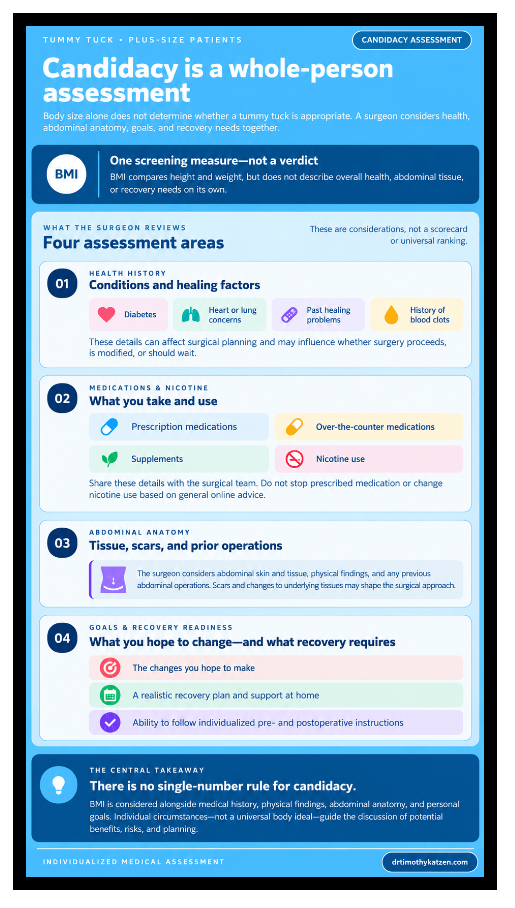
Infogram of Candidacy for a Tummy Tuck is a whole person assessment
How Can You Prepare for a Plus-Size Tummy Tuck Conversation?
Preparing for a consultation can help you focus on what matters most. For a tummy tuck on plus size patient, you do not need to arrive with a perfect medical summary or a predetermined answer. Give the surgical team a clear picture of your health, concerns, and expectations so the conversation can focus on an individualized plan.
What information is useful to bring to a consultation?
Before your appointment, take a few practical steps:
- Clarify your goals. Describe what you’d like to change in your own words, such as loose abdominal skin, folds that cause discomfort, or the way clothing fits. Note functional concerns as well as aesthetic ones.
- Gather your health history. Include relevant diagnoses, past treatments, and details of prior abdominal surgery, if applicable.
- List medications and supplements. Record what you take, including over-the-counter products, and share any nicotine use. Don’t stop or adjust medication without guidance from your clinician.
- Write down questions. Ask about potential risks, expected limitations, recovery support, follow-up, and how your health or anatomy could affect planning.
Being candid about your history helps the surgeon assess the full picture. Bring notes if useful, so you can focus on listening and leave with a clearer understanding of the discussion.
What should you understand about recovery and safety?
Recovery varies with the procedure, individual health, and how healing progresses. Before deciding, discuss applicable activity restrictions, how follow-up will be organized, and what help you may need at home. These details are part of surgical planning, not an afterthought. Your surgical team should provide instructions tailored to your situation; general online advice cannot replace them.
Ask what changes should prompt you to contact the team and how your recovery plan may account for your health and daily responsibilities. Clear expectations help you prepare while keeping the decision grounded in your circumstances. No consultation can promise an exact result or uniform recovery, but it should explain the proposed approach, its limits, and the factors that matter for your care.
To learn more before your discussion, explore Dr. Katzen’s tummy tuck care.
What Happens at a Personalized Tummy Tuck Consultation with Dr. Katzen?
A consultation is an opportunity to discuss your health, abdominal anatomy, and goals, then consider whether a tummy tuck may be appropriate. For a tummy tuck on plus size patient, the conversation should focus on the individual, not assumptions about body size or a standardized ideal.
Dr. Katzen’s practice focuses on tummy tuck and advanced body contouring, including care for patients after significant weight loss. This experience provides context for an evaluation, but it does not determine candidacy in advance. The surgeon considers your medical history, physical findings, and desired changes before discussing a possible approach.
How are goals translated into an individualized surgical plan?
Start by describing the concerns you hope to address, such as excess abdominal skin, folds, or changes in contour. The surgeon can relate those goals to your anatomy and health, explain which changes surgery may reasonably address, and discuss its limitations and risks. The extent and technique of surgery are determined for the individual patient. The aim is a medically appropriate plan that reflects your circumstances, not a prescribed shape or promise of a particular result.
What questions help make the decision more informed?
Clear questions can help you understand the plan and decide whether it fits your priorities. Consider asking:
- Which of my concerns could a tummy tuck address, and which might remain?
- What potential benefits, limitations, and risks apply to my health and anatomy?
- How might my medical history, medications, or weight stability influence the plan?
- What should I expect during recovery, including activity restrictions and follow-up?
- What support might I need as I heal?
It’s reasonable to take time to consider the answers. An informed decision comes from understanding both what surgery may offer and what it cannot guarantee. Shared decision-making means your goals and questions matter alongside the surgeon’s medical assessment. Realistic, patient-centered expectations can help you decide whether to proceed, wait, or revisit your options later.
To take a low-pressure next step, request a consultation with Dr. Katzen and discuss your individual goals and health considerations.
Take the Next Step Toward an Individualized Plan
A decision about a tummy tuck on plus size patient should rest on more than body size alone. Your overall health, abdominal anatomy, goals, and recovery needs all help shape whether surgery may be appropriate. It is also helpful to distinguish a goal of addressing excess skin or contour from a goal of continued weight loss, since a tummy tuck is not a weight-loss procedure.
Preparation can make the conversation more useful. Bring your health history and medication list, describe the changes you hope to make, and ask about potential benefits, limitations, risks, and recovery. There is no one-size-fits-all plan or promised result. The right discussion is grounded in your circumstances.
Dr. Katzen’s board-certified plastic surgery practice specializes in tummy tuck and advanced body contouring, including care for people after significant weight loss. If you’re ready to explore your options, request a personalized tummy tuck consultation. A thoughtful conversation can help you move forward with clearer expectations and confidence in your next step.
Frequently Asked Questions
Can a plus-size patient have a tummy tuck?
Yes, some plus-size patients may be candidates, but body size alone cannot determine whether surgery is appropriate. The surgeon considers overall health, abdominal anatomy, healing factors, and the changes you hope to make. Whether a tummy tuck on plus size patient is suitable depends on this full assessment, not a promise based on a label or measurement. A consultation can clarify potential benefits, risks, and alternatives for your circumstances.
Is there a BMI cutoff for a tummy tuck?
There isn’t one universal BMI cutoff that determines eligibility for every patient. BMI may inform a surgeon’s risk assessment, but it does not capture your full health picture, abdominal anatomy, or recovery needs. Your surgeon considers it alongside factors such as medical conditions, medications, nicotine use, and goals. A particular BMI does not guarantee candidacy or rule it out; the decision requires an individualized medical evaluation.
How much weight should I lose before a tummy tuck?
There’s no single amount of weight everyone should lose before a tummy tuck. The more useful question is whether your weight is stable and whether further weight changes are part of your current goals. Changes after surgery can affect abdominal contour and planning. Share your weight history and expectations with the surgeon, who can discuss timing in light of your health and anatomy rather than applying a universal target.
Is a tummy tuck more dangerous for plus-size patients?
Risk depends on individual health and the details of the operation, so it cannot be judged by body size alone. Factors such as medical conditions, nicotine use, medications, and healing history may affect surgical planning. Possible concerns include wound-healing problems, infection, or fluid buildup. Your surgeon should explain how your personal risk factors apply, what steps may reduce risk, and whether the expected benefits justify proceeding.
Does a tummy tuck help you lose weight?
No. A tummy tuck is a body-contouring operation, not a weight-loss treatment. It may remove selected excess skin and tissue and alter abdominal contour, but it does not create broad or predictable weight loss or replace weight-management care. If your main goal is substantial weight reduction, discuss that with your healthcare clinician. If loose skin remains a concern, a plastic surgeon can assess whether abdominal contouring may be appropriate for you.
Is a tummy tuck or liposuction better for a plus-size patient?
Neither procedure is automatically better; each addresses different concerns. A tummy tuck can remove selected excess skin and reshape abdominal contour, while liposuction reduces fat in targeted areas. Liposuction does not remove loose skin, so it may not address overhanging tissue. The appropriate approach depends on your anatomy, health, and goals. Combining procedures is a separate planning decision that requires careful assessment of overall safety.
What should I expect during tummy tuck recovery?
Recovery varies with the surgical plan, your health, and your individual healing response. Your surgical team will give you specific instructions about activity, incision care, follow-up, and when to resume usual routines. Arrange practical support for the period when movement or daily tasks may be limited. Swelling and healing changes can take time, so ask what to expect at each stage and which symptoms should prompt you to contact the team.