What to Expect After Silicone Removal Surgery: A Complete Recovery Guide
10/5/2026
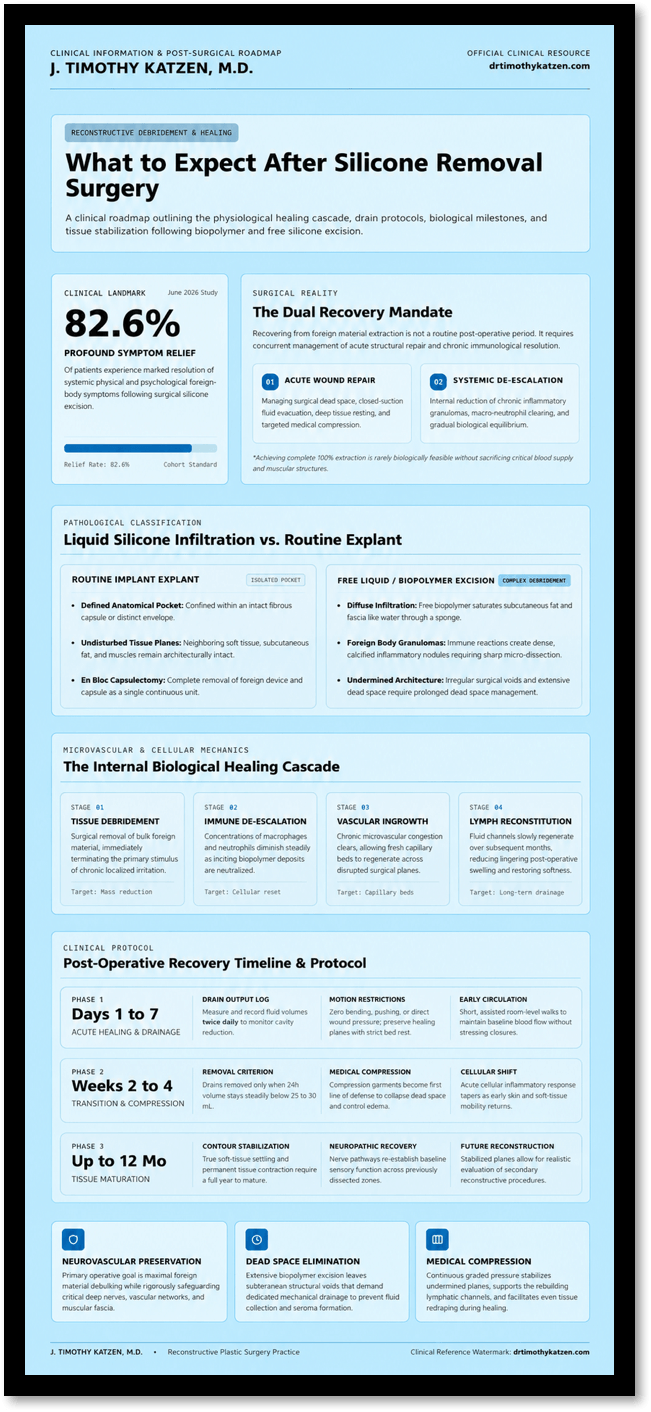
A June 2026 study revealed that 82.6% of patients experience profound relief from systemic and psychological symptoms after silicone excision. Yet for many, the most daunting hurdle isn't the decision to excise the foreign material, but wondering what to expect after silicone removal surgery.
If you feel anxious about surgical drains, prolonged downtime, or potential contour irregularities, your concerns are completely justified. Recovering from silicone extraction is rarely just a routine post-operative phase. It's a dual journey that requires meticulous management of acute surgical wound healing alongside your body's systemic inflammatory resolution. You've carried the physical and emotional burden of foreign body reactions or chronic discomfort for long enough, and fear of the unknown shouldn't delay your renewal.
This complete guide provides a clear, medically grounded roadmap of every healing milestone so you can approach your procedure with confidence. We'll explore your day-by-day physical timeline, realistic contour expectations, and practical protocols designed to restore tissue harmony and long-term vitality.
Key Takeaways
- Understand what to expect after silicone removal surgery across each phase of physical healing, from critical early drain care to long-term tissue stabilization.
- Learn why complex biopolymer excision differs fundamentally from routine implant removal, requiring specialized dead space management and medical-grade compression.
- Discover how comprehensive recovery protocols address both acute incisional healing and neuropathic sensations while fostering systemic inflammatory relief.
- Prepare for the emotional transition of shifting body contours with realistic insights on tissue contraction and future reconstructive options.
- Identify essential safety markers, accredited facility standards, and reconstructive qualifications necessary for safe, restorative foreign material extraction.
Table of Contents
- Understanding Silicone Removal Surgery and the Healing Process
- The Recovery Timeline: What to Expect Week by Week
- Managing Postoperative Pain, Swelling, and Surgical Drains
- Emotional Health, Systemic Relief, and Aesthetic Changes
- Partnering with a Board-Certified Reconstructive Specialist for Safe Recovery
Understanding Silicone Removal Surgery and the Healing Process
When planning for recovery, you must first understand the true nature of your operation. Extracting illicit biopolymers or free liquid silicone is not a standard cosmetic revision; it is a highly specialized form of complex reconstructive surgery involving extensive tissue debridement. Understanding this distinction clarifies what to expect after silicone removal surgery, because healing from tissue debulking follows a vastly different trajectory than recovering from routine device extraction.
Free silicone doesn't stay confined to an isolated pocket. Over time, it migrates through subcutaneous fat, wraps around neurovascular bundles, and embeds deeply into muscular fascia. As a result, the primary surgical objective is to maximize foreign material extraction while rigorously preserving vital blood supply and muscular function. Achieving complete 100% extraction is rarely biologically feasible without sacrificing critical healthy structures. Your body therefore undergoes a dual recovery: repairing surgically disrupted planes while systematically de-escalating months or years of chronic immunological activation.
Liquid Silicone vs. Implant Removal: Crucial Distinctions
A standard explant procedure involves removing an intact or ruptured silicone breast implant along with its surrounding fibrous capsule (a total or en bloc capsulectomy). The boundaries are well-defined, leaving the neighboring anatomical planes largely undisturbed.
Liquid silicone injection extraction, however, presents a distinct clinical challenge:
- Diffuse infiltration: Rather than resting within a clear surgical pocket, free biopolymers saturate healthy soft tissues like water in a sponge.
- Foreign body granulomas: The immune system walls off droplets into dense, calcified granulomas, creating chronic inflammatory nodules that require careful sharp excision.
- Undermined tissue architecture: Removing these masses creates irregular physical voids that require dedicated dead-space management to heal cleanly.
The Biological Healing Cascade After Foreign Material Excision
Once the bulk of the inflammatory mass is surgically excised, your local tissues initiate an intense cellular reset. Macrophages and neutrophils gradually diminish in concentration as the primary inciting irritants disappear. In turn, chronic microvascular congestion resolves, allowing fresh capillary beds to regenerate across the treated field.
Lymphatic pathways also require significant time to reconstitute. As fluid channels re-establish themselves over several months, post-operative swelling slowly subsides. Knowing what to expect after silicone removal surgery means recognizing that internal biological recovery continues long after your skin incisions close, steadily restoring tissue softness, mobility, and systemic calm.
The Recovery Timeline: What to Expect Week by Week
Physical recovery after biopolymer extraction is a deliberate, progressive healing journey rather than a rapid turnaround. Understanding what to expect after silicone removal surgery allows you to protect delicate internal tissues while your body resets. True soft-tissue maturation and contour stabilization often require up to twelve full months, moving through distinct phases of wound repair.
Phase 1 (Days 1 to 7): Acute Healing and Managing Discomfort
Your primary goal during week one is absolute tissue rest and incision protection. Expect pronounced localized tightness, swelling, and surgical fatigue as your system clears post-operative medication. Prescribed analgesics and oral antibiotics maintain baseline comfort and defend against secondary infection.
Surgical drains play a critical role during this stage by evacuating inflammatory fluid and minimizing dead space. Fluid retention represents one of the primary Risks and Complications following extensive subcutaneous debridement. You'll measure and record drainage volumes twice daily while avoiding any bending, pushing, or direct pressure on freshly closed wounds. Short, assisted walks around your room promote healthy vascular circulation without straining incisions.
Phase 2 (Weeks 2 to 4): Transitioning and Early Mobility
By the second and third weeks, acute cellular inflammation begins to taper. Surgical drains are typically removed once fluid volume steadily measures below 25 to 30 milliliters over 24 consecutive hours.
After drain removal, medical compression garments become your front line of defense. Consistent external pressure holds undermined tissue planes together, preventing seroma formation and encouraging skin retraction. You can slowly expand daily light activity, though strenuous tasks and lifting over ten pounds remain restricted. If you notice unusual swelling or have procedural questions, consulting an experienced reconstructive surgeon ensures each healing milestone stays on schedule.
Phase 3 (Months 2 to 6+): Deep Tissue Remodeling
Between eight weeks and six months, deep collagen fibers realign. Dense internal scar tissue begins to soften, and external incision marks gradually transition from pink to paler, softer lines.
Most individuals receive medical clearance to resume low-impact cardiovascular exercise around six weeks, slowly reintroducing strength conditioning as endurance builds. As residual lymphatic edema leaves the area, your authentic tissue contour becomes clear. Lingering tissue hollows or asymmetries may appear as swelling subsides, but healthy soft-tissue contraction and structural equilibrium will continue to settle over the entire first year.
Managing Postoperative Pain, Swelling, and Surgical Drains
Excising deeply embedded silicone involves significant tissue dissection across multiple anatomical layers. Consequently, post-operative discomfort encompasses two distinct sensations: acute surgical soreness from tissue manipulation and sharper neuropathic twinges as disrupted cutaneous nerves awaken. Knowing what to expect after silicone removal surgery allows you to respond calmly to these physical sensations while safeguarding your results through diligent drain care and dead space compression.
Navigating Surgical Drains and Dead Space Closure
When extensive foreign material is excised from subcutaneous fat and muscular planes, it leaves structural voids known as dead space. Closed-suction bulb drains are essential to prevent fluid from pooling in these empty beds. Without them, accumulating serous fluid or blood can trigger seromas, hematomas, or secondary infections that jeopardize vascular survival.
Proper drain stewardship requires a consistent, sterile routine:
- Milking the tubing: Gently strip the tubing twice daily using an alcohol wipe to clear small fibrin clots toward the bulb.
- Accurate measurement: Empty the reservoir into a calibrated cup, record the fluid volume in milliliters, and document the color changes from bright red to light amber.
- Continuous compression: Wear your fitted, medical-grade compression garment around the clock. This constant external pressure forces undermined tissue planes against underlying muscular walls, accelerating internal sealing.
Contact your surgical team immediately if you notice sudden unilateral swelling, extreme localized firmness, or active bleeding that saturates the collection bulb within minutes.
Distinguishing Normal Healing Sensations from Nerve Regeneration
Dull, aching soreness is an expected consequence of deep tissue debulking, readily tempered with prescribed medications during the opening days. As the weeks advance, however, you will likely encounter sudden electric twinges, prickling, intense itching, or patches of profound cutaneous numbness. These sensory shifts aren't signs of tissue damage; they signal active peripheral nerve regeneration as microscopic sensory fibers rebuild pathways through healing tissue.
Positioning plays a major role in keeping swelling down and protecting vulnerable nerves. Keep your treated areas gently elevated while resting, avoiding sharp angles or bent postures that compress regional blood vessels. Pair this position with conscious sodium reduction and steady hydration. Regulating dietary salt curbs excessive fluid retention, helping your body maintain lymphatic equilibrium while internal tissues settle into their new contours.
Emotional Health, Systemic Relief, and Aesthetic Changes
Surgical debulking marks the turning point of a long, exhausting personal odyssey. When considering what to expect after silicone removal surgery, you must prepare for an internal transformation that parallels your evolving physical silhouette. Experiencing a mixture of profound relief and emotional vulnerability is entirely natural as you adjust to altered body contours and release years of physical strain.
Systemic Symptom Resolution and Autoimmune Recovery
Free silicone functions as a chronic immunological irritant, often triggering autoimmune and inflammatory reactions throughout the entire body. Debulking the offending foreign material removes the primary catalyst driving this constant stress. Over the months following surgery, many individuals observe steady improvements in persistent brain fog, joint aching, and chronic fatigue as circulating inflammatory markers decline.
This immune de-escalation rarely follows a straight line. Your body recalibrates in waves. You may experience temporary inflammatory flares before settling into sustained comfort. Working alongside your primary care physician or rheumatologist during post-operative recovery ensures comprehensive monitoring as your vitality rebounds.
Coping with Changing Body Image and Tissue Deficits
Protecting long-term health and preserving tissue viability must always take precedence over immediate aesthetics. Because biopolymers interweave with healthy soft tissues, thorough surgical excision inevitably produces localized contour depressions, asymmetry, or skin laxity. Viewing your surgical sites for the first time can provoke feelings of shock or grief, even when you feel immense gratitude that the hazardous material is gone.
Patience during this transitional phase is essential. Your initial post-operative appearance is not your permanent outcome. Undermined tissues require six to twelve months to soften, rebuild microvascular circulation, and complete their contraction. Once your biological foundation stabilizes, secondary reconstructive options such as autologous fat transfer can help restore harmonious contours. To begin planning your personal journey toward physical renewal, contact our team to arrange your reconstructive consultation.
Partnering with a Board-Certified Reconstructive Specialist for Safe Recovery
Selecting the right surgeon directly shapes your post-operative safety and long-term vitality. Because free biopolymer extraction involves meticulous dissection through delicate neurovascular networks, partnering with an experienced reconstructive authority is essential. Understanding what to expect after silicone removal surgery begins with choosing a practitioner whose background combines oncologic-level tissue debridement with sophisticated body contouring expertise. Board-certified plastic surgery credentials established in 1997 provide the deep clinical acumen needed to manage these complex tissue environments.
What to Look for in a Silicone Removal Specialist
General cosmetic training does not prepare a surgeon for the intricate realities of biopolymer excision. Prioritize these vital benchmarks when vetting your care team:
- Specialized board certification: Confirm certification by the American Board of Plastic Surgery, ensuring rigorous training in both complex reconstruction and aesthetic restoration.
- Documented foreign material expertise: Seek verifiable experience specifically in removing diffuse liquid silicone, free biopolymers, and industrial injectables rather than standard implant explants.
- Fully accredited surgical suites: Extensive tissue extractions demand hospital-grade operating facilities equipped with advanced monitoring and patient safety protocols.
- Structured follow-up care: Healing requires continuous clinical oversight, including evaluations at day one, week one, week three, and milestone check-ins throughout the first year.
Long-Term Partnership and Secondary Reconstructive Options
Your physical renewal unfolds across distinct stages. A conscientious reconstructive partner will recommend waiting between six and twelve months before considering secondary aesthetic refinements. Giving your body this dedicated window allows swelling to clear completely, internal scar tissue to soften, and skin elasticity to reveal its true baseline.
Once tissue stability is confirmed, you and your surgeon can assess secondary reconstructive procedures. Interventions like excess skin reduction, scar revision, or localized tissue repositioning can re-establish smooth anatomical contours and structural harmony. Framing this process as the concluding, restorative chapter of a demanding personal odyssey empowers you to heal with confidence. You can consult with Dr. J. Timothy Katzen to design a personalized surgical and recovery strategy centered on your safety, tissue health, and long-term peace of mind.
Reclaiming Your Health and Physical Harmony
Navigating foreign material extraction is ultimately about reclaiming your health, comfort, and peace of mind. Knowing what to expect after silicone removal surgery shifts your perspective from early wound vulnerability to sustainable, long-term vitality. With disciplined dead-space compression, patience through internal tissue remodeling, and realistic expectations for contour contraction, your body can finally initiate genuine cellular repair.
Safe extraction requires a high level of surgical mastery and compassionate clinical oversight. Dr. J. Timothy Katzen brings board-certified plastic surgery credentials established in 1997 to every complex case, serving as a national authority in extensive biopolymer excision and restorative tissue preservation. You don't have to navigate this transformative journey alone. Schedule a consultation with Dr. J. Timothy Katzen to take the next reassuring step toward renewed health, tissue harmony, and lasting quality of life.
Frequently Asked Questions
How long does pain and swelling last after silicone removal surgery?
Acute pain typically subsides within the first one to two weeks, while deep tissue swelling takes three to six months to resolve significantly. Minor residual tightness or intermittent nerve sensations can persist for up to a full year as internal scar tissue remodels. Consistent compression garment wear and limiting strenuous exertion during early weeks are essential steps to keep fluid buildup under control.
Will all of the injected silicone be removed in a single procedure?
Complete 100 percent extraction is rarely biologically feasible because free silicone disperses into surrounding muscle fibers, vascular pathways, and nerves. A board-certified reconstructive specialist focuses on excising the maximum volume of foreign material and reactive granulomas while carefully preserving healthy anatomy and blood circulation. Leaving minute, intertwined microscopic traces is often necessary to avoid debilitating nerve damage or tissue necrosis.
How long do I need to keep surgical drains in place after surgery?
Surgical drains usually remain in place for one to three weeks following your operation. Removal depends entirely on your daily fluid production rather than a fixed calendar date. Once fluid output drops below 25 to 30 milliliters over a continuous 24-hour cycle, your surgeon will safely pull the drains. Premature removal increases the risk of seromas, prolonged dead space, and delayed wound closure.
When can I safely return to work and light exercise after recovery?
Most patients resume sedentary desk work within ten to fourteen days, provided surgical drains are managed comfortably. Light walking is encouraged immediately to stimulate circulation, but you should avoid strenuous workouts, heavy lifting over ten pounds, and vigorous cardio for at least six weeks. Understanding what to expect after silicone removal surgery helps you pace physical activity safely without jeopardizing internal wound healing.
Will I have loose skin, indentations, or contour deformities after excision?
Localized contour indentations and skin laxity are common after debulking large volumes of silicone-infiltrated tissue. Because the procedure prioritizes foreign substance clearance and infection prevention over immediate cosmetic shaping, structural hollows often become visible as swelling recedes. Skin naturally retracts to some degree over six to twelve months, after which secondary reconstructive techniques can address residual unevenness.
Can silicone removal cure my joint pain, chronic fatigue, and autoimmune symptoms?
Removing silicone debulks the primary immune trigger, with clinical studies indicating that over 80 percent of patients experience noticeable relief from systemic symptoms. While surgery often dramatically reduces systemic inflammation, fatigue, and joint discomfort, individual immunological recovery varies. Some residual symptoms may persist if chronic inflammatory pathways or pre-existing autoimmune conditions remain active, requiring ongoing collaboration with your physician.
When is it safe to undergo secondary reconstructive surgery or body contouring?
You should wait at least six to twelve months before pursuing revision contouring or secondary reconstructive procedures. When assessing what to expect after silicone removal surgery, giving tissues adequate time to soften, restore microvascular supply, and complete lymphatic drainage is vital. Once your surgical site reaches stable cellular maturation, safe cosmetic revisions, scar revisions, or tissue repositioning can be planned with your surgeon.