What to Expect During a Silicone Removal Consultation: A Comprehensive Guide
7/6/2026
Feeling anxious about silicone removal? Learn what to expect during a silicone removal consultation, from advanced imaging to surgical planning for your rest...
What if the persistent hardness and physical discomfort you feel isn't a permanent sentence, but a treatable condition waiting for a sophisticated surgical solution? You've likely spent years managing the pain of granulomas while weighing the fear of disfigurement against the urgent need for relief. It's common to feel a mix of regret and deep anxiety when considering such a complex restorative journey. Knowing what to expect during a silicone removal consultation can transform that uncertainty into a clear, confident path forward.
We believe this meeting is more than a simple exam; it's a vital diagnostic mapping session designed to validate your symptoms and plan your physical restoration. In this guide, we'll walk through the specialized imaging used to track migrated silicone, the clinical assessment of your tissue health, and the meticulous planning required to return your body to its intended state. You'll discover how a premier surgical approach doesn't just remove foreign material, but actively works to restore the natural, athletic silhouette you've worked so hard to achieve.
Key Takeaways
-
Discover how a specialized clinical environment provides the non-judgmental safety you need to discuss your medical history and restorative goals.
-
Learn why advanced MRI imaging is essential for mapping migrated silicone and assessing the health of your surrounding tissues.
-
Understand exactly what to expect during a silicone removal consultation, from the physical assessment of granulomas to the creation of your surgical roadmap.
-
Explore the sophisticated surgical techniques used to excise compromised tissue while prioritizing both your physical health and aesthetic silhouette.
-
Gain clarity on post-operative outcomes to help resolve anxieties about disfigurement, focusing on how expert reconstruction can restore your confidence.
The Purpose of Your Silicone Removal Consultation
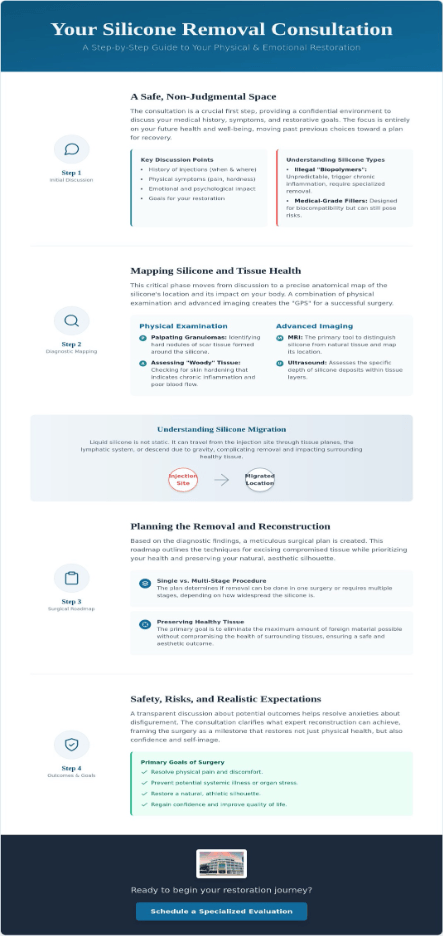
Many individuals arrive at their first appointment carrying a heavy burden of physical pain and emotional weight. When you're considering what to expect during a silicone removal consultation, it's vital to recognize that this is a safe, non-judgmental space. We focus entirely on your restoration rather than your past choices. This initial meeting serves as a turning point, moving you away from the discomfort of granulomas and toward a future of functional freedom. It's a life-saving diagnostic step designed to prevent systemic illness or potential organ stress caused by foreign materials in your body.
During our discussion, we'll delve into the specific history of your injections. We need to understand when and where the procedures occurred to predict how the material might have interacted with your anatomy over time. There's a significant clinical difference between medical-grade implants and "black market" liquid silicone biopolymers. While standard Injectable fillers are often designed to be biocompatible, illegal liquid silicone behaves unpredictably. It can trigger chronic inflammatory responses that require a highly specialized surgical plan to resolve safely.
The Emotional Journey of Restoration
Living with the consequences of illegal injections often involves more than just physical symptoms like skin discoloration or migration. It carries a profound psychological toll. This consultation serves as a sanctuary where your concerns are validated. We address the "woody" texture of tissue and the persistent discomfort not just as medical facts, but as obstacles to your quality of life. Our goal is to replace anxiety with transformative hope, framing your surgery as a milestone that restores both your health and your self-image.
Defining the Scope of the Procedure
A critical part of what to expect during a silicone removal consultation is the initial assessment of silicone migration. Liquid silicone doesn't always stay where it was originally placed; it often travels through tissue planes into surrounding areas. We determine if the material is localized or widespread, which informs whether you're a candidate for a single-stage procedure or a more complex multi-stage reconstruction. We'll be transparent about the nuances of "complete removal." The priority is always to preserve the health of your surrounding tissues while eliminating the maximum amount of foreign material possible to ensure a safe, aesthetic outcome.
The Diagnostic Phase: Mapping Silicone and Tissue Health
The diagnostic phase represents the most critical technical portion of your visit. It's during this time that we move from your narrative history to a precise anatomical map. When considering what to expect during a silicone removal consultation, understand that the physical examination is the first step. We carefully palpate the affected areas to identify granulomas, which are hard nodules of scar tissue formed around the silicone. We also assess for "woody" tissue, a specific type of skin hardening that indicates chronic inflammation and compromised blood flow. This tactile assessment helps us gauge the vitality of your skin and determine the safest limits for surgical intervention.
Visualizing the internal landscape requires more than a surface exam. We utilize advanced imaging to see exactly where the material has settled. MRI with and without contrast is our primary tool, as it distinguishes between liquid silicone and natural fat or muscle. While MRI provides a high-resolution overview, ultrasound allows us to assess the specific depth of silicone deposits within various tissue layers. This level of detail is vital because the FDA safety communication regarding illegal injections highlights the severe risks of material migrating into blood vessels or vital organs.
Identifying Silicone Granulomas and Migration
Granulomas are essentially your body's defensive response to a foreign invader. These lumpy, often painful masses complicate surgery because they tend to adhere to healthy structures. We also track "silent" migration, where silicone travels through the lymphatic system or descends into the lower extremities due to gravity. MRI imaging serves as the essential GPS for the surgical team to navigate these complex anatomical changes. If you are experiencing these symptoms, you can schedule a specialized evaluation to begin your diagnostic mapping.
Assessing Systemic Health and Inflammatory Response
Our evaluation extends beyond the local injection site to your entire biological system. We review blood work to check for markers of chronic inflammation or autoimmune triggers that often accompany long-term silicone exposure. This is particularly relevant when discussing ASASIA, or Autoimmune/Inflammatory Syndrome Induced by Adjuvants. We look for specific criteria, such as joint pain, chronic fatigue, or cognitive changes, to understand how the silicone is impacting your daily mobility and overall comfort. This comprehensive health profile ensures that your surgical roadmap is tailored to your body's unique healing capacity.
Planning the Removal: Surgical Techniques and Reconstruction
Once the diagnostic mapping is complete, we transition into the technical planning of your procedure. A major part of what to expect during a silicone removal consultation is a detailed explanation of why specific surgical techniques are chosen over others. While "En Bloc" removal is the gold standard for encapsulated breast implants, liquid silicone requires a more nuanced approach. Because liquid biopolymers often lack a protective capsule, we typically utilize direct excision. This involves meticulously removing the silicone along with the compromised skin and fat it has infiltrated. Our priority is always the preservation of vital structures. We work with extreme precision to protect underlying nerves and blood vessels, ensuring that the deep tissue cleaning doesn't compromise your functional health.
We believe in a comprehensive approach that treats the individual, not just the condition. This means your consultation will include a frank discussion about the "void" left behind after removal. Whether we are addressing the buttocks, breasts, or face, the goal is to stabilize the area first. We'll examine your skin elasticity and tissue volume to determine if a single-stage procedure is possible or if a multi-stage plan will yield the safest aesthetic result. This strategic planning is what distinguishes a premier reconstructive practice from a general aesthetic clinic.
The Challenges of Liquid Silicone Removal
Many patients ask if liposuction can solve the problem, but this method is often ineffective and dangerous for liquid silicone. Liposuction cannot remove the hard granulomas or the "woody" tissue identified during your exam. In fact, it can worsen the situation by breaking up the material and encouraging further migration. Open surgery is necessary to clear the maximum volume of foreign material. This is particularly true when silicone has infiltrated muscle tissue, creating a "Swiss cheese" effect that requires a surgeon's direct visualization to navigate safely. The FDA safety warning on injectable silicone underscores these complexities, noting that the material can be nearly impossible to remove entirely once it has integrated with your anatomy.
Integrating Reconstruction into the Consultation
We don't just plan for the removal; we plan for your eventual restoration. During your visit, we'll discuss how to manage the changes in your silhouette. In many cases, reconstruction is scheduled for a later date to allow the tissues to heal and the inflammation to subside. Whether you're seeking a Breast Lift (Mastopexy) or Buttock Reconstruction after Silicone Removal, we set realistic expectations for the outcome. While the immediate goal is functional health, we also explore future options like fat grafting or skin lifts to return your body to its natural, intended state. Understanding this multi-stage roadmap is a vital part of what to expect during a silicone removal consultation.
Safety, Risks, and Realistic Expectations
One of the most frequent questions we hear is, "Will I look worse after surgery?" It's a valid fear, especially when you've already experienced the trauma of disfiguring injections. Part of what to expect during a silicone removal consultation is a transparent discussion about the immediate aesthetic trade-off. Initially, removing large volumes of material may leave the area looking deflated or irregular. However, we prioritize your long-term health and the foundation for future reconstruction. The "Katzen Approach" focuses on placing incisions strategically to minimize visible scarring while aggressively clearing as much foreign material as possible to stop the cycle of inflammation.
Like any major reconstructive procedure, there are inherent risks such as infection or the formation of a seroma, which is a pocket of fluid that can develop post-operatively. These surgeries are long and technically demanding, often requiring several hours of meticulous work. Because of this complexity, we utilize specialized anesthesia protocols to ensure your safety and comfort throughout the entire process. We don't rush the removal. We take the time necessary to clean the tissue planes thoroughly while protecting your functional integrity.
The Reality of Residual Silicone
Achieving 100% removal is often anatomically impossible. As we discussed in previous sections, liquid silicone can weave through muscle fibers and wrap around nerves like a web. Attempting to scrape every microscopic trace could cause permanent damage to vital structures. We define a successful outcome as a significant reduction in the inflammatory load. By removing the bulk of the material, your body can finally begin to heal from chronic inflammation. Most patients find that their systemic symptoms and daily comfort improve dramatically even if trace amounts remain.
Pre-Surgical Requirements
Success starts before you enter the operating room. We require strict smoking cessation and nutritional optimization to ensure your body has the resources for complex wound healing. Depending on your systemic symptoms, we may coordinate with your rheumatologist or an infectious disease specialist to ensure your body is ready for the stress of surgery. Mental health support is also a cornerstone of our approach. Having a strong recovery network helps you manage the emotional arc of this transition. If you're ready to prioritize your health and safety, contact us today to discuss your personalized surgical plan.
Choosing an Elite Specialist for Your Restoration
Silicone removal is one of the most technically demanding procedures in the field of reconstructive surgery. Because of the high risk of tissue compromise and the unpredictable nature of migrated material, many general plastic surgeons decline these cases entirely. They often lack the specialized instrumentation or the reconstructive background required to navigate "woody" tissues and scarred tissue planes safely. When you're researching what to expect during a silicone removal consultation, it's essential to seek a specialist who views your case through both a medical and an artistic lens. Dr. Katzen’s extensive experience in massive weight loss and complex reconstructive body contouring provides the unique skill set needed to handle these difficult challenges with elite craftsmanship.
We approach these cases with a sophisticated balance of clinical authority and compassionate reassurance. We understand that this isn't just about removing a foreign substance; it's about restoring your functional freedom. A premier specialist doesn't just look at the injection site. They evaluate how the material has impacted your mobility, your systemic health, and your self-image. This comprehensive perspective ensures that your surgical roadmap is both safe and transformative, leading you toward a result that feels like your natural self again.
The Katzen Difference in Reconstructive Craftsmanship
Our practice has built a national reputation for addressing the most complex "botched" or illegal injection cases that others might avoid. We don't see these procedures as mere medical interventions; they are life-changing milestones. Our commitment is to restore your body to its intended, healthy state, revealing the results of your prior health efforts that the silicone has obscured. We've seen countless individuals transition from a life of chronic pain and isolation to one of functional freedom. This journey begins with a meticulous plan that prioritizes your safety while striving for the most aesthetic silhouette possible.
Preparing for Your Visit
To make the most of your time, come prepared with a clear history of your previous procedures. Understanding what to expect during a silicone removal consultation involves active participation in your care plan. Please bring the following items to your evaluation:
- Copies of any previous imaging, such as MRI or ultrasound reports.
- A detailed timeline of when and where the injections occurred.
- A list of current medications and any systemic symptoms you're experiencing.
During our meeting, don't hesitate to ask specific questions about your restoration. You might ask how many similar cases the surgeon has handled, what the specific plan is for preserving your healthy tissue, or how many stages the reconstruction might require. This transparency builds the trust necessary for a successful outcome. If you're ready to reclaim your health and confidence, schedule your specialized silicone removal consultation today and take the first step toward your physical restoration.
Reclaiming Your Health and Functional Freedom
Your journey toward physical restoration begins with the courage to seek a specialized solution. We've explored how advanced diagnostic mapping and meticulous surgical planning form the essential blueprint for your recovery. By prioritizing the removal of inflammatory material and the preservation of vital anatomy, you're doing more than treating a medical concern; you're reclaiming your daily comfort and confidence.
Knowing what to expect during a silicone removal consultation empowers you to move past the anxiety of the unknown and toward a clear, surgical roadmap. Our practice serves as a premier national destination for these complex cases, offering a compassionate, non-judgmental environment where your health is the absolute priority. With board-certified expertise in complex reconstructive surgery, we are dedicated to returning your body to its intended state through elite craftsmanship.
Take the first step toward a life free from the weight of past choices and chronic discomfort. Begin your journey to restoration: Request a consultation with Dr. Katzen. You don't have to navigate this path alone; transformative hope and specialized care are ready to guide you home.
Frequently Asked Questions
Is silicone removal surgery covered by insurance?
Silicone removal is typically classified as a cosmetic procedure and isn't covered by standard insurance plans. However, if the removal is deemed medically necessary due to documented health complications like severe infection or chronic pain, some providers might offer partial coverage. It's best to consult with your insurance carrier directly to understand their specific requirements for medical necessity documentation.
Can I have my silicone removed and a BBL done at the same time?
Performing a Fat Transfer (BBL) at the same time as silicone removal is generally discouraged because the surrounding tissue is often too inflamed to support new fat cells. Our priority is to clear the inflammatory load and allow the area to heal completely first. This staged approach ensures a safer environment for eventual reconstruction and leads to a much more predictable, aesthetic result.
How long does the initial consultation typically last?
A comprehensive evaluation usually lasts between 45 and 60 minutes. This time allows for a thorough review of your medical history, a detailed physical examination, and a discussion of your diagnostic imaging. Understanding what to expect during a silicone removal consultation means knowing that we won't rush this process; we take the time to build a precise surgical roadmap tailored to your needs
What happens if the silicone has migrated to my legs or back?
If silicone has migrated beyond the initial injection site, we use advanced imaging to map its exact location. Gravity often pulls liquid silicone down into the thighs or calves, requiring specialized incisions to access and remove the material. While migrated silicone adds complexity to the surgery, identifying these deposits during your consultation is the first step toward relieving the associated heaviness and discomfort.
Will I need an MRI before my consultation?
While you don't strictly need an MRI before your first visit, having one ready makes the appointment significantly more productive. An MRI with and without contrast acts as a GPS for your anatomy, allowing us to see exactly where the silicone sits in relation to your muscles and nerves. If you haven't had imaging yet, we can coordinate the necessary orders as part of what to expect during a silicone removal consultation.
How many surgeries are usually required to remove all the silicone
Most patients require one to two surgeries depending on the extent of the migration and the health of their tissue. The first procedure focuses on removing the bulk of the foreign material and compromised tissue to stop chronic inflammation. If significant reconstruction is needed, such as a skin lift or fat grafting, this is often performed as a second stage once the area has stabilized and healed.
What are the signs that my silicone injections are becoming dangerous?
Warning signs include persistent hardness, skin discoloration, or the formation of painful lumps known as granulomas. You might also notice the material shifting to new areas or experience systemic issues like chronic fatigue and joint pain. These symptoms indicate that your body is in a state of constant inflammatory defense, making a professional surgical evaluation an urgent priority for your long-term health.
Can silicone removal help with autoimmune symptoms?
Many individuals find that their systemic health improves significantly after the inflammatory material is removed. By reducing the "foreign body" load, we help alleviate the triggers for ASASIA, or Autoimmune Syndrome Induced by Adjuvants. While we can't guarantee a complete cure for autoimmune conditions, removing the source of chronic inflammation is a powerful step toward restoring your body's natural balance and functional freedom.