Life After Silicone Removal Surgery: The Journey to Health and Restoration
7/8/2026
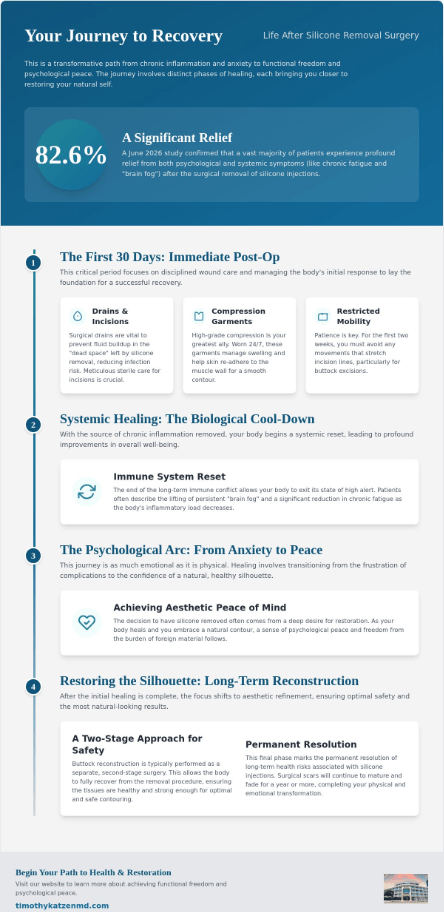
Did you know that 82.6% of patients experience significant relief from both psychological and systemic symptoms following the surgical removal of silicone injections? This data, from a June 2026 study, confirms what many individuals feel intuitively: the burden of foreign material is more than just physical. If you've struggled with chronic inflammation, fatigue, or the fear of permanent disfigurement, it's natural to wonder what life after silicone removal surgery actually looks like. You aren't just seeking a medical procedure; you're seeking a return to the person you were before these complications began.
We understand that the decision to move forward is often born from a place of deep frustration and a desire for genuine restoration. This guide explores the multi-phase journey of healing, from the immediate relief of systemic symptoms to the sophisticated aesthetic reconstruction that restores a natural body contour. We'll preview the clinical steps and emotional milestones that define this transition. By focusing on a comprehensive, all-encompassing approach, we can help you achieve both functional freedom and psychological peace of mind. Your path to health is a transformative milestone, and we're dedicated to helping you reveal the results of your resilience.
Article Summary
-
Manage the critical first 30 days by utilizing surgical drains and compression garments to minimize swelling and protect delicate excision sites.
-
Understand the biological "cool-down" that occurs after removal, allowing the immune system to reset and alleviating systemic symptoms like brain fog and chronic fatigue.
-
Transition from initial anxiety to psychological peace as you embrace a natural silhouette during your life after silicone removal surgery.
-
Discover why buttock reconstruction after silicone removal is typically approached as a separate, second stage to ensure optimal safety and the most refined contouring results.
-
Look forward to the permanent resolution of long-term health risks and the final maturation of surgical scars one year and beyond.
??????
Table of Contents
-
The First 30 Days: Navigating the Immediate Post-Operative Phase
-
Systemic Healing: How Your Body Responds to Silicone Removal
-
Restoring the Silhouette: Options for Post-Removal Reconstructio


The First 30 Days: Navigating the Immediate Post-Operative Phase
The first month of life after silicone removal surgery is a period of profound transition. Unlike a standard breast implant removal, the excision of liquid silicone injections involves a meticulous surgical debridement of tissues where the material has migrated and integrated. This complexity often leads to a more intensive recovery phase than typical aesthetic procedures. You'll likely notice a unique relief milestone within the first week. While you'll experience expected surgical soreness, the chronic, inflammatory burning or heaviness associated with silicone granulomas often begins to dissipate almost immediately.
Protecting your results during these first 30 days requires a disciplined approach to wound care, especially for complex areas like the buttocks or breasts. Because these tissues have often been compromised by years of inflammation, they require extra time to heal. It's essential to understand that managing Plastic Surgery Complications related to previous illegal injections is a specialized skill. Your primary goal during this window is to minimize tension on the excision sites and manage the body’s natural inflammatory response.
Managing Drains and Incisions
Surgical drains are a vital component of your early recovery. When we remove integrated silicone, it leaves behind "dead space" that the body naturally wants to fill with fluid. Drains prevent this buildup, which reduces the risk of seromas or infections. You'll need to keep a daily log of the fluid output; this data is the clinical compass that tells us exactly when it's safe to remove them. Keeping the incision sites sterile is equally critical, as tissues previously affected by silicone may have a slightly slower immune response.
The Role of Compression Garments
High-grade compression is your greatest ally in achieving a smooth, natural contour. These garments do more than just manage swelling; they provide the mechanical pressure needed to help the skin and underlying tissue re-adhere to the muscle wall. In the context of life after silicone removal surgery, you can expect to wear these garments 24/7 for the first several weeks. As the initial post-surgical swelling decreases, we'll guide you on how to adjust or downsize your garment to maintain consistent, even pressure across the surgical area.
Restricted mobility is the final piece of the puzzle. For the first two weeks, you must avoid any movements that stretch or pull at the incision lines. This is particularly true for buttock excisions, where sitting or walking can place significant stress on the repair. By prioritizing rest and following these clinical protocols, you're not just healing; you're laying the foundation for a successful future reconstruction. This period is about patience and allowing your body to finally begin the process of internal restoration without the burden of foreign material.
Systemic Healing: How Your Body Responds to Silicone Removal
The surgical excision of integrated silicone marks the end of a long-term immune conflict. For years, your body has been in a state of high alert, attempting to wall off a material it simply cannot process. Once the physical source of this chronic inflammation is removed, a "biological cool-down" begins. While the first few weeks focus on wound closure, the following months involve a systemic reset that truly defines your life after silicone removal surgery. Many patients describe a profound shift as the persistent "brain fog" lifts and chronic fatigue begins to wane.
According to a June 2026 study, 82.6% of patients experienced significant relief from both psychological and systemic symptoms following the surgical removal of silicone injections. This improvement isn't just subjective; it's a measurable reduction in the body's inflammatory load. It's helpful to review what to expect during recovery to understand how the body prioritizes internal healing over several months. To accelerate this process, we often recommend specialized lymphatic drainage to help the body clear residual inflammatory markers and toxins that may have accumulated in the tissue surrounding the injection sites.
The End of the Inflammatory Response
When silicone is present, the immune system is locked in a cycle of producing scar tissue and granulomas. Excision breaks this cycle. The immune system typically reaches a new baseline of stabilization within six to twelve months after the final excision procedure. While some symptoms like joint pain may take time to fully resolve as the body recalibrates, the cessation of the active inflammatory response prevents further damage to your internal organs and overall health.
Monitoring Tissue Health
In the months following surgery, you'll notice a gradual softening of the skin and underlying tissues. Research indicates that 63.6% of individuals with illegal injections suffer from skin induration, or hardening, which requires a significant "cool-down" period to reverse. We utilize follow-up MRIs or ultrasounds to confirm the stability of the remaining tissue. This clinical vigilance helps us differentiate between normal surgical scar tissue and any residual material. For those navigating this complex recovery, a consultation with a specialist like Dr. Timothy Katzen can provide the clinical clarity needed to monitor long-term tissue health and ensure the inflammatory response has truly subsided.
As the skin induration clears and hyperpigmentation (which affects over 90% of patients) begins to fade, the focus shifts from medical necessity to aesthetic restoration. This transition is a vital milestone, as it signals that the body is finally healthy enough to support the next stage of your journey. You aren't just recovering from a procedure; you're reclaiming a body that is no longer fighting itself.
The Psychological Arc: From Anxiety to Aesthetic Peace
Choosing to undergo a major restorative procedure is as much a mental milestone as it is a surgical one. For many, the years leading up to this decision are defined by a quiet, persistent anxiety. You may have felt like you were living with a "ticking time bomb," constantly monitoring your body for new lumps, skin changes, or signs of migration. Once the material is excised, that psychological weight often lifts before the physical swelling even subsides. This sense of liberation is a hallmark of life after silicone removal surgery, marking the moment you stop managing a medical crisis and start reclaiming your quality of life.
Reconnecting with your body after years of chronic pain or hiding deformities takes time and patience. It's common to experience a period of adjustment as you transition from an "injected" look to a natural silhouette. While the initial change in volume can feel significant, it's vital to frame this as a return to your intended state. You aren't just losing volume; you're gaining a body that is functional, healthy, and finally yours again. Setting realistic expectations early in the process helps bridge the gap between the memory of a previous aesthetic and the reality of a restored, healthy frame.
Validation of the Journey
It takes immense bravery to prioritize systemic health over a temporary aesthetic. We recognize that the path to restoration often involves navigating complex emotions, including "removal regret" or fear of the unknown. Finding support communities of individuals who have walked this same path can be incredibly healing. This shift in focus from "augmentation" to "restoration" is a powerful act of self-advocacy. You're choosing a future where your health is the foundation of your confidence, rather than a liability.
Confidence in Your New Silhouette
Embracing a smaller, more natural version of yourself often brings unexpected physical benefits that boost your mental well-being. Migrated silicone is remarkably heavy and can distort your natural posture and gait. As this weight is removed, many patients report improved physical mobility and a renewed desire to be active. This newfound functional freedom often translates into a more vibrant, confident presence. Open communication with your specialist is essential during this phase. We work closely with you to manage aesthetic expectations, ensuring you feel supported as you rediscover the strength and beauty of your natural form.
Restoring the Silhouette: Options for Post-Removal Reconstruction
A common concern for many individuals is how their body will look once the volume of the injected silicone is gone. It's important to understand that life after silicone removal surgery often involves a staged approach. Unlike removing a contained implant, excising liquid silicone requires removing the material along with the surrounding inflamed tissue and granulomas. This process can leave significant voids or skin laxity. We typically recommend waiting six to twelve months before performing major reconstruction to ensure the "inflammatory bed" has completely cooled down and the remaining tissues are healthy enough to support new volume.
This waiting period is a vital safety measure. Attempting to reconstruct too early, while the body is still responding to the trauma of excision, increases the risk of complications like fat necrosis or wound dehiscence. By prioritizing health first, we create a stable foundation for a beautiful, lasting result. Once your tissues have softened and systemic inflammation has subsided, we can begin the artistic process of restoring your natural body contour through specialized techniques designed for complex restoration.
Buttock Reconstruction After Silicone Removal
For those who have had silicone removed from the buttocks, the goal is to restore a feminine, projected shape without introducing new foreign materials. Dr. Katzen often utilizes advanced autologous tissue flaps to rebuild the gluteal region. This technique involves repositioning your own existing tissue to fill the voids left by the excision. We generally avoid traditional gluteal implants in these cases, as the tissues previously compromised by silicone may not have the blood supply or elasticity to safely house a large foreign object. Fat transfer, or a BBL, is another powerful tool; however, it's only performed once we've confirmed the inflammatory response is gone, ensuring the highest possible survival rate for the transferred fat cells.
Combining Removal with Body Contouring
Significant volume removal often results in "deflated" skin that requires surgical tightening. To address this, we may integrate a 360 circumferential lower body lift to remove excess skin from the abdomen, hips, and lower back. This procedure provides a comprehensive reset for your entire midsection. Additionally, VASER Hi-Definition liposuction can be used to refine the edges of the reconstruction, smoothing out any irregularities and highlighting your natural muscle definition. Each plan is meticulously tailored to the specific location and depth of your original injections, ensuring that we address the unique nuances of your anatomy. If you're ready to discuss a personalized plan for your restoration, you can schedule a consultation with Dr. Katzen to explore your reconstructive options.
Long-Term Outlook: Life at One Year and Beyond
Reaching the twelve-month milestone marks a definitive turning point in your recovery. By this stage, the biological "cool-down" period discussed in earlier phases has largely concluded, and your body has successfully recalibrated to its natural state. Life after silicone removal surgery at the one-year mark is characterized by stability, both in your physical health and your aesthetic results. The persistent threat of silicone migration, which affects up to 59% of patients with illegal injections, is finally a concern of the past. You're no longer just a patient in recovery; you're an individual living with a body that is finally free from industrial-grade contaminants.
One of the most profound benefits of this journey is the permanent mitigation of severe health risks. Research from 2026 indicates that illegal silicone injections frequently lead to chronic complications like skin ulcers (36.4%) and systemic inflammation (50%). By choosing excision, you've eliminated the source of these triggers, significantly reducing the long-term risk of organ failure or inflammatory-related cancers. Maintaining this health requires a commitment to stable weight and healthy lifestyle habits, which ensure that your reconstructive results remain crisp and well-defined for years to come.
Returning to a high-impact, active lifestyle is a major goal for many. Whether you've undergone a buttock reconstruction or a body lift, your tissues are now strong enough to support vigorous exercise. Running, weightlifting, and high-intensity training are not only possible but encouraged to help maintain the muscle tone beneath your new, natural contours. This return to functional freedom is the ultimate reward for the patience you've shown throughout this multi-stage restorative process.
Scar Management and Maturation
During the first year, your surgical scars will undergo a significant transformation. Initially, incisions may appear red and slightly raised as the body works to knit the tissues back together. Over the course of 12 to 18 months, these marks typically fade into flat, pale lines that blend more seamlessly with your natural skin tone. We often recommend a combination of silicone sheets, targeted massage, and occasionally laser treatments to optimize this process. The point of "final result" in reconstructive surgery is reached when the tissues have fully softened and the surgical scars have completed their biological maturation process.
A Lifetime of Health
The decision to remove non-medical grade silicone is a lifetime investment in your longevity. While the primary source of inflammation is gone, we still recommend periodic check-ups to monitor tissue integrity and ensure your lymphatic system remains healthy. These follow-up visits provide clinical peace of mind and allow us to celebrate the continued success of your transformation. You've navigated a complex path from chronic pain to restorative peace, proving that health and beauty are most powerful when they exist together. Ready to reclaim your health? Schedule a consultation with Dr. Katzen to discuss your restoration plan.
Reclaiming Your Natural Strength and Vitality
The path toward total restoration is more than a surgical timeline; it's a profound return to your intended state of health. By navigating the clinical milestones of excision and allowing for the essential biological cool-down, you replace a state of chronic inflammation with one of functional freedom. Your life after silicone removal surgery is defined by this transition from managing a medical burden to finally embracing a natural, healthy silhouette. This journey requires patience, but the result is a body that is no longer in conflict with itself.
Choosing a specialist who understands the intricate nuances of tissue debridement and restoration is the most critical step in this process. Dr. Katzen provides board-certified expertise in complex silicone excision and specialized buttock reconstruction techniques, offering the elite craftsmanship necessary to handle even the most challenging cases. We're dedicated advocates for individuals seeking to reverse the effects of illegal injections, providing compassionate care that prioritizes your long-term safety and aesthetic peace of mind. You've shown incredible resilience throughout this journey, and you deserve a surgical outcome that reflects your strength and commitment to health.
Begin your journey to restoration with Dr. Katzen and take the first step toward a future where your body is finally your own again. We're here to guide you through every milestone of your transformation.
Frequently Asked Questions
How long after silicone removal can I have reconstruction surgery?
You should typically wait six to twelve months before undergoing a reconstruction procedure. This interval is essential to allow the "inflammatory bed" created by the silicone to fully cool down and ensures the remaining tissues are stable enough to support new volume. Performing reconstruction too early, while the body is still in an active inflammatory state, increases the risk of fat necrosis or wound complications.
Will my systemic symptoms like fatigue and joint pain go away immediately?
While many patients report an immediate sense of "lightness" or the lifting of brain fog, other systemic symptoms like joint pain and fatigue often take several months to resolve fully. Your immune system requires time to recalibrate and reach a new baseline after years of chronic inflammation. Most individuals notice a steady, progressive improvement in their energy levels throughout the first year of life after silicone removal surgery.
What happens if some silicone cannot be safely removed during the first surgery?
If silicone has integrated into vital nerves, blood vessels, or deep muscle tissue, a specialist may leave microscopic traces to prioritize your functional safety. The primary goal of the procedure is to remove the vast majority of the material to trigger a systemic reset. In some highly complex cases, a staged approach with a secondary excision may be planned once the initial inflammation has subsided and the tissues have softened.
Can I ever have fat transfer or fillers after silicone injection removal?
Fat transfer, such as a BBL, is an excellent method for restoring volume once the tissues have completely healed and stabilized. However, we strictly avoid the use of permanent or non-FDA approved fillers in areas previously compromised by silicone. Utilizing your own natural fat provides a biocompatible solution for rebuilding your silhouette without the risk of re-triggering a foreign body response.
How do I sleep and sit comfortably after silicone is removed from my buttocks?
You'll need to avoid sitting or sleeping directly on the surgical site for at least the first two to three weeks. We recommend using a specialized "booty pillow" or a donut cushion to offload pressure when sitting is absolutely necessary. Sleeping on your stomach or side is essential during this initial phase to protect the delicate excision sites and ensure optimal blood flow for tissue healing.
Will silicone removal surgery leave me with significant scarring?
Excision surgery does result in permanent scarring, as the surgeon must physically remove the integrated material and granulomas through direct incisions. The length and location of these marks depend on the extent of the silicone migration. However, with proper scar management, these lines typically flatten and fade significantly over 12 to 18 months, eventually becoming much less noticeable pale lines.
Is it possible for silicone to migrate again after a removal surgery?
Once the bulk of the silicone and the associated granulomas are surgically excised, the risk of significant migration is virtually eliminated. While microscopic traces may occasionally remain in the tissue, they are typically encapsulated by the body's natural healing process. This clinical stability is a major milestone in your long-term recovery and provides the peace of mind needed to move forward with life after silicone removal surgery.
How soon can I return to work after silicone injection removal?
Most patients can return to sedentary desk work within two to three weeks, provided they follow strict protocols for pressure relief. If your professional life involves heavy lifting or significant physical activity, you may need four to six weeks of recovery time. We'll provide a personalized timeline based on the complexity of your specific excision and the demands of your daily routine.