Panniculectomy vs. Tummy Tuck: Which Procedure Is Right for You?
11/30/2025
Panniculectomy and abdominoplasty procedures are two separate surgical interventions aimed at addressing issues related to excess abdominal tissue. However, they serve different objectives and are performed under different clinical indications. Comprehending the distinctive features of each surgical procedure is essential for individuals contemplating abdominal surgery.
Panniculectomy
A panniculectomy is a medically indicated surgical procedure primarily designed to excise a pannus. A pannus is the overhanging portion of skin and adipose tissue that may develop in the abdominal region, frequently following substantial weight loss, aging, or pregnancy. A panniculectomy is exclusively aimed at removing excess tissue to enhance hygiene, relieve discomfort, and decrease the risk of medical complications such as rashes, skin irritation, or infections that commonly develop in the creases of the overhanging skin. A panniculectomy does not include any supplementary cosmetic contouring and is primarily regarded as a functional or reconstructive procedure.
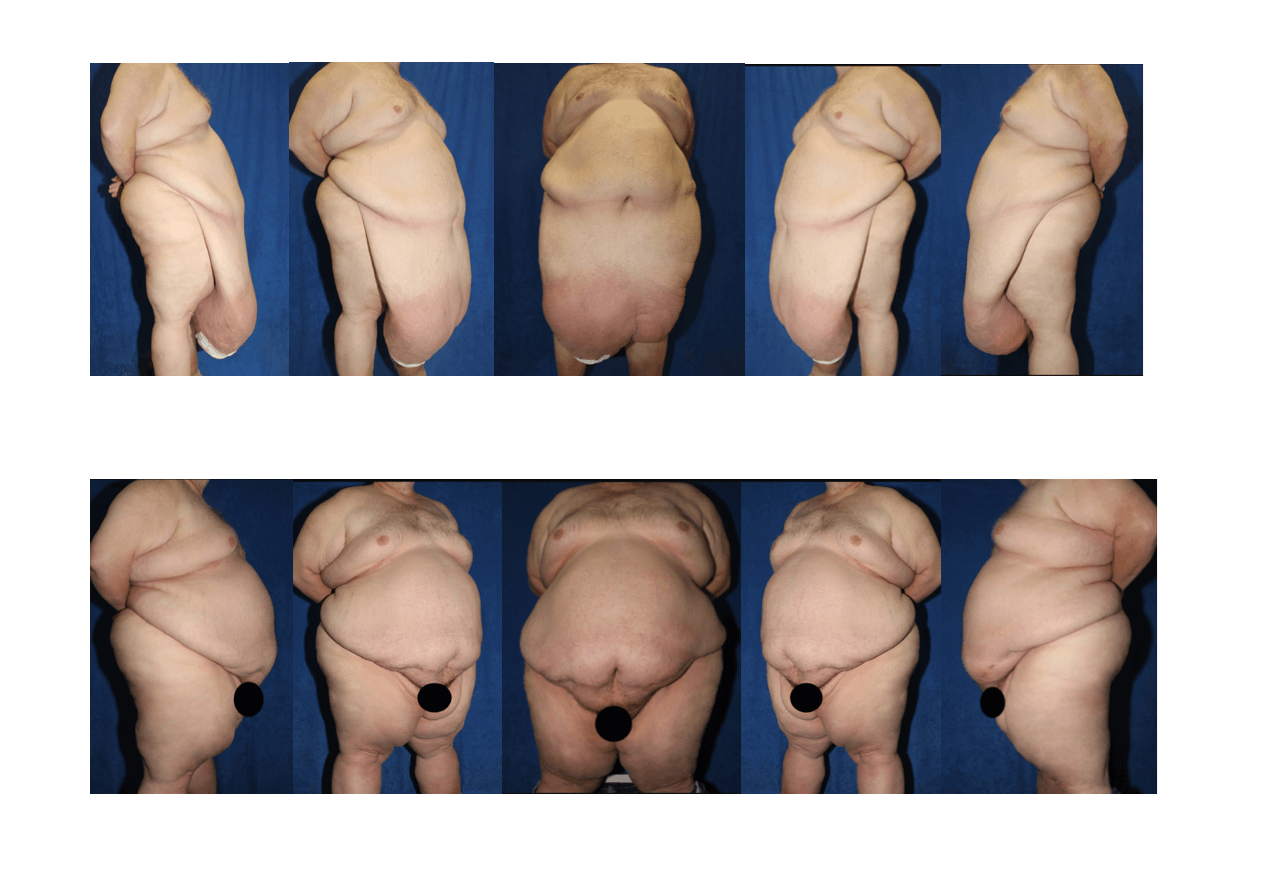
Figure #1: This set of 10 images shows the before and after pictures of a panniculectomy performed on 53-year-old White male patient who weighed 550 pounds. This patient’s pannus would become swollen and chronically inflamed. The bottom of the pannus would not receive much oxygen and would turn red. The lower part of the pannus would have chronic infections refractory to topical antibiotics and oral antibiotics. Dr. Katzen removed 72 pounds of excess skin and tissue from this patient’s lower abdomen with the panniculectomy. The patient is ecstatic with the results and can now move around more easily without the heavy burden of a pannus.
Abdominoplasty
An abdominoplasty or tummy tuck is a cosmetic surgery aimed at improving the appearance of the abdomen through the removal of excess skin and fat, as well as the tightening of the underlying abdominal muscles. The tummy tuck procedure is well-suited for individuals aiming to attain a sleeker, more sculpted abdominal area. In numerous instances, a tummy tuck is performed on patients who have undergone significant abdominal stretching resulting from pregnancy, aging, or substantial weight changes. In contrast to a panniculectomy, a tummy tuck is an elective procedure typically driven by aesthetic considerations rather than medical necessity.
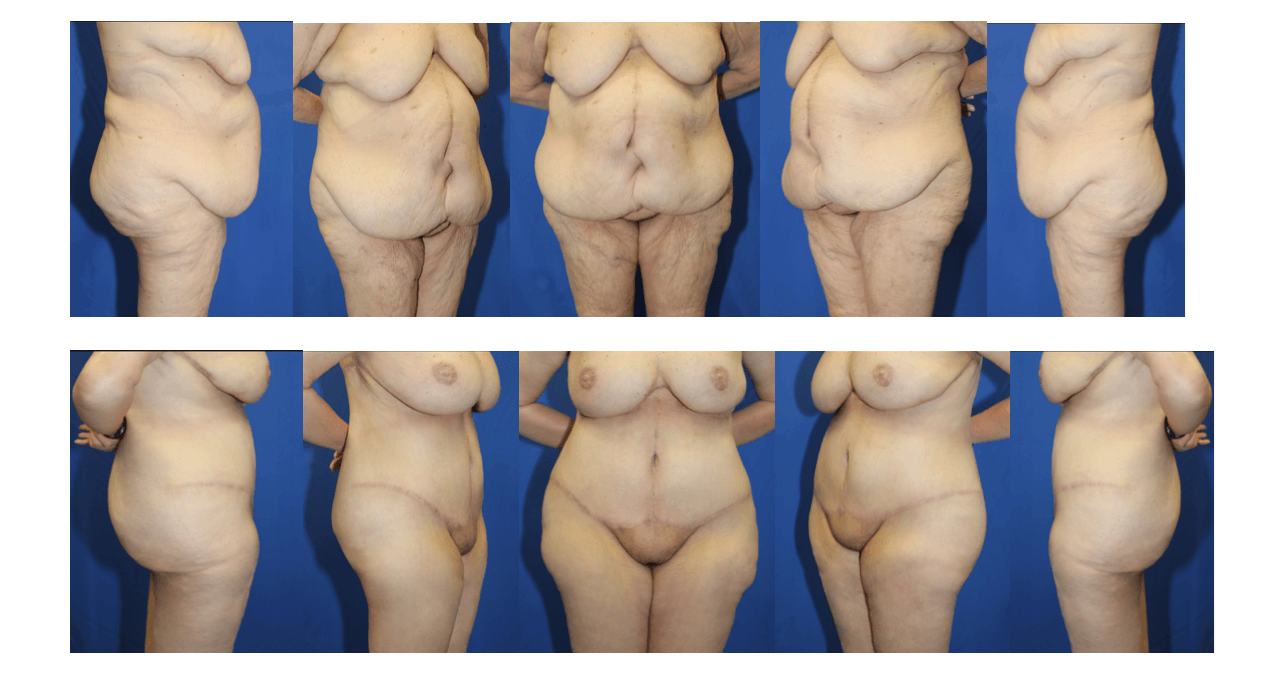
Figure #2: The 10 before and after pictures depict a 62 year old White female patient who weighed 375 pounds. She underwent duodenal switch surgery and lost 155 pounds. She wanted to remove excess skin and fat in her abdomen so she underwent an extended tummy tuck. Patient is very satisfied with her results.
Both the panniculectomy and tummy tuck procedures are conducted under general anesthesia and entail surgical excision; however, their techniques and outcomes vary. Understanding these distinctions enables patients to make well-informed decisions aligned with their individual requirements and goals.
Comprehending the Objective of Each Procedure
The primary distinction between a panniculectomy and a tummy tuck resides in their respective objectives and intended outcomes, which address different patient requirements and medical conditions. Each procedure targets specific issues concerning the aesthetic and health aspects of the abdomen.
Panniculectomy: A Medical Perspective
The panniculectomy is predominantly a medically indicated procedure aimed at excising excess skin and fat from the lower abdomen. A panniculectomy is frequently advised for individuals experiencing substantial skin excess, clinically known as a pannus. A panniculectomy is intended to address medical concerns, including skin irritation, persistent infections, mobility impairments, and sanitation difficulties resulting from the pannus. A panniculectomy involves two objectives:
- Removal of excess lower abdominal skin from pubis to the top of the pannus.
- Removal of lower abdominal wall fat from pubis to the top of the pannus.
Unlike cosmetic procedures, a panniculectomy does not include tightening of abdominal muscles or aesthetic contouring. Its focus remains on functionality, addressing medical requirements to enhance the patient’s overall quality of life.
Abdominoplasty: Aesthetic Improvement
A tummy tuck, medically referred to as an abdominoplasty, is primarily regarded as a cosmetic surgical procedure. A tummy tuck is designed to improve the aesthetic appearance of the abdomen by excising surplus skin and fat, while concurrently tightening the underlying abdominal musculature. A tummy tuck involves five objectives.
- Removal of the excess lower abdominal skin from pubis to above umbilicus or belly button
- Removal of the lower abdominal wall fat from pubis to above umbilicus or belly button
- Plication of the rectus abdominis muscles and correction of rectus diastasis
- Repositioning and reshaping of the umbilicus or belly button
- Lifting and reducing the mons or pubic region
This makes it a suitable choice for individuals seeking a flatter and more toned abdominal contour. Candidates frequently opt for tummy tuck surgery after pregnancy or weight fluctuations to achieve a more proportionate and toned appearance. In contrast to a panniculectomy, a tummy tuck procedure frequently incorporates liposuction to further enhance the contour of the area. It serves individuals desiring a more sculpted abdominal profile, emphasizing both functionality and aesthetic appeal.
Primary Variations in Purpose
While the panniculectomy primarily addresses health issues resulting from excess abdominal tissue, the tummy tuck combines functional enhancement with aesthetic refinement. Each procedure has a specific objective—panniculectomy focuses on medical necessity, while a tummy tuck emphasizes aesthetic considerations. Choosing the appropriate surgical procedure starts with determining whether the primary objective is health-related or aesthetic improvement. Both procedures can yield transformative outcomes; however, their fundamental objectives continue to play a crucial role in the decision-making process.
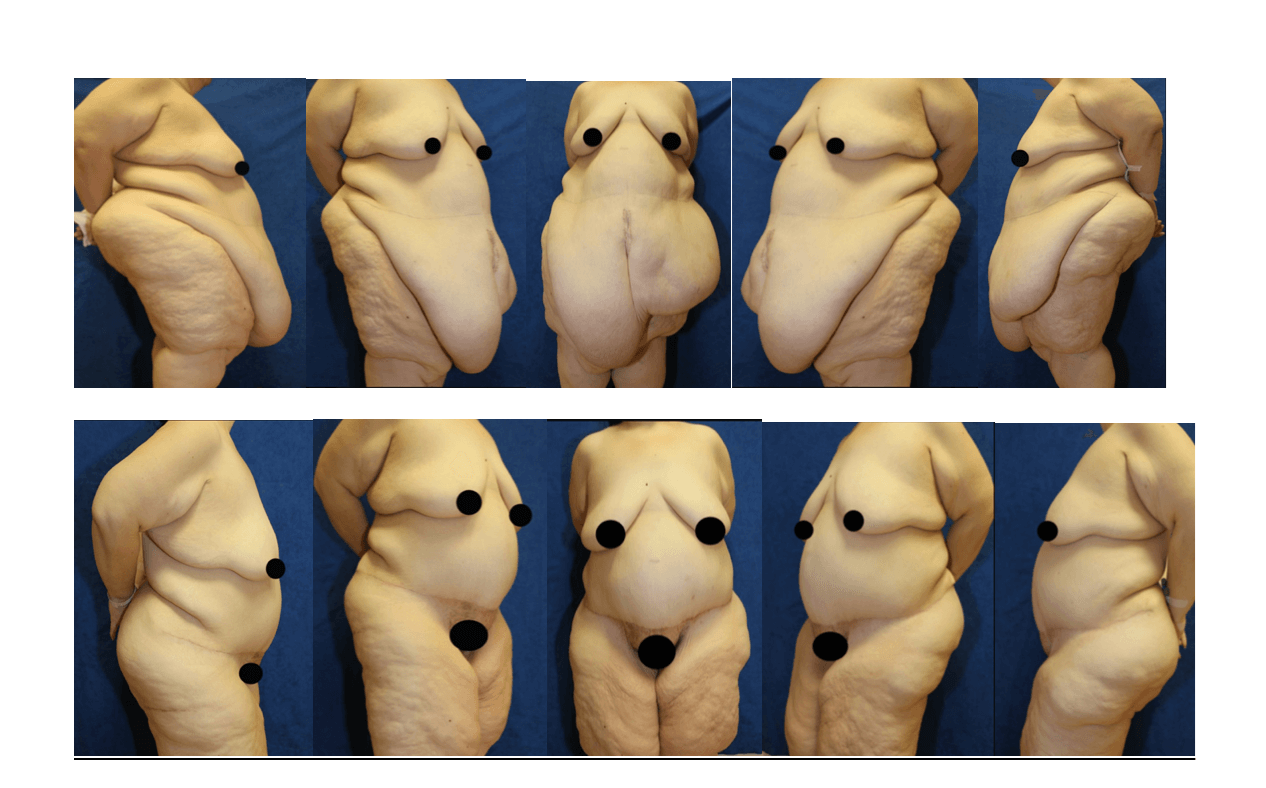
Figure #3: Ten before and after pictures of a 44-year-old White female patient who weighed 420 pounds and underwent a panniculectomy. She had previously undergone weight loss surgery and lost 177 pounds before her panniculectomy During the panniculectomy procedure, 34 pounds of excess fat and skin from her abdomen were removed. This panniculectomy transformed her body. She is thrilled with her new look and loves how she looks now!
Key Definitions: What Is Panniculectomy?
A panniculectomy is a surgical intervention aimed at excising excess skin and adipose tissue from the lower abdominal region, commonly known as the pannus or apron. Unlike cosmetic procedures, a panniculectomy predominantly focuses on functional and medical considerations. It is frequently advised for individuals experiencing complications associated with excess abdominal tissue, such as skin irritation, infections, or challenges in conducting daily activities.
The panniculectomy is exclusively concerned with the excision of the draping tissue, without altering the abdominal musculature or enhancing the waistline’s contour. The panniculectomy procedure is frequently conducted on patients who have experienced substantial weight loss through bariatric surgery or lifestyle modifications, resulting in sagging skin that impacts their quality of life. In certain instances, it may also be advisable for individuals with excessive abdominal tissue resulting from genetic factors or medical conditions.
Panniculectomies are regarded as medically necessary when excess skin and adipose tissue result in functional limitations or present health hazards. Unlike cosmetic procedures, insurance providers frequently provide coverage for a panniculectomy when the patient can substantiate a medical necessity. Nevertheless, it is essential to recognize that the panniculectomy is not designed to function as a weight-loss remedy.
The panniculectomy procedure generally entails making incisions along the lower abdomen to excise the pannus and reattach the residual skin. Recovery may entail physical discomfort, swelling, and a transient incapacity to engage in strenuous activities. A panniculectomy differs from other body-contouring procedures in that its primary goal is to promote health rather than achieve aesthetic improvements. Unlike tummy tuck procedures, panniculectomy does not involve tightening abdominal muscles or cosmetic alterations.
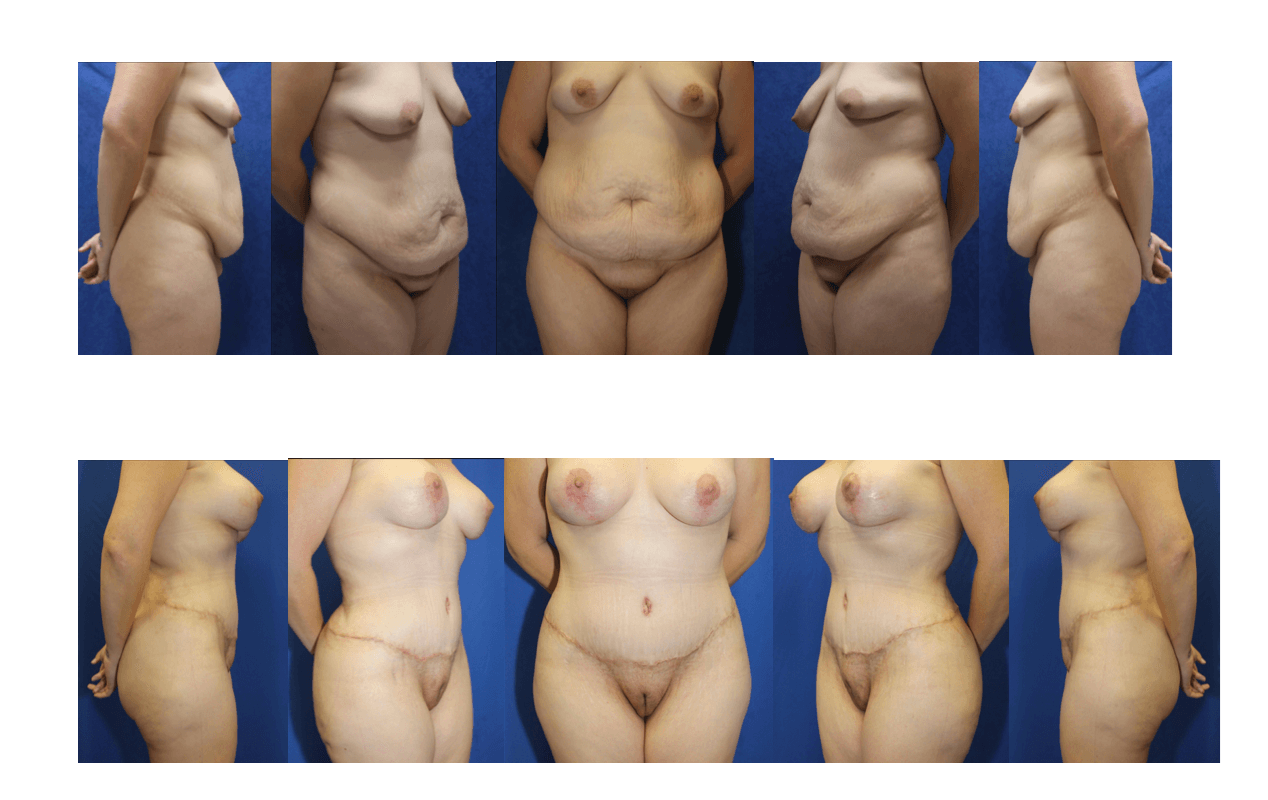
Figure #4: This set of 10 pictures show the before and after pictures of a 34 year old female patient who weighed 260 pounds and lost 90 pounds. She was not happy with the excess skin and fat in her abdomen. She underwent a tummy tuck. She is extremely satisfied with her results.
Key Definitions: What Constitutes a Tummy Tuck?
A tummy tuck, medically known as abdominoplasty, is a cosmetic surgical procedure aimed at improving the aesthetic aspect of the abdominal region. It aims to achieve a more contoured and toned midsection by eliminating excess skin and fat, while also tightening the abdominal muscles. This procedure is frequently requested by individuals who have undergone substantial weight loss, pregnancy, or aging, which may result in lax or sagging skin around the abdomen.
Eight Types of Tummy Tucks
Tummy tucks procedures are classified into various categories based on the scope of the surgical intervention:
Complete (Full) Tummy Tuck: This procedure involves a horizontal incision between the hips, allowing the plastic surgeon to remove a substantial amount of skin and adipose tissue. The horizontal tummy tuck incision can be positioned low and horizontal or high like handle bars on a bike. The high incision tummy tuck is called a high lateral tension tummy tuck. The abdominal muscles are plicated or brought together with permanent sutures. The umbilicus is repositioned and contoured. The lower abdominal skin and fat is re-draped and removed to achieve a firm and smooth appearance.
Mini-Tummy Tuck: This is a less invasive procedure targeting the lower abdomen, suitable for individuals with minimal excess skin or fat between the navel and top of the pubic region. Lower abdominal skin and fat are removed. The rectus abdominis muscle may or may not be repaired.
Extended Tummy Tuck: This modification addresses not only the abdominal region but also the flanks or “love handles.” The extended tummy tuck is best for individuals with significant hip skin laxity and hip fat deposits. The rest of the surgery is similar to the complete tummy tuck.
Fleur-de-Lis Tummy Tuck (FDL) : This FDL tummy tuck modification includes a vertical incision from the top of the pubic region to the middle of the sternum. The incision goes around the belly button. The FDL tummy tuck incision and resulting scar is in the shape of an upside down letter “T” or a “fleur-de-lis,” hence the name. The FDL tummy tuck removes excess skin and fat from the upper abdomen above the belly button. The problem with the FDL tummy tuck is a highly visible scar.
Vertical Tummy Tuck: This tummy tuck modification includes removing a vertically oriented piece of skin and fat from the top of the pubic region or belly button the bottom of the sternum. The vertical tummy can be performed independently after a horizontal full tummy tuck or primarily as an isolated form of tummy tuck. The problem with the vertical tummy tuck is a highly visible scar.
Lateral Tummy Tuck or Hour Glassing procedure: This tummy tuck modification places the incisions on the side of the torso. The incision for the lateral tummy tuck are placed from the ribs to the top of the hips or sometimes below. The lateral tummy tuck incision can fuse into a vertical torsoplasty and extend to the armpit or axillae. A large ellipse shaped area of skin and fat are removed from each side. The belly button is not altered and the rectus muscle is not reapproximated. One of the benefits of the lateral tummy tuck is that the incisions are covered on the sides. Because the lateral tummy pulls the abdominal skin to the sides, an hour glass shape is often achieved. For this reason the lateral tummy tuck is called an Hour Glassing procedure.
Reverse Tummy Tuck: During this tummy tuck modification, and incision is placed under the breasts and the upper abdominal skin and fat is pulled upwards. The reverse tummy tuck is ideal for patient with loose upper abdominal skin.
“I” Tummy Tuck: During this tummy tuck modification, a horizontal incision is placed on the lower abdomen like a complete tummy tuck, a horizontal incision is placed on the upper abdomen like a reverse tummy tuck, and a vertical incision is placed on the middle of abdomen like a verical or FDL tummy tuck. This form of tummy tuck is called the “I” because the resulting scar is in the shape of the letter “I”. The benefit of the “I” tummy tuck is that all areas of the abdomen are addressed. One downside of the “I” tummy tuck is the resulting scar.
During a tummy tuck procedure, the navel is frequently repositioned to preserve a natural appearance following surgery. A tummy tuck does not explicitly target fat removal as liposuction does; however, the tummy tuck may be combined with liposuction to achieve improved contouring outcomes.
Candidates suitable for this surgical procedure are typically individuals in good health who maintain a stable body weight. It is important to emphasize that a tummy tuck is not an alternative to weight loss nor a remedy for obesity. The main emphasis is on aesthetic enhancement rather than medical necessity, in contrast to the panniculectomy.
Variations in Surgical Procedures
Panniculectomy and abdominoplasty procedures vary considerably in their methodology, objectives, and the scope of tissue excision, which in turn influences the surgical techniques utilized. These distinctions are essential in assessing which procedure might be more appropriate to meet an individual’s specific requirements.
A panniculectomy predominantly involves the excision of the pannus—a substantial overhanging apron of excess adipose tissue and skin in the lower abdominal region. Usually, plastic surgeons perform a horizontal incision positioned just above the genital region. The method employed is designed to excise the surplus tissue while maintaining functionality. The panniculectomy does not include any muscle restoration or tightening of the abdominal wall. The panniculectomy procedure is regarded as medically essential in numerous instances, as it addresses health concerns such as skin infections or mobility limitations resulting from the size of the pannus.
A tummy tuck, or abdominoplasty, entails a more extensive and aesthetic procedure. In addition to excising excess skin and fat, the tummy tuck procedure encompasses the tightening of the abdominal muscles to achieve a firmer, more contoured appearance. The conventional tummy tuck involves a horizontal incision extending from hip to hip, typically positioned low enough to be hidden by “reasonable” undergarments. Loose muscles in the abdominal wall are sutured together during the procedure, which can restore core strength and enhance posture. Variations such as mini tummy tucks concentrate on smaller regions, whereas extended or “I” tummy tucks encompass larger areas, including the flanks.
Analysis of Recovery Time
Recovery time can be a consideration when choosing between a panniculectomy and a tummy tuck. Selection of procedure can substantially influence an individual’s capacity to resume daily activities and employment. Although both procedures necessitate a post-operative healing period, the particular recovery timelines and corresponding care requirements vary for each surgery and patient.
In general, recovery from a panniculectomy is about three to four weeks. However, there is wide variation depending on the patient’s health and size of pannus removed. Panniculectomy patients can typically anticipate returning to mild activities within three to four weeks. Full recovery, encompassing the complete subsidence of edema and other minor discomforts, may require up to three months or more. Patients are generally recommended to refrain from heavy lifting and strenuous activities for a minimum of six weeks to facilitate proper healing of the surgical site.
In comparison, the recovery from a tummy tuck is typically two to three weeks. Some tummy tuck patients may require a longer recovery period owing to the supplementary procedures required to tighten the abdominal muscles and sculpt the midsection with liposuction. Although moderate activity may typically resume within two to three weeks, the healing process for abdominal muscle repairs can often take approximately six weeks or longer to complete. Post-operative swelling generally diminishes progressively, and patients may require four to six months to observe their final tummy tuck outcomes.
Both procedures require the use of compression garments during the initial recovery period to reduce edema and facilitate healing. Both panniculectomy and tummy tuck patients will experience differing degrees of discomfort, which can be effectively alleviated with prescribed analgesic medications. Strict compliance with post-surgical care instructions, including attending scheduled follow-up appointments, is vital to promote recovery and minimize the likelihood of complications.
Who Is the Optimal Candidate for Each Procedure?
Identifying the most suitable candidate for either a panniculectomy or a tummy tuck depends on each individual’s medical requirements, body composition, and aesthetic aspirations. Although both procedures target surplus abdominal tissue, they vary considerably in their primary objectives and eligibility criteria.
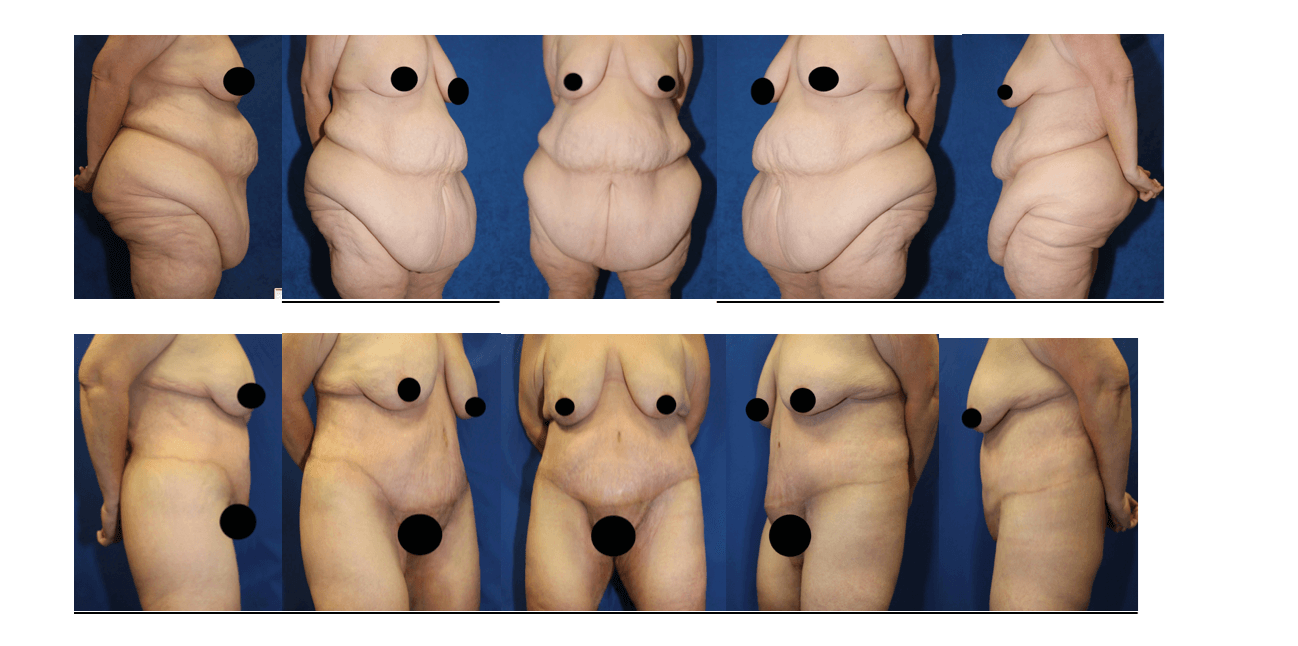
Figure #5: These 10 before and after pictures depict a 47-year-old White female who stood at 5'5" and weighed 341 pounds. She underwent a gastric sleeve and lost 133 pounds. However, she was still struggling with excess skin and fat in various areas of her body, including her abdomen, hips, legs, and buttocks. She underwent a panniculectomy and 360 circumferential lower body lift. With this procedure, 34 pounds of excess skin and fat was removed. Now, our patient is thrilled with her new body and feels more confident than ever before. Her transformation is a shining example of how hard work, determination, and the expertise of a skilled surgeon can help achieve life-changing results.
Suitable Patients for Panniculectomy
A panniculectomy is predominantly conducted for medical purposes and is aimed at patients suffering from complications caused by excessive abdominal skin, commonly known as a pannus. It is especially appropriate for individuals who have experienced substantial weight loss, such as through bariatric surgery or lifestyle modifications, resulting in sagging skin folds that interfere with daily functioning or personal sanitation. Typical candidates encompass:
- Patients Experiencing Physical Discomfort: Individuals presenting with rashes, infections, or irritation resulting from excess skin in the lower abdominal region.
- Individuals with Activity Limitations: Persons whose mobility or capacity to engage in physical activity is constrained by the weight or size of the overhanging pannus.
- Patients Experiencing Post-Weight Loss Effects: Individuals with excess skin after substantial weight reduction, particularly when the skin compromises comfort and daily functioning.
- Individuals in need of functional benefits: Applicants pursuing alleviation of medical issues rather than cosmetic improvements.
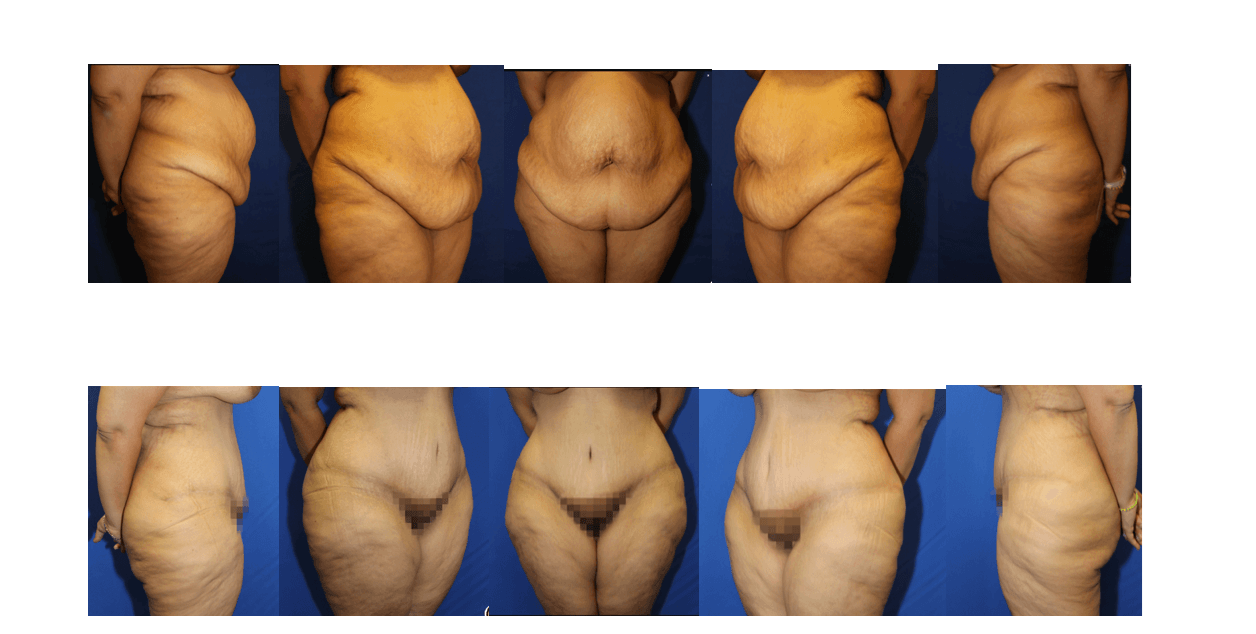
Figure #6: This before-and-after photo set depicts a 36 year-old Hispanic female patient who was 290 pounds and lost 130 pounds with diet, exercise, and gastric bypass. After her weight loss, she complained of the excess, loose abdominal skin. Dr. Katzen performed an extended abdominoplasty to remove the excess skin of her abdomen. She loves her results.
Suitable Candidate for Abdominoplasty (Tummy Tuck)
A tummy tuck, in contrast, is predominantly a cosmetic procedure designed to improve the shape of the abdomen by excising surplus skin, tightening underlying muscles, repositioning the belly button, lifting and reducing the pubic region, and enhancing overall aesthetic appearance. Ideal candidates encompass individuals seeking to restore the contour and firmness of their abdomen. Typical instances include:
- Postpartum Women: Women who have encountered skin laxity or separation of the abdominal muscles (diastasis recti) after childbirth.
- Individuals with Moderate Weight Fluctuations: Persons who have developed stretched and lax epidermis following minor changes in body weight.
- Individuals Pursuing Aesthetic Enhancements: Persons aiming to enhance the appearance of their abdomen through the removal of superfluous skin and persistent fat deposits.
For both the panniculectomy and tummy tuck, patients should be in good health and not smoke. Panniculectomy and tummy tuck candidates should possess realistic expectations, maintain a stable weight, and have no contraindicating health conditions.
Although both procedures target surplus skin, comprehending whether the primary objective is medical alleviation or aesthetic improvement assists in selecting the suitable surgical approach.
Costs and Insurance Coverage: Panniculectomy Compared to Tummy Tuck
The expenses related to panniculectomy and abdominoplasty procedures can differ considerably depending on the surgical methods employed, the scope of the procedures, and the extent of insurance coverage. Comprehending these cost variations enables individuals to make well-informed decisions regarding their options.
Cost Considerations
Panniculectomy: Panniculectomy is predominantly regarded as a medically necessary procedure designed to excise excess skin that leads to health problems, including persistent infections or impairments in mobility. The overall expense typically ranges due to the patient’s geographic location, the plastic surgeon’s level of expertise, anesthesia charges, and hospital expenses.
Tummy Tuck (Abdominoplasty): Tummy tuck procedures are categorized as cosmetic surgical interventions. Tummy tuck prices range due to factors like time under anesthesia, and whether liposuction is also being performed. These expenses encompass the plastic surgeon’s fee, facility charges, anesthesia, and post-operative care. In contrast to a panniculectomy, abdominoplasties may involve supplementary contouring procedures, which contribute to the higher overall cost.
Insurance Coverage
Panniculectomy: Insurance providers are more inclined to approve coverage for panniculectomy when medical necessity is clearly established. Documentation, including physician records, photographic evidence, and a history of unsuccessful non-surgical treatments, is frequently necessary. Coverage eligibility is subject to variation based on the specific insurance plan.
Tummy Tuck: Since a tummy tuck is classified as an elective cosmetic procedure, insurance typically does not provide coverage for a tummy tuck. Patients are accountable for their out-of-pocket expenses, often necessitating the use of payment plans or financing arrangements.
Additional Expenses to Account For
Patients contemplating either procedure should consider the expenses associated with pre-operative consultations, post-surgical garments, medications, and recovery assistance. However, panniculectomy may provide financial assistance via partial insurance coverage; a tummy tuck is generally regarded as a personal expenditure for elective aesthetic improvement.
Potential Risks and Adverse Outcomes
Undergoing a panniculectomy or abdominoplasty entails a variety of potential risks and complications that warrant cautious evaluation. Although these procedures are typically safe when conducted by a qualified and experienced plastic surgeon, each surgical intervention entails the potential for adverse outcomes.
General Risks Associated with Surgical Procedures
Both panniculectomy and abdominoplasty procedures entail similar surgical hazards, including:
- Infection: The surgical site may become infected if appropriate post-operative care is not maintained.
- Excessive bleeding: Hemorrhage occurring during or after surgery may necessitate medical intervention.
- Blood clots: Deep vein thrombosis or pulmonary embolism may develop during the recuperation process, particularly during extended periods of immobility.
- Adverse reactions to anesthesia: Allergic responses or other complications associated with general anesthesia may occur during the procedure.
Procedure-Related Complications
Complications Associated with Panniculectomy
- Seroma or hematoma development: Fluid or blood may collect, requiring drainage.
- Healing complications: Owing to the extensive scope of the excision, there may be delayed healing or inadequate wound closure.
- Skin numbness: There is a potential for nerve injury in the abdominal region, which may result in transient or persistent numbness.
Complications Associated with Abdominoplasty
- Scarring concerns: Although scars are anticipated, keloid or hypertrophic scarring may pose challenges for certain individuals.
- Asymmetry: Irregularities in the outcomes of body contouring may be observed.
- Muscle repair complications: Performing muscle plication may lead to tension, delayed healing, or persistent discomfort.
Long-Term Considerations
- Satisfaction with the results: Unrealistic expectations may lead to disappointment with the outcome.
- Revision surgery: Further procedures may be necessary to resolve aesthetic issues or complications.
- Impact on overall health: Scars, ongoing edema, or extended discomfort may persist for months or longer.
By comprehending these risks, individuals are better equipped to make informed decisions and participate in proactive pre-operative planning and post-operative management.
Sustained Advantages and Outcomes
Both panniculectomy and abdominoplasty procedures provide substantial long-term advantages and outcomes that can greatly enhance a patient’s quality of life and self-esteem. Although each procedure addresses distinct concerns and produces particular results, the outcomes are frequently long-lasting and offer physical, functional, and cosmetic benefits.
Long-Term Advantages of Panniculectomy
A panniculectomy predominantly targets health-related issues, with its long-term advantages emphasizing improved physical comfort and functional capacity.
- Reduction of Skin-Related Complications: The removal of the hanging pannus alleviates skin irritation, infections, and chronic rashes resulting from retained moisture and friction.
- Enhanced Mobility: The removal of surplus tissue frequently improves physical movement and facilitates daily activities, which can be especially advantageous for individuals who have experienced restricted mobility due to abdominal tissue.
- Long-term weight management assistance: Eliminating excess abdominal fat and skin can promote healthier behaviors, such as facilitating simpler exercise routines, thereby fostering sustained weight stability.
- Durability of Outcomes: As panniculectomy entails the excision of extensive portions of skin and fat, the results are permanent provided that patients sustain their overall weight stability.
Long-Term Advantages of Abdominoplasty
A tummy tuck provides a combination of medical and aesthetic enhancements, leading to a flatter, more toned abdominal contour while also correcting the underlying abdominal musculature.
- Improved Aesthetic: Patients frequently attain enduring contentment with their silhouette due to the firming of abdominal muscles and the excision of surplus skin.
- Reduced Abdominal Separation: Addressing diastasis recti (separation of the abdominal muscles) during the procedure can lead to sustained core stability and improved physical performance.
- Increase in Self-Confidence: A more refined and toned contour can enhance confidence in both professional and social contexts.
- Minimized Scarring: Although scars are unavoidable, appropriate care and medical treatments can facilitate their gradual fading, resulting in subtle long-term traces.
Both procedures require a dedication to preserving outcomes by adhering to a healthy lifestyle, which encompasses proper nutrition and consistent physical activity.
Figure #7: These 10 pictures showcase a 47 year male patient who weighed 450 pounds, underwent gastric bypass, and lost an incredible 160 pounds. Despite his significant weight loss, he was still unhappy with the excess skin and fat in his abdomen. To address his concerns, he underwent a panniculectomy and abdominoplasty. During this procedure, a staggering 20 pounds was removed from the patient's abdomen. After the procedure, the patient felt much lighter and more comfortable, allowing him to move around with greater ease. He was delighted with the results and grateful for the life-changing transformation.
Guidelines for Selecting Between Panniculectomy and Abdominoplasty
When choosing between a panniculectomy and a tummy tuck, it is crucial to grasp the specific objectives, advantages, and indications associated with each procedure. Both procedures entail the excision of surplus abdominal skin; however, they vary considerably in purpose, extent, and aesthetic outcomes.
1. Determine the Objective of the Surgical Procedure
A panniculectomy primarily focuses on medical issues associated with excessive skin and adipose tissue in the abdominal region. This procedure is frequently advised for individuals suffering from physical distress, recurrent infections, or mobility impairments resulting from a pannus—the medical term for an overhanging abdominal skin fold. A tummy tuck, alternatively, is a cosmetic procedure aimed at enhancing the contour of the midsection through the removal of surplus skin and fat, coupled with the tightening of the abdominal muscles. A tummy tuck is frequently selected by individuals aiming for a more sculpted and defined appearance following pregnancy or substantial weight loss.
2. Assess the Medical Necessity
Healthcare providers generally advise a panniculectomy when excess skin results in persistent health issues, including rashes, sores, or challenges in maintaining proper sanitation. Insurance may provide coverage for the panniculectomy procedure when deemed medically necessary. A tummy tuck is regarded as an elective procedure and is typically not covered by insurance. Patients should assess whether their primary objective is cosmetic enhancement or alleviation of medical concerns.
3. Evaluate Recovery Period and Associated Risk Factors
Recovery from panniculectomy may prioritize alleviating discomfort over attaining aesthetic improvements. Patients who undergo this procedure generally prioritize enhancements in functionality. Patients undergoing a tummy tuck should expect customized aesthetic results and may need additional recovery time due to muscle tightening. Candidates should evaluate their overall health status and their capacity to manage post-surgical care effectively.
4. Seek Advice from Reputable Medical Experts
Consulting with a board-certified plastic surgeon is essential. They are capable of evaluating an individual’s particular requirements and advising the suitable procedure in accordance with their medical history, intended results, and eligibility.
Making a well-informed decision necessitates meticulous evaluation of both medical and cosmetic considerations. Understanding the differences between these procedures can help individuals identify the most suitable option for their specific circumstances.
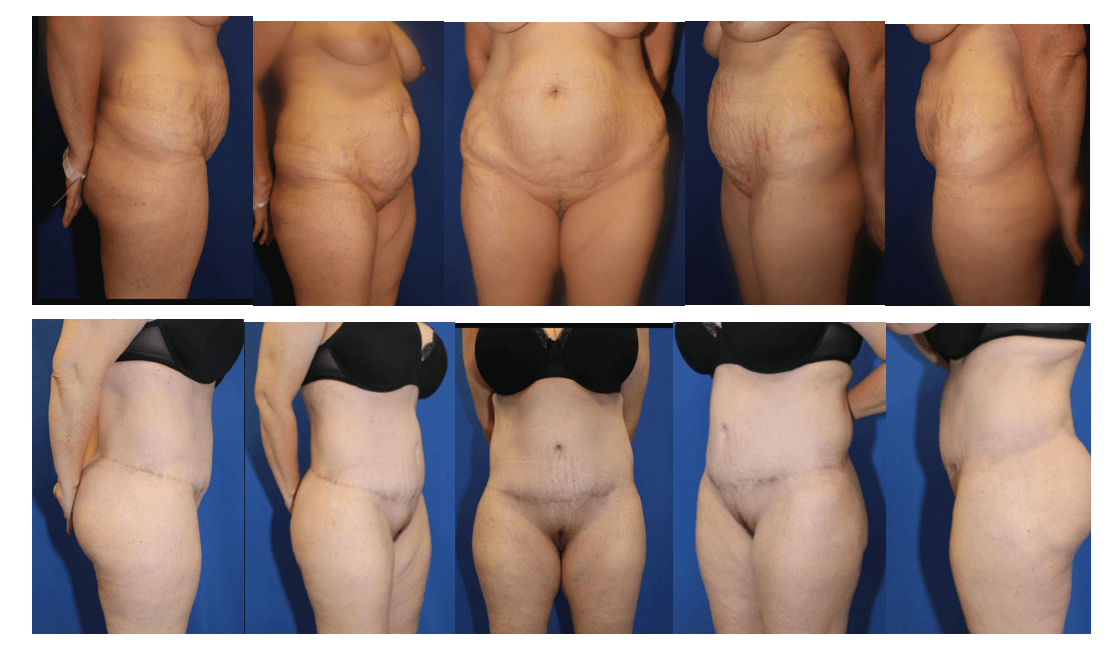
Figure #8: This set of before-and-after pictures shows a 42 year-old White female who initially weighed 245 pounds. She lost 70 pounds and was not happy with the excess skin and fat in her abdomen. She underwent a tummy tuck. She achieved a flat tummy with rectus abdominis muscle plication and the removal of excess abdominal skin and fat. Her mons (pubic region) was raised and reduced. She is very satisfied with abdominoplasty results.
SUMMARY OF THE DIFFERENCES BETWEEN A
PANNICULECTOMY AND ABDOMINOPLASTY
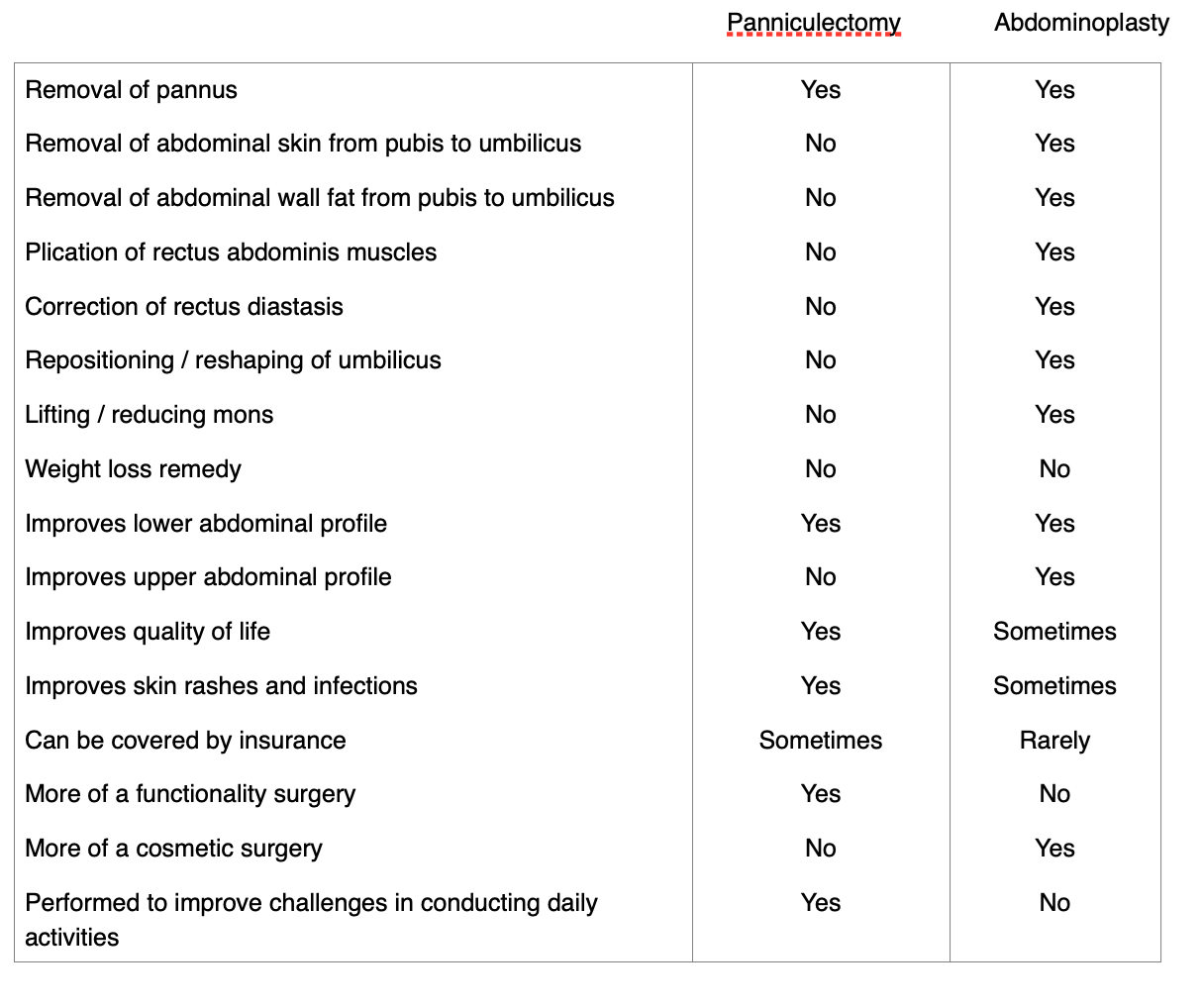
Figure #9: Chart Depicting the Differences
Between a Panniculectomy and an Abdominoplasty
Conclusion: Reaching an Informed Choice
When selecting between a panniculectomy and a tummy tuck, it is essential to comprehend the differences between the procedures. Each surgical procedure targets specific objectives and medical requirements, and choosing the appropriate one necessitates a thorough assessment of individual conditions and desired results.
A panniculectomy is typically advised for individuals experiencing physical discomfort, hygiene issues, or medical complications related to excess skin and tissue in the abdominal region. A panniculectomy concentrates solely on the removal of the pannus — the fold of skin and fat that may drape over the lower abdomen. This procedure is primarily functional rather than aesthetic and does not encompass contouring or correction of muscle laxity.
By comparison, a tummy tuck is selected by individuals who aim not only to eliminate excess skin and fat but also to achieve muscle tightening, a better belly button, a lifted and reduced pubic region and a refined abdominal silhouette. Often regarded as a cosmetic procedure, a tummy tuck generally seeks to restore a firmer and more sculpted contour to the midsection. It is typically conducted following substantial weight loss or pregnancy, when concerns regarding rectus abdominis muscle separation (diastasis recti) arise.
Patients should evaluate multiple factors to make an informed decision. These encompass their general health status, particular somatic issues, and long-term objectives. Financial considerations may also influence decision-making, as insurance plans typically cover panniculectomy for medical indications but infrequently provide coverage for tummy tucks owing to their cosmetic purpose. Recovery duration and surgical hazards must be carefully considered for both procedures.
Consulting with an experienced, board-certified plastic surgeon is a vital step in the procedure. A comprehensive assessment will offer clarity on whether panniculectomy, abdominoplasty, or a combination of both most appropriately addresses the individual’s specific requirements.

Figure #10: Picture of Dr. J. Timothy Katzen’s office in Beverly Hills. The address is 9735 Wilshire Boulevard, Suite #407, Beverly Hills, CA 90212. Dr. Katzen’s phone is (310) 859-7770.
If you or someone you know are considering a panniculectomy or tummy tuck, please get in touch with Dr. Katzen. Dr. Katzen and his team will be able to evaluate your abdomen and provide the most appropriate treatment. Please arrange for a consultation with Dr. Katzen by calling (310) 859-7770 or emailing [email protected]. Physical or virtual consultation can be arranged. Dr. Katzen is located in Beverly Hills, CA.