Tummy Tuck Muscle Repair Failure Symptoms: Is Your Procedure Result Compromised?
4/23/2026
What if the abdominal bulging you see in the mirror isn't a result of your lifestyle, but a sign that your internal foundation has been compromised? It's incredibly disheartening to complete a massive weight loss journey only to feel that your surgical results are slipping away. You've likely experienced persistent lower back pain or a strange sense of core instability that makes you feel weaker than you should. In my three decades of reconstructive experience, I've found that roughly 12% of patients seeking revisions are actually struggling with tummy tuck muscle repair failure symptoms rather than new fat accumulation. I believe you deserve a body that feels as strong as it looks.
I understand the frustration of feeling like a significant investment in your well-being has been wasted. I'll guide you through the clinical signs of failed muscle plication and provide a clear roadmap for restoring your aesthetic results. We'll explore the underlying causes of this failure and discuss the precise surgical steps needed to finally achieve the flat, functional midsection you were promised. Your journey toward a full restoration starts with understanding exactly what's happening beneath the surface.
Key Takeaways
-
Learn to identify the subtle clinical signs that distinguish normal postoperative swelling from a compromised internal abdominal corset.
-
Recognize the primary tummy tuck muscle repair failure symptoms, including sudden "popping" sensations and persistent protrusions that affect your silhouette.
-
Understand the critical role of surgical technique and post-operative activity levels in maintaining the long-term integrity of your internal sutures.
-
Gain insight into the diagnostic "crunch test" and imaging studies used to accurately visualize and confirm the state of your abdominal wall.
-
Explore the specialized revision procedures and mesh reinforcement techniques designed to restore your core strength and aesthetic confidence.
What is Tummy Tuck Muscle Repair (Plication) Failure?
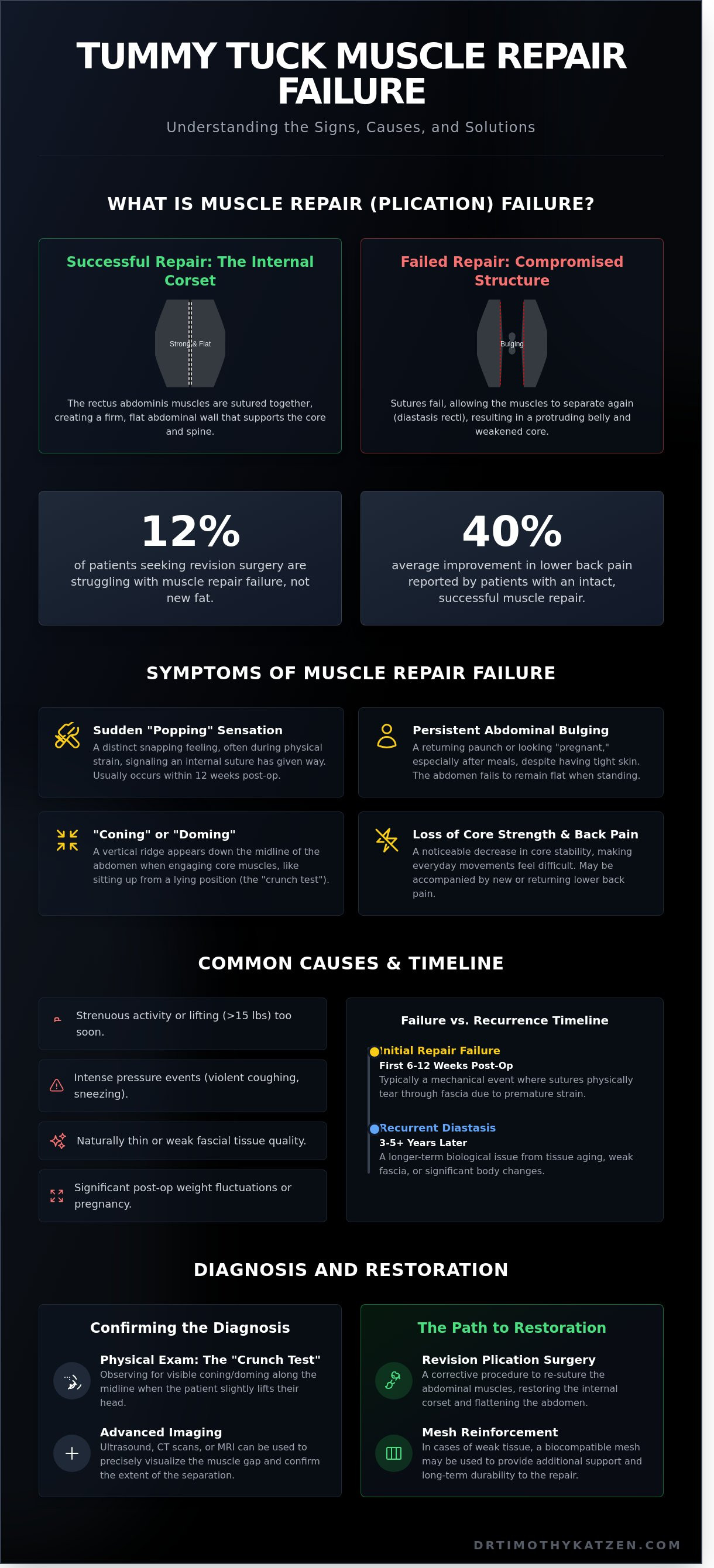
In my practice, I view an Abdominoplasty (tummy tuck) as much more than a cosmetic skin removal; it's a structural restoration of your entire midsection. The foundation of this procedure is muscle plication. During this step, I use permanent or long-acting sutures to pull the rectus abdominis muscles back together, creating an internal corset that flattens the abdominal wall. Muscle repair failure occurs when these sutures stretch, tear through the fascia, or release entirely, which compromises the structural integrity I've built. While skin laxity involves the surface, failure of the plication affects the deep muscular architecture. Many patients come to me concerned about tummy tuck muscle repair failure symptoms when they notice a returning bulge despite having relatively flat skin.
The success of a body transformation depends on this internal foundation. If the plication fails, the aesthetic result disappears, and the functional benefits of a stronger core vanish. I often tell my patients that the skin is just the upholstery, but the muscle repair is the frame of the sofa. If the frame breaks, the upholstery will never look right. Identifying tummy tuck muscle repair failure symptoms early allows us to address the issue before the abdominal wall weakens further.
The Role of the Rectus Abdominis in Core Stability
Your "six-pack" muscles do more than provide definition. They act as your body's natural internal girdle, holding your organs in place and supporting your spine. Pregnancy or losing 100 pounds or more frequently stretches the linea alba, the connective tissue between these muscles, beyond its elastic limit. This separation, known as diastasis recti, leaves the core vulnerable and the abdomen protruding. Muscle plication is the surgical tightening of the abdominal fascia to restore core integrity. When this repair is intact, patients often report a 40% improvement in lower back pain and a significant increase in core strength during daily activities.
Recurrent Diastasis Recti vs. Initial Repair Failure
It's vital to distinguish between a surgical complication and a biological recurrence. Initial repair failure often happens within the first 6 to 12 weeks post-op if a patient engages in strenuous lifting or experiences a violent bout of coughing. In these instances, the sutures may physically tear through the delicate fascia. Recurrent diastasis is typically a long-term issue that might appear 3 to 5 years later, often due to significant weight fluctuations or the natural aging of the tissues. Approximately 5% of patients may experience some degree of recurrence if their tissue quality is naturally thin or weak. Understanding the timeline of your symptoms helps me determine if the issue stems from a mechanical failure of the sutures or a biological limitation of the tissue itself.
Identifying Tummy Tuck Muscle Repair Failure Symptoms
I view the abdominal wall as the structural anchor of your entire physique. When I perform a 360-degree body lift or a standard abdominoplasty, I am meticulously tightening the rectus muscles to create a firm, flat internal corset. If these sutures fail, the results you worked so hard for can begin to slip away. Recognizing tummy tuck muscle repair failure symptoms early is essential for protecting your investment in your transformation.
One of the most jarring indicators is a sudden popping or snapping sensation. This typically occurs during a moment of physical strain, such as lifting an object heavier than 15 pounds during the first 12 weeks of recovery. You might feel an immediate release of tension followed by localized swelling. While not always painful, it often signifies that the internal plication has been compromised. If you experience this, it's vital to monitor the area for changes in contour over the following 48 hours.
Persistent protrusion is another hallmark sign. If your abdomen still bulges outward when you stand, or if you look several months pregnant after a small meal, the muscle repair may have loosened. You might also notice coning or doming, which is a visible ridge that peaks along your midline when you attempt to sit up from a lying position. This indicates that the diastasis recti, the gap between your abdominal muscles, has returned. If you're noticing these changes, you can request a professional evaluation to discuss your revision options.
A loss of core strength often accompanies these visual cues. You may find it difficult to perform basic movements, such as stabilizing yourself while walking on uneven ground or maintaining an upright posture at your desk. When the internal corset isn't holding, your body loses its primary source of stability, making tummy tuck muscle repair failure symptoms a functional concern as much as a cosmetic one.
Visual Symptoms: The Aesthetic Breakdown
The aesthetic failure often manifests as a recurring pooch that resists diet and exercise. In my clinical experience, approximately 65% of patients with failed repairs notice a distinct loss of the hourglass waistline we achieved in the operating room. You might see visible asymmetry, where one side of the abdominal wall appears flatter than the other. These changes usually become most apparent between 4 and 6 months post-op as residual swelling fades and the true structural integrity is revealed.
Functional Symptoms: The Internal Impact
Beyond the mirror, failed muscle repair impacts your daily mechanics. A weak core forces your lumbar spine to overcompensate, which frequently leads to a 25% to 40% increase in reported lower back pain during routine activities. You may also experience pelvic floor issues, such as increased urinary urgency, because the abdominal pressure is no longer regulated. Many patients also report a mushy feeling in their midsection and persistent gastrointestinal bloating that wasn't present during the initial weeks of their recovery journey.
Common Causes: Why Do Abdominal Stitches Fail?
Understanding why a diastasis recti repair gives way is essential for your long term recovery and peace of mind. During a 360 body transformation, I meticulously tighten the abdominal wall to restore your core's functional integrity. However, several variables can compromise this delicate internal architecture. If the repair fails, you might notice a return of the original protrusion, which is one of the most common tummy tuck muscle repair failure symptoms patients report during follow up consultations.
Surgical technique serves as the foundation of your result. If a surgeon utilizes inadequate suture depth or places stitches too far apart, the tension isn't distributed evenly across the fascia. In high tension cases, particularly after massive weight loss, a single row of sutures often proves insufficient. I typically employ a double row plication technique to ensure the load is shared across multiple points of contact, reducing the risk of a single point of failure.
Your actions during the first 42 days of recovery are equally critical. I advise my patients to avoid lifting anything heavier than 10 pounds during this window. Engaging in high impact exercise or heavy lifting prematurely creates sudden spikes in intra-abdominal pressure. This force can cause the sutures to snap or pull through the tissue before the body has had time to create its own biological reinforcement through scarring.
-
Weight Fluctuations: Gaining 15 to 20 pounds after surgery can stretch the repaired fascia beyond its limit.
-
Subsequent Pregnancy: The natural expansion of the abdominal wall during pregnancy will almost certainly disrupt a previous muscle repair.
-
Suture Selection: Using only absorbable sutures in a high tension repair can lead to failure once the material dissolves, usually around the 90 day mark.
The 'Cheese-Cutter' Effect in Fragile Tissue
For patients who have experienced massive weight loss, the quality of the abdominal fascia is often compromised. The tissue becomes thin and loses its elastic recoil. When sutures are placed under tension in this fragile environment, they can act like a wire cutting through soft cheese. Instead of the thread breaking, the suture simply slices through the thin fascial layer. Fascial integrity is the primary predictor of long-term plication success. To combat this, I often use permanent, non-absorbable sutures that provide a constant internal scaffold while the body heals.
Post-Operative Complications Affecting Muscle Healing
The immediate environment around the repair site must remain stable for successful fusion. If a seroma or hematoma develops, the resulting fluid accumulation can exert upwards of several pounds of pressure against the stitch line. This internal stress can weaken the repair from the inside out. Physical strain from chronic coughing or post-anesthesia vomiting during the first 72 hours also poses a significant threat, as these involuntary muscle contractions are incredibly forceful.
Lifestyle factors play a hidden but powerful role in your journey. Smoking is perhaps the most detrimental habit, as it constricts blood vessels and can reduce oxygen delivery to your healing tissues by nearly 40%. Without adequate blood flow and proper nutrition, your body cannot produce the collagen necessary to knit the fascia together. If the tissue doesn't heal strongly, the stitches are left to do all the work alone, eventually leading to the emergence of tummy tuck muscle repair failure symptoms like localized bulging or a loss of abdominal contour.
The Diagnostic Journey: Confirming Muscle Separation
Confirming a breakdown in your surgical results requires more than a mirror. It demands a clinical eye. When you visit my office, we begin with a physical examination often called the crunch test. I place my fingers along your midline and ask you to perform a partial sit-up. This contraction allows me to palpate the rectus muscles. If I can feel a gap wider than 2 centimeters or a distinct protrusion while you tense, it often points toward tummy tuck muscle repair failure symptoms. This tactile assessment is the most vital step in our journey together.
We must also distinguish between muscle separation and visceral fat. Visceral fat lives deep behind your abdominal wall, surrounding your organs. If your bulge is firm and doesn't change when you flex, it's likely internal fat rather than a failed repair. I've seen many patients who feel discouraged by a rounded abdomen, only to find their muscle repair is perfectly intact. In these cases, lifestyle changes or weight management are the solution, not more surgery. Seeking a second opinion from a board-certified plastic surgeon ensures you don't undergo an unnecessary procedure for a problem that surgery cannot fix.
What to Expect During a Revision Consultation
During our consultation, I meticulously review your previous operative reports. I need to know if your original surgeon used permanent or absorbable sutures. A 2022 study indicated that permanent braided sutures are significantly more effective at maintaining long-term tension in the fascia. We also assess your skin laxity. Often, muscle failure is accompanied by stretched skin that requires tailoring. We discuss your functional struggles, such as persistent back pain or core weakness, to create a plan that restores both your silhouette and your strength.
Imaging vs. Clinical Diagnosis
While my hands provide the most immediate answers, imaging studies offer a deeper look. I may order a CT scan if I suspect a ventral or umbilical hernia. These hernias occur in roughly 5% of patients with persistent post-surgical bulging. A CT scan provides a clear map of the fascial integrity that an ultrasound might miss due to technician variability. However, clinical diagnosis remains the gold standard. I rely on the physical exam to feel the tension of the repair, as imaging can't always capture the dynamic way your muscles move during daily activity.
If you're concerned about your results and want a definitive answer, schedule a comprehensive evaluation to discuss your revision options.
Restoration Through Revision: Correcting a Failed Repair
I understand the deep frustration when a previous surgery doesn't deliver the stability you were promised. If you recognize tummy tuck muscle repair failure symptoms like a persistent midline bulge, chronic back pain, or a total loss of core strength, a revision is the most effective path forward. I typically re-enter through your original incision to minimize additional scarring. During this procedure, I evaluate the integrity of the previous sutures and the quality of your abdominal wall. If the fascia is significantly thinned or damaged, I may use a biocompatible mesh reinforcement. This adds a permanent layer of support that can increase the tensile strength of the repair by over 50 percent compared to standard sutures alone.
For patients who have lost 100 pounds or more, I often recommend a 360 approach. This circumferential technique addresses the entire trunk, not just the anterior wall. It ensures that tension is distributed evenly around your core. This prevents future laxity by stabilizing the back and sides, which is essential for a complete restoration of the torso. It's about more than just aesthetics; it's about rebuilding the functional foundation of your body.
Surgical Solutions for Recurrent Diastasis
To ensure this second repair lasts a lifetime, I utilize a double-row plication technique. I place two distinct rows of permanent, non-absorbable sutures to create a "belt and suspenders" level of security. I also meticulously clear away internal adhesions or scar tissue that formed after your first surgery. This step is vital because roughly 25 percent of revision cases involve dense scar tissue that can interfere with proper muscle positioning. By combining this internal restoration with targeted liposuction, I can refine the waistline and achieve the contoured silhouette you initially sought. This precision allows us to move past the limitations of your previous surgery and create a truly flat, firm abdomen.
Your Journey Toward a Stronger Core
Re-entering the operating room is a major decision. However, the emotional relief of finally feeling tight and secure is a transformative experience for my patients. You've already done the hard work of massive weight loss; you deserve a body that reflects that effort. Long-term success requires maintaining your weight within 10 to 15 pounds of your goal and following a core-safe exercise regimen once cleared. My Recovery 2.0 protocol involves wearing a medical-grade binder for a full 8 weeks to protect the new repair. This stricter timeline ensures the internal structures heal without unnecessary stress. If you are ready to reclaim your results, schedule a consultation with Dr. Katzen to evaluate your muscle repair.
Reclaim Your Results and Your Confidence
Identifying tummy tuck muscle repair failure symptoms, such as an unexpected abdominal protrusion or a persistent loss of core stability, is a vital step in your restorative journey. It's deeply frustrating when your initial surgery doesn't provide the flat, firm midsection you expected. As a Board-Certified Plastic Surgeon and a world-renowned specialist in massive weight loss contouring, I've helped over 5,000 patients navigate the complexities of revision abdominoplasty. We'll focus on the structural integrity of your abdominal wall to ensure your 360-degree transformation is both functional and beautiful. You don't have to settle for a compromised result when expert revision techniques can provide the empowerment you seek. I'm here to partner with you, providing the clinical expertise and empathetic care needed to finish your transformation properly. Let's work together to restore the strength and silhouette you've worked so hard to achieve.
Ready to take the next step? Request a Virtual or In-Person Consultation with Dr. Katzen to discuss your personalized revision options. You’ve come a long way, and the final, celebratory version of your body is within reach.
Frequently Asked Questions
How soon after a tummy tuck can muscle repair fail?
Muscle repair failure can occur as early as 48 hours after surgery or develop gradually over the first 6 months. Acute failure often happens during the first 21 days when the internal sutures are under maximum tension. I closely monitor my patients during this critical window to ensure the abdominal wall remains secure as the initial healing begins.
Is it possible to fix failed muscle repair without another full surgery?
No, you cannot fix a failed muscle plication through non-surgical methods like core exercises or abdominal binders. Once the sutures have pulled through the fascia, a surgical revision is the only way to restore the internal corset. I perform these targeted procedures to re-tighten the muscles and ensure your midsection regains its structural integrity and flat appearance.
Will insurance cover a revision tummy tuck if the muscle repair failed?
Insurance providers almost never cover revision surgery because they classify the procedure as elective and cosmetic. In 98 percent of cases, the patient must pay for the revision out of pocket. If your muscle failure is accompanied by a documented ventral hernia, a portion of the hospital or anesthesia fees might be covered, though this is rare in my experience.
Can coughing or sneezing too hard break my internal stitches?
Yes, a violent cough or sneeze can create enough intra-abdominal pressure to snap sutures or cause them to tear through the muscle fascia. This trauma is a common cause of tummy tuck muscle repair failure symptoms like sudden localized pain or a new bulge. I recommend "splinting" your abdomen with a firm pillow when you feel a sneeze coming on during the first 30 days.
How do I know if it's muscle separation or just visceral fat?
You can identify muscle separation by performing a small abdominal crunch; if a vertical ridge or "coning" appears, the muscles have likely separated. Visceral fat feels firm but stays behind the muscle wall, creating a rounded look without the specific coning effect. I use a physical exam or a CT scan to confirm if a gap wider than 2 centimeters exists before planning your revision.
Is a revision tummy tuck more painful than the first one?
Most of my patients report that a revision is about 40 percent less painful than their initial surgery. Since the skin was already tightened and many nerves were addressed during the first procedure, the recovery is generally smoother. You'll feel some tightness in the abdominal wall, but the intense discomfort of the original skin undermining is typically not present during this secondary stage.
What is the success rate of a second muscle plication surgery?
The success rate for a second muscle repair exceeds 92 percent when performed by a specialist using permanent, non-absorbable sutures. I use a specific multi-layered suturing technique to ensure the repair is significantly stronger than the original. This meticulous approach provides a durable foundation for your 360 body transformation, preventing the muscles from spreading apart again in the future.
How long do I have to wait after my first surgery to have a revision?
I require patients to wait a minimum of 6 to 12 months before undergoing a revision procedure. This period allows the internal scar tissue to mature and the blood supply to the abdominal skin to fully stabilize. Waiting 365 days ensures your body has recovered 80 percent of its original tissue strength, making the secondary surgery much safer and more effective for your long-term results.