How to Avoid the “Boxy” Look After a Tummy Tuck or Body Lift
2/23/2026
A Comprehensive, Evidence-Based Guide to Restoring Balanced Proportions J. Timothy Katzen, MD, MBA, FACS, FICS
Board-Certified Plastic Surgeon – American Board of Plastic Surgery
Beverly Hills, California
Read Time: 8 minutes
1) Introduction

Figure 1: Picture of Sponge Bob Square pants who has an ill-defined waist line with a waist-to-hip ratio of 1.0. Image created by Gemini on 2/17/2026.
A “boxy” or rectangular appearance after a tummy tuck (abdominoplasty) or circumferential lower body lift is one of the most common aesthetic concerns expressed by patients seeking revision consultation. While the abdomen may appear flatter after surgery, the waist may lack curvature, and the torso may appear straight from ribcage to hip.
This outcome is not simply a cosmetic disappointment. It reflects incomplete three-dimensional contour planning.
With more than 35 years of surgical experience and a focused practice dedicated to complex
reconstructive plastic surgery procedures—particularly after massive weight loss—Dr. J.
Timothy Katzen emphasizes that avoiding a boxy outcome requires far more than skin removal.
It requires structural correction, strategic vector design, volumetric restoration, and proportional
analysis.
The goal is not merely a tighter abdomen. The goal is restored proportion.
2) Understanding Aesthetic Proportion: The 0.7 Waist-to-Hip Ratio
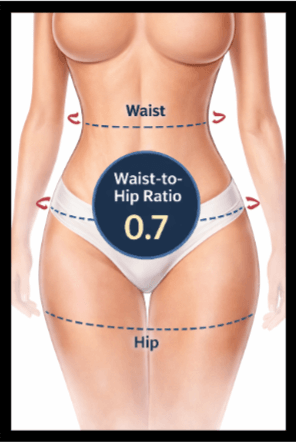
Figure 2: Picture of the ideal waist-to-hip ratio of 0.7. Image created by CHATGPT on 2/17/2026.
The waist-to-hip ratio (WHR) is calculated by dividing waist circumference by hip circumference.
In aesthetic and evolutionary research, a WHR of approximately 0.7 in women has been associated with balanced and harmonious body proportions (Singh, 1993). While this is not a rigid rule, it provides a conceptual framework for understanding torso balance.
A higher ratio—0.8, 0.85, or above—often produces a straighter, less tapered silhouette. Massive weight loss frequently disrupts this balance by:
- Widening the abdominal wall
- Creating flank redundancy
- Excess fat in “love handles” or superior iliac crests
- Causing buttock and hip deflation
- Producing circumferential tissue laxity
Effective body contouring seeks to:
- Narrow the waist
- Restore hip projection
- Re-establish proportional harmony
A boxy result typically occurs when only one of these objectives is addressed.
3) Why the Boxy Look Happens?
A boxy appearance may develop for several anatomical and technical reasons:
1. Failure to Repair Rectus Diastasis
Muscle separation widens the abdominal framework internally.
2. Inadequate Lateral Vector Control
Downward-only tension flattens the midsection without tapering the waist.
3. Insufficient Flank Contouring
Residual flank fullness obscures waist definition.
4. Buttock and Hip Deflation
Without lateral fullness, even a narrowed waist may appear straight.
5. Untreated Vertical Laxity
Massive weight loss often produces vertical excess requiring more than a horizontal incision.
Avoiding boxiness requires simultaneous correction of these variables.
4) Core Surgical Strategies to Prevent a Boxy Outcome
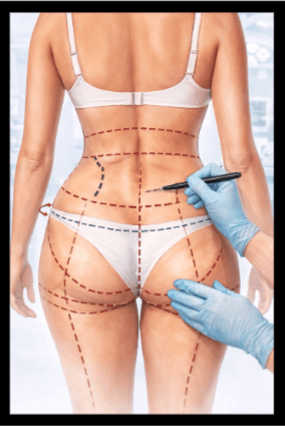
A) Comprehensive 360° Body Lift Planning
Patients after massive weight loss often require circumferential correction.
Components may include:
- Rectus plication
- High lateral tension closure
- Flank liposuction
- Fat transfer
- Midline vertical excision
- Lateral vertical torsoplasty
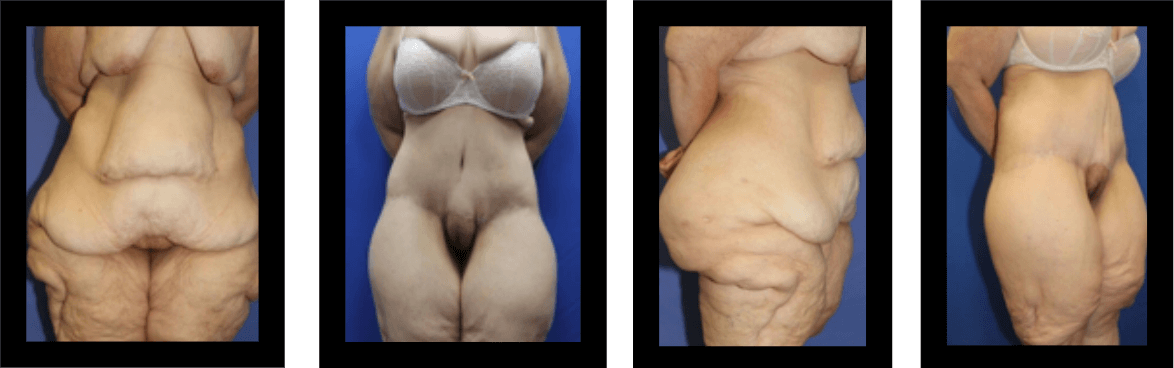
Figure 4: This patient is a 45-year-old woman, initially weighing 472 pounds, embarked on a transformative weight loss journey by opting for bariatric surgery, which led to a substantial reduction of 175 pounds. Post weight loss, she faced the common issue of excess skin. To combat this, she underwent a 360-circumferential body lift, a procedure tailored to contour the body by removing surplus skin. Her decision to undergo the procedure served as a critical step in her
transformation, enhancing her physical shape and complementing her significant weight loss. Note the better waist-to-hip ratio and improved waistline.
To learn more about the 360-circumferential lower body lift, click here.
B) Rectus Plication: Rebuilding the Internal Corset
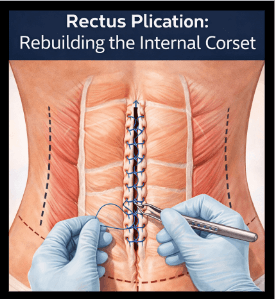
Figure 5: Picture of a plastic surgeon tightening the abdominal waist line with rectus plication to ideally achieve an ideal waist-to-hip ratio of 0.7. Image created by CHATGPT on 2/17/2026.
Diastasis recti is common after pregnancy and significant weight fluctuation. When the rectus muscles separate, the abdominal wall widens.
Rectus plication accomplishes:
- Internal narrowing of the abdominal framework
- Reduction of waist circumference
- Improved core stability
- Improved abdominal projection control
- Without plication, the abdomen may appear flat yet remain broad.
Risks
- Temporary tightness
- Discomfort with movement
- Rare suture complications
Recovery
- Core tightness 4–6 weeks
- Activity restrictions for 6 weeks
Evidence supports muscle repair as foundational in aesthetic abdominoplasty (ASPS guidelines).
C) High Lateral Tension Closure: Vector Engineering
A) Comprehensive 360° Body Lift Planning
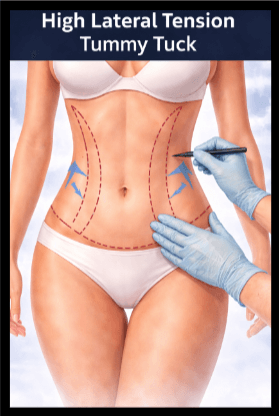
Figure 6: Picture of a plastic surgeon creating surgical plan to minimize boxy look with high-lateral tension 360 lower body lift. Image created by CHATGPT on 2/17/2026.
Traditional abdominoplasty techniques focused primarily on downward pull. Modern contouring
incorporates lateral vector tension.
This approach:
- Enhances waist indentation
- Improves scar positioning
- Reduces central flattening
- Supports hip contour
Vector direction determines final shape. Without lateral emphasis, the torso may tighten but fail
to taper.
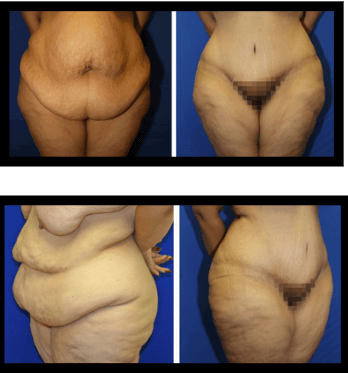
Figure 7: After losing 130 pounds, this patient complained of loose abdominal skin and lack of a waist line. Dr. Katzen performed an extended high-lateral tension tummy tuck in Beverly Hills to remove the excess skin of her abdomen. She loves her results. Note the significant improvement in her waistline.
D) Strategic Liposuction: Refining Contour Transitions
Liposuction is not a substitute for excision or muscle repair, but it is a critical adjunct.
Target zones:
- Flanks
- Lower back
- Upper abdomen (select cases)
Benefits include:
- Enhanced waist taper
- Improved transition zones
- Lowered waist circumference
In post-weight-loss patients, asymmetry and residual adiposity may persist. Liposuction allows
selective refinement.
E) Fat Transfer to the Hips and Buttocks: Restoring Proportion
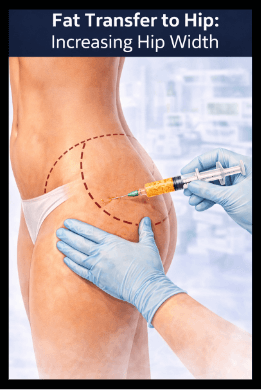
Figure 8: Picture of a plastic surgeon injecting fat (autologous fat transfer) to increase hip width and minimize boxy look. Image created by CHATGPT on 2/17/2026.
Massive weight loss often results in deflated buttocks and flattened hips. If only the waist is narrowed without restoring lateral volume, the silhouette remains straight.
Autologous fat transfer can:
- Enhance hip projection
- Improve buttock contour
- Lower the waist-to-hip ratio
- Restore curvature
Properly performed fat grafting enhances proportional balance. Safety depends on technique, patient selection, and adherence to gluteal fat grafting safety guidelines.
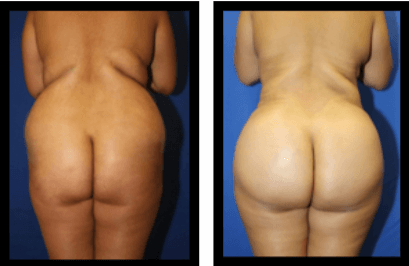
Figure 9: This is a 46-year-old Hispanic female patient. Fat was removed from this patient's abdomen, lower back, and superior iliac crest and was transferred to her buttocks and hips. Removing fat from lower back and superior iliac crest gave her body a new hourglass shape. Fat transfer to the buttocks is also known as a Brazilian but lift (BBL). Fat transfer to the hips is also known autologous fat transfer.
F) Hip Implants
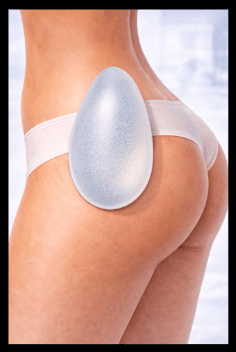
Figure 10: Picture of a plastic surgeon inserting hip implants to increase hip width and minimize boxy look. Image created by CHATGPT on 2/17/2026.
Hip implants are one surgical option to increase hip projection and thereby improve the waist-to-hip ratio, particularly in patients with congenital narrow hips or significant soft tissue deflation after weight loss. Unlike fat transfer, which depends on available donor fat and variable graftretention, hip implants provide a fixed and predictable volume increase. The implants are typically solid silicone and are placed through an incision hidden in the lateral hip region,
positioned either subfascially or intramuscularly depending on anatomy and plastic surgeon’s
preference.
However, hip implants are more invasive than fat grafting and carry distinct risks, including implant malposition, capsular contracture, infection, seroma, asymmetry, and potential need for revision surgery. While hip implants can create significant lateral projection and structural enhancement, they must be integrated into comprehensive contour planning that also addresses waist narrowing techniques such as rectus plication and flank contouring.
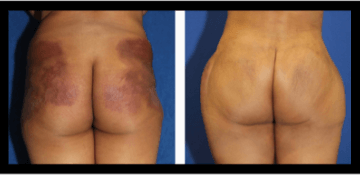
Figure 11: This patient is 33-year-old Asian transgender female who stands at 5'5" and weighs 155 pounds. In 2009, she had previously undergone raw silicone injections in her buttocks in the Philippines, which led to various issues, including redness and discomfort. In November 2020, she underwent a posterior body lift for silicone removal in the buttocks with the exceptional Dr. J. Timothy Katzen in Beverly Hills, CA. Thanks to his expertise and skill, the surgery was
successful in removing the silicone and improving the appearance of her buttocks. In July 2022, she returned to Dr. Katzen for bilateral buttock and hip implants, a procedure that she had been eagerly anticipating. The results of the surgery are outstanding, and the patient is thrilled with her new appearance, feeling more confident and comfortable in her body.
To view a YouTube video regarding insertion of hip implants, please click here.
G) Rib Removal
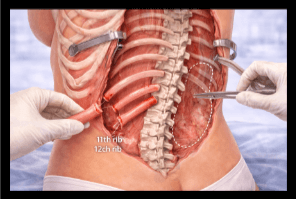
Figure 12: Picture of a plastic surgeon removing lower ribs to increase hip width and minimize
boxy look. Image created by CHATGPT on 2/17/2026.
Cosmetic rib removal, typically involving partial resection of the 11th and/or 12th ribs, has been discussed as a method to narrow the waist and enhance the waist-to-hip ratio toward 0.7 in women. By reducing the bony framework that contributes to lower thoracic width, selected patients may achieve increased waist taper and more pronounced hourglass contour. However, rib resection is a significantly more invasive procedure than soft-tissue contouring and should
only be considered after careful anatomical evaluation. Unlike rectus plication, liposuction, or fat transfer—which modify soft tissue—rib removal alters skeletal structure and carries higher surgical risk.
Potential complications include bleeding, pneumothorax, chronic pain, contour irregularities, and prolonged recovery. Because the 11th and 12th ribs provide some structural and muscular attachment support, surgical planning must be meticulous to avoid functional compromise.
H) Vertical Techniques: When Horizontal Surgery Is Not Enough
Massive weight loss patients frequently present with both horizontal and vertical tissue excess.
1) Midline Vertical Tummy Tuck
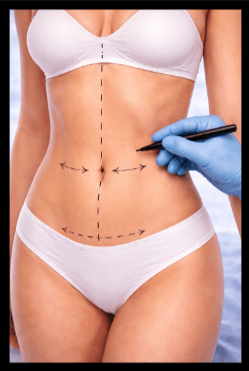
Figure 13: Picture of a plastic surgeon marking patient for a midline vertical tummy tuck incision. Image created by CHATGPT on 2/17/2026.
Indications:
- Severe central redundancy
- Wide pannus
- Persistent horizontal width
Benefits:
- Significant narrowing
- Removal of central laxity
- Improved symmetry
Trade-off:
- Vertical scar
In appropriate candidates, contour improvement outweighs scar concerns.
To read more about the 8 different types of tummy tucks, please click here.
2) Lateral Vertical Torsoplasty (“Hour-Glassing” Procedure)
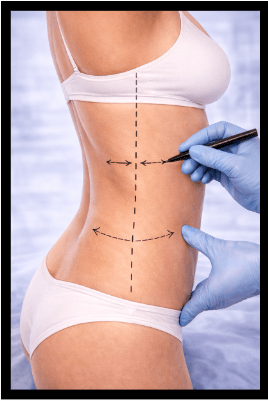
Figure 14: Picture of a lateral torsoplasty markings. Image created by CHATGPT on 2/17/2026.
This technique removes lateral torso tissue vertically, narrowing side-to-side width.
Advantages:
- Enhanced waist indentation
- Improved hourglass contour
- Reduction of flank redundancy
For selected massive weight loss patients, this may be the decisive maneuver in avoiding
boxiness.
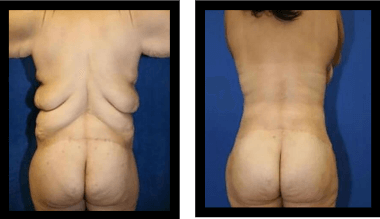
Figure 15: This patient is a 5’3” 160-pound White 48-year-old female. Their maximum weight was 300 pounds. This patient lost 140 pounds with Lap band, diet, and exercise. Yet dissatisfaction lingered due to the persistent excess skin and fat on her back and sides. In pursuit of a solution, she turned to Dr. J. Timothy Katzen in Beverly Hills, California. Upon assessing her condition, Dr. Katzen and the patient concluded that back liposuction alone would leave undesirable back skin rolls. Consequently, Dr. Katzen opted to perform both vertical torsoplasty and back liposuction. The vertical torsoplasty spanned roughly five hours, with the liposuction adding an additional hour, all under general anesthesia provided by a skilled anesthesiologist. Drains were installed on either side to aid healing and were removed on the tenth day following surgery. The patient resumed her office job after two weeks, tended to her dressings for three weeks, and wore a compression garment for six weeks. Beginning in the fourth week, she diligently applied silicone strips and scar cream twice daily, continuing this regimen for six months. The outcome of her back lift has been incredibly positive, allowing her to wear clothes she previously could not and significantly boosting her confidence. She now harbors no
insecurities about her body image. She is extremely satisfied with her vertical back lift results. She cannot believe the significant improvement in her overall shape and especially, her back.
To view another Hour-glassing Procedure or Vertical torsoplasty procedure, please click here for
YouTube and click here for Instagram.
To read more about the Hour-glassing procedure, please click here.
5) Recovery Timeline

Figure 16: Picture of an hour-glass shape and time line to achieve this shape. Image created by Gemini on 2/17/2026.
Week 1–2:
Swelling, bruising, compression garments, limited mobility
Week 3–4:
Improved comfort, gradual increase in activity
Week 6:
Return to moderate exercise
3 Months:
Visible contour refinement
6–12 Months:
Scar maturation and final results
Recovery varies depending on procedure extent.
6) Risks of Advanced Body Contouring
All major reconstructive procedures carry risks:
- Bleeding
- Infection
- Seroma
- Delayed wound healing
- Scarring
- Asymmetry
- DVT / pulmonary embolism
Board certification and experience significantly reduce complication rates. Dr. Katzen is certified
by the American Board of Plastic Surgery and has extensive experience in complex body
contouring.
7) Frequently Asked Questions
A) What causes a boxy tummy tuck?
Incomplete muscle repair, insufficient flank contouring, lack of hip volume restoration, or untreated vertical excess.
B) Can you guarantee a 0.7 waist-to-hip ratio?
No ethical surgeon can guarantee specific measurements. 0.7 serves as a proportional planning concept.
C) Is revision surgery possible?
Yes. Options may include liposuction, fat grafting, scar revision, or vertical excision techniques.
D) Is fat transfer safe?
When performed according to current safety guidelines and proper technique, autologous fat grafting is safe.
E) Are vertical scars always necessary?
Only when vertical laxity is significant. Scar placement is carefully discussed during consultation.
8) Conclusion
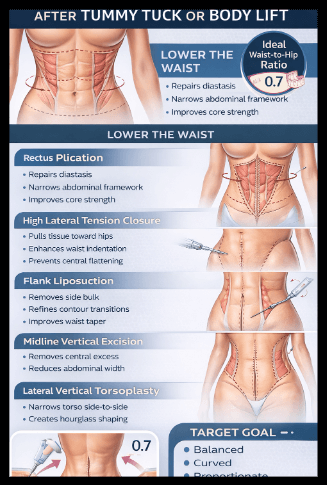
Figure 17: Infographic describing how to achieve ideal waist-to-hip ratio of 0.7
Avoiding a boxy outcome requires:
- Structural correction (rectus plication)
- Vector engineering (high lateral tension)
- Flank refinement (liposuction)
- Volume restoration (fat transfer)
- Vertical excision when indicated
True contouring is three-dimensional.
For patients after massive weight loss, a circumferential and proportional approach is often essential.
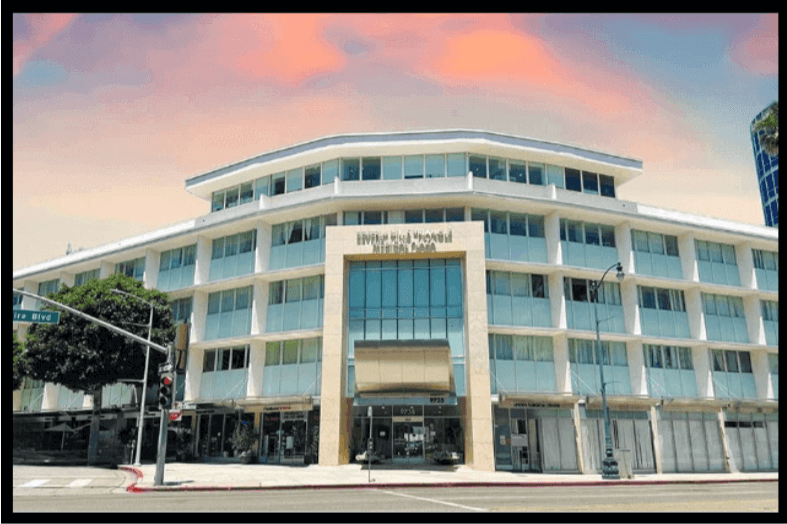
Figure 18: Picture of Dr. J. Timothy Katzen’s office in Beverly Hills. The address is 9735 Wilshire Boulevard, Suite #407, Beverly Hills, CA 90212. Dr. Katzen’s phone is (310) 859-7770.
If you or someone you know are considering achieving an ideal waist-to-hip ratio of 0.7 and avoiding the boxy look, please get in touch with Dr. Katzen. Dr. Katzen and his team will evaluate your abdomen and provide the most appropriate treatment. Please arrange for a consultation with Dr. Katzen by calling (310) 859-7770 or emailing [email protected]. Physical or virtual consultation can be arranged. Dr. Katzen is in Beverly Hills, CA.
9) Academic References
- Singh D. Adaptive significance of female physical attractiveness: role of waist-to-hip ratio. J Pers Soc Psychol. 1993.
- Nahabedian MY. Management strategies in post-bariatric body contouring. Clin Plast Surg. 2014.
- American Society of Plastic Surgeons. Evidence-Based Patient Safety Advisory: Gluteal Fat Grafting.
- Matarasso A. Abdominoplasty techniques and outcomes. Clin Plast Surg.